Oyster, Lamb, Cobnut
Wine & Food
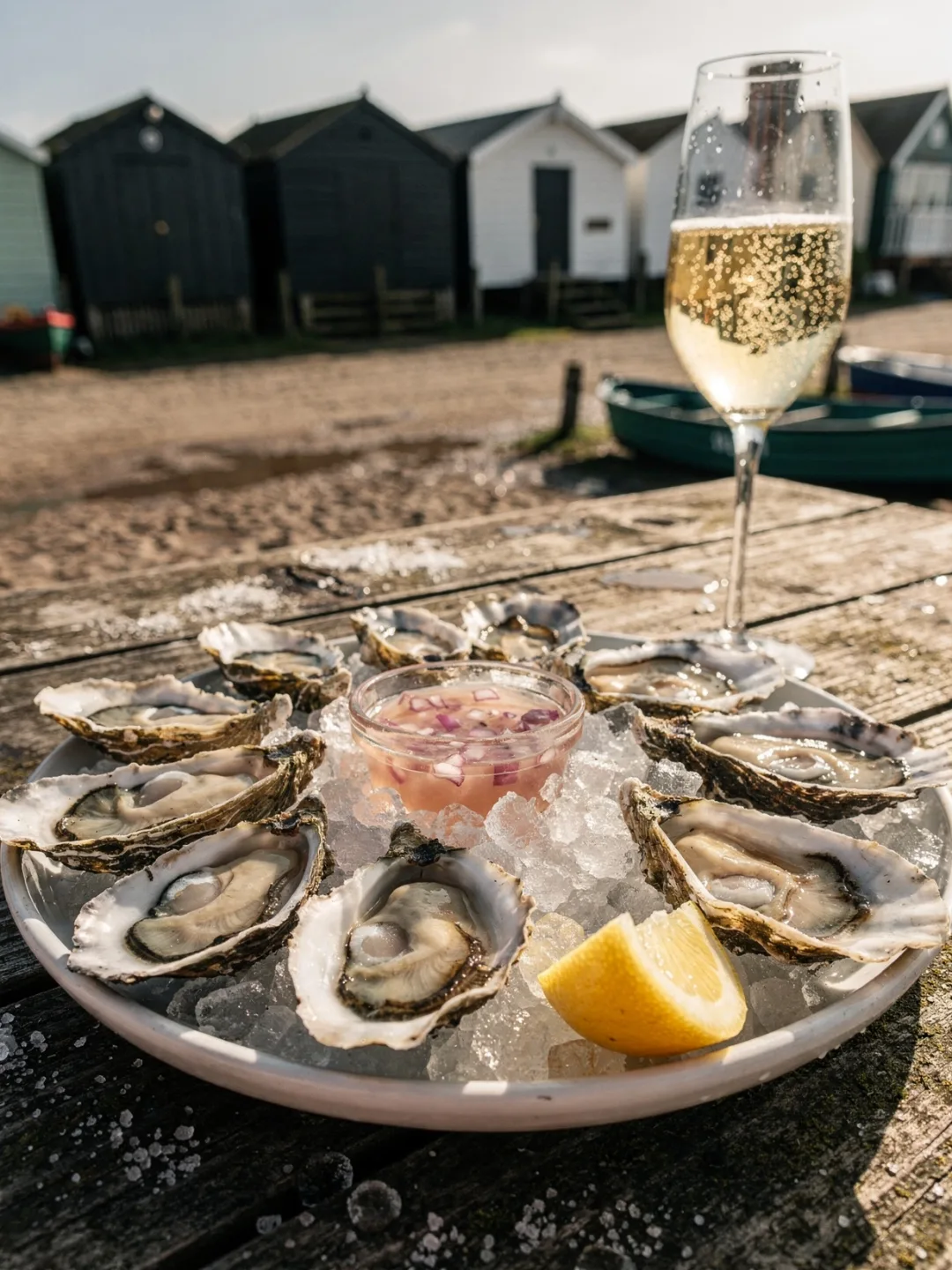
Few pairings are as well known as Whitstable oysters and a glass of Kentish Sparkling. This small coastal town has been eating its oysters since Roman times. In July it celebrates with its own oyster festival, echoing the feast of Saint James. As it happens, the native oyster isn't even in season then, that only begins on the first of September, but tradition has cared little about that for centuries. The acidity of the sparkling wine suits the oyster the way lemon suits fish. It cuts through the salty, iodine note and makes both taste fresher than either would alone.
The case is different with lamb from Romney Marsh. The sheep graze there on salty marsh pastures and put on more fat than elsewhere. That fat gives the meat a richer, slightly sweet flavour. For that you don't need a red wine, but rather a robust rosé sparkling wine made from Pinot Noir and Pinot Meunier. The Balfour Brut Rosé from Hush Heath vineyard, 2004 vintage, won exactly that kind of praise, and in 2007 it became the first English wine ever to take gold and the trophy at the International Wine Challenge.
That changes in September. That's when the short season of Kentish cobnuts begins, just as oysters come back into season. These mild, almost creamy hazelnuts grow almost exclusively in Kent and are eaten young, still in their green husks. The aromatic Bacchus is the perfect match: its notes of elderflower and gooseberry meet the milky sweetness of the fresh nut without overwhelming it with too much alcohol.
It only takes two sentences to bring Kent's cuisine and Kent's wine together. Salt and fat in food need acidity in the glass, and the county's cool climate delivers that in abundance. Anyone who has experienced this with an oyster from Whitstable will rarely order Champagne with it again afterward, however famous Champagne may be for precisely this pairing.