Chalk Meets the Weald
Soils
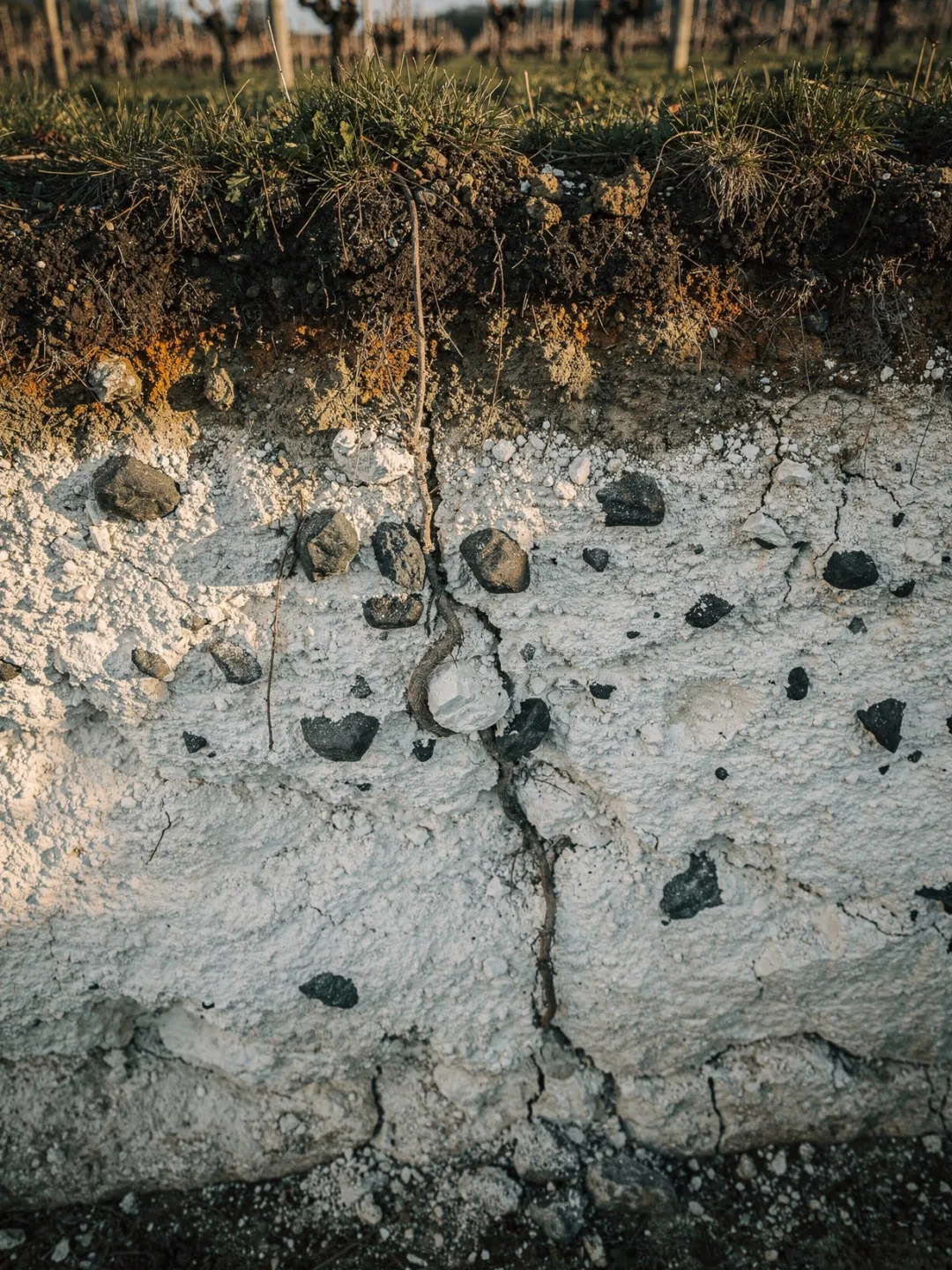
Stick a spade into a South Downs vineyard, and within a hand's width you'll hit pure white chalk. Fine, porous, and almost colorless, it lies beneath a wafer-thin layer of topsoil – some vineyards have barely twenty centimeters of soil above it.
This chalk reaches far back in time. It formed roughly seventy to a hundred million years ago from the calcareous shells of tiny marine algae that settled on the floor of a shallow, warm ancient sea. It's the very same basin from which the chalk beneath the Côte des Blancs in Champagne originates. The English Channel later only cut through this one layer, without truly separating it: the bedrock beneath Seaford and Lewes in the south is geologically the same as that beneath Épernay.
For the vine, this chalk is a tool, not a nutrient source. It drains rain almost instantly, yet stores enough water in its fine fissures to see the vine through August. Dark flint nodules within it absorb warmth by day and release it again at night. The root has to force its way through this hard rock, but in doing so grows deep and even. That stress later reappears in the glass as freshness and length.
North of the Downs, this chalk has long since eroded away. Beneath the Weald lie older layers of clay and greensand that hold moisture rather than draining it. Bolney's Foxhole vineyard, for instance, stands on such soil. Its wines come across rounder and more fruit-forward than the lean, austere sparkling wines from the chalk slopes further south.
A stubborn myth persists: that the vine passes minerals from the chalk directly into the wine, and that we can then taste them. That's not quite how it works. What actually comes through is an indirect effect via water balance, heat storage, and root depth. It's precisely this detour that explains why a wine from the South Downs tastes so different from one grown in the Weald, even though the two are often only a few miles apart.
A thin, dark layer of decomposed grass and root matter, sitting directly atop the chalk. In many South Downs vineyards barely a hand's width deep.
The root: This is where the fine roots sit. They respond first to rain and are the first to feel thirst during dry spells.