1086 to today
Region & History
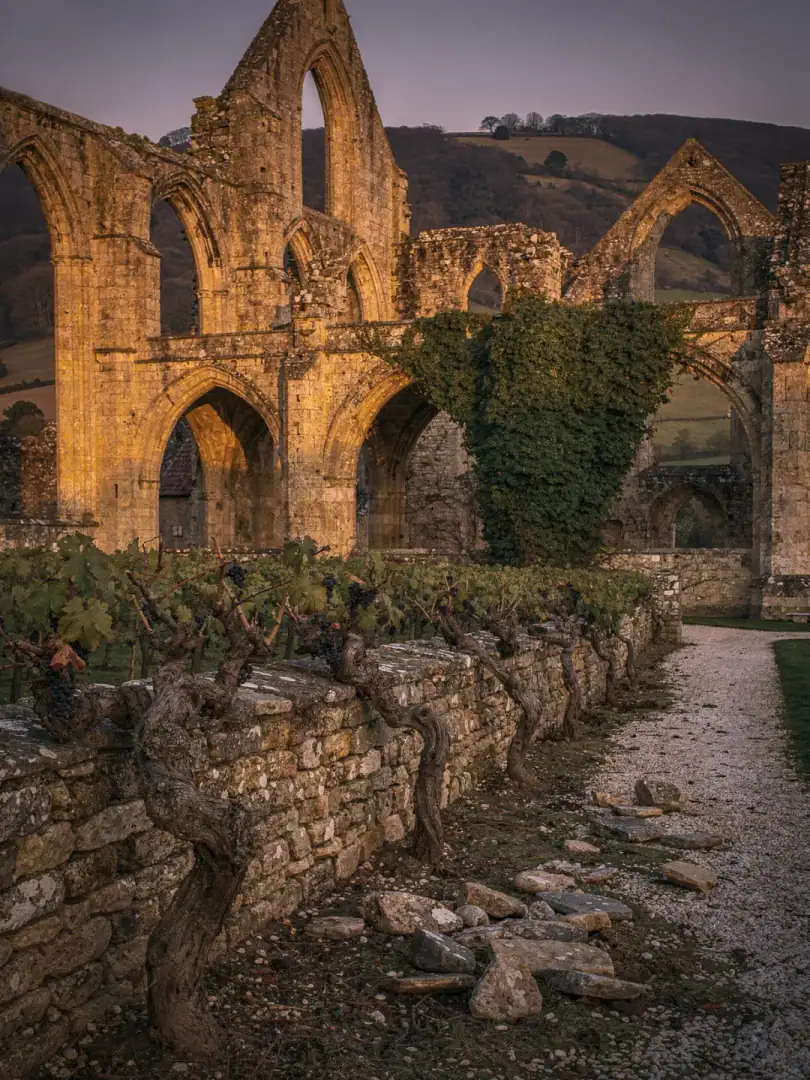
Whether Celtic or Roman settlers already grew vines at the foot of the South Downs cannot be proven with certainty. What is documented, however, are the 45 vineyards recorded in the Domesday Book of 1086 in southeast England, most owned by Norman lords or great abbeys. Sussex was among them.
Battle Abbey, founded on the site of the Battle of Hastings, maintained its own vineyard. Around 1275, the monastery gave up cultivation. Two reasons are possible: a cooler climate in the decades marking the onset of the Little Ice Age, and the marriage of Henry II to Eleanor of Aquitaine, which suddenly brought English courts duty-free wine from Gascony. Homegrown wine stood no chance against cheap imports from within the kingdom's own domain.
For nearly seven hundred years, things stayed at the level of scattered hobby plots. It wasn't until 1972 that Janet and Rodney Pratt bought a run-down estate near Bolney. The following year they planted the first thousand vines – Müller-Thurgau, England's sixth commercial vineyard altogether. Two years later, Breaky Bottom followed in the east of the county. Both estates proved that ripe wine could grow in Sussex, even if no one yet dreamed of Champagne-caliber quality.
The decisive step came in 1988, taken by an American couple. Stuart and Sandy Moss planted Chardonnay, Pinot Noir, and Pinot Meunier at their Nyetimber estate near West Chiltington – deliberately. These were the same three grape varieties as in Champagne, planted exclusively for sparkling wine made by the traditional method. Seven years later, Mike and Christine Roberts founded Ridgeview winery in Ditchling, below the South Downs. Both houses remain among England's most celebrated names today. Nyetimber simply named its top cuvée, launched in 2018, 1086 – after the year the estate first appeared in the Domesday Book.
In 2010, Rathfinny arrived in the Cuckmere Valley near Alfriston, a project on an entirely different scale. 93 hectares of vines stand there on a single estate, barely three miles from the sea. In June 2022, the British agricultural authority officially recognized Sussex as its own protected designation of origin – the first of its kind in the country since leaving the EU. This means only wines whose grapes grow entirely within East and West Sussex may bear the name, though unlike Champagne, the regulation prescribes no specific grape varieties. Today, 28 percent of all British wine comes from Sussex, from 138 vineyards – more than from any other county.