Claret & Classification
Region & History
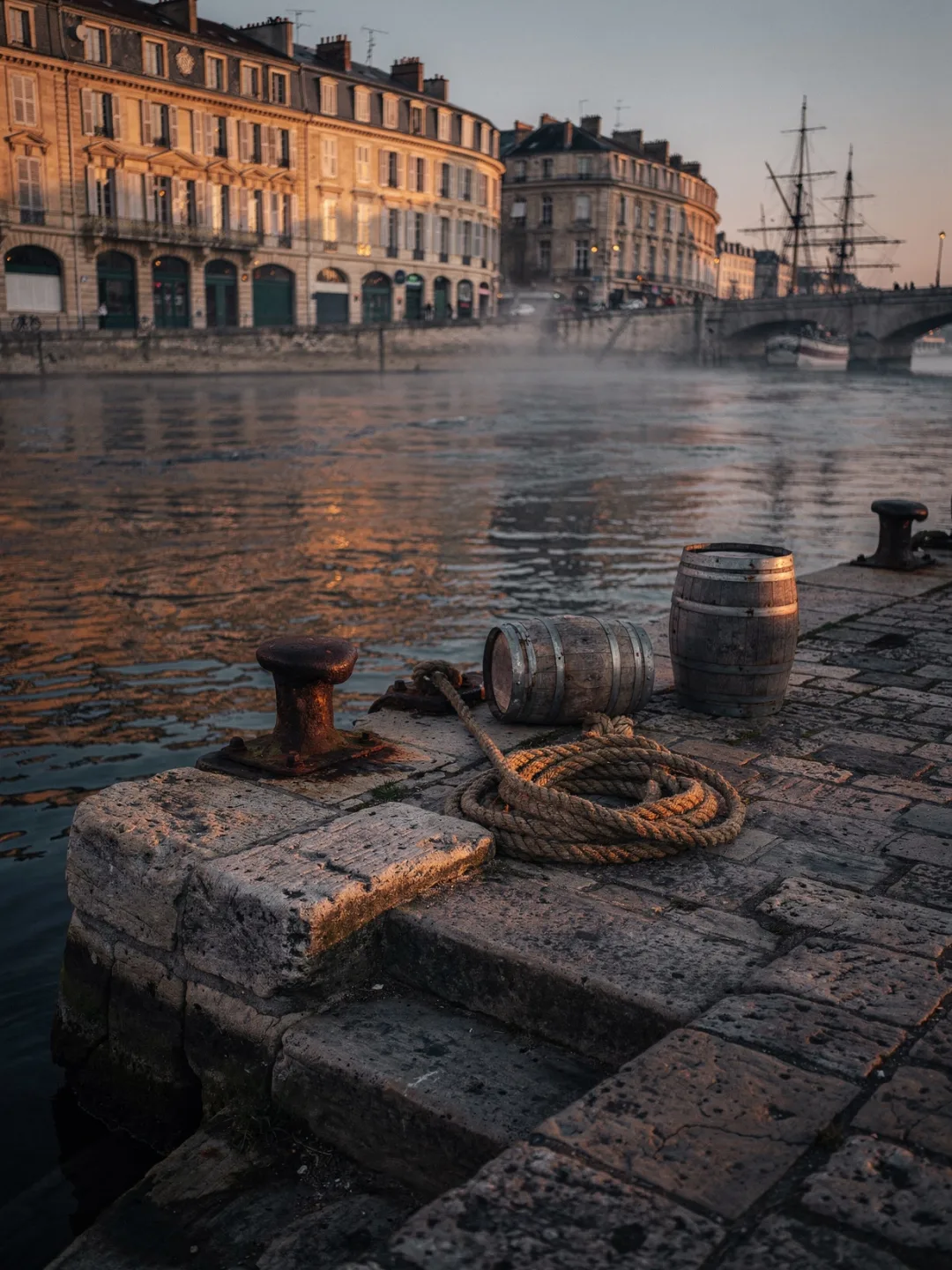
In May 1152, Eleanor of Aquitaine married the young Henry Plantagenet of the House of Anjou. Two years later he was crowned King of England, and with him, Bordeaux fell under English rule for three hundred years. The wine of the city was then called clairet. It was pale and thin, and it usually spoiled within a few months of harvest. The English drank it by the gallon anyway, helped along by low tariffs for Bordeaux's winemakers. Every autumn a whole fleet moored at the harbor to load the new vintage. Clairet became claret in English — a name that still stands for red Bordeaux today.
The wine's reputation grew faster than any system could keep up with. For the 1855 Paris World's Fair, the French emperor demanded a ranking of the finest estates, and Bordeaux's wine brokers drew one up based on sale prices from the previous hundred years. Sixty-one estates made the list, nearly all from the Médoc — except one. Château Haut-Brion from the Graves was sorted in as the sole exception, across five tiers from Premier Cru to Cinquième Cru. Almost nothing about this list has changed since, with one single exception: in 1973, Château Mouton Rothschild was promoted from Second to First Growth, after decades of lobbying.
Between 1875 and 1892, phylloxera stripped nearly every vineyard in the region bare. Growers only saved themselves by grafting their vines onto American rootstock. In the middle of this crisis came an accidental discovery. In 1882, Bordeaux professor Alexis Millardet observed vines in the Médoc whose leaves had been coated with a poisonous blue mixture of copper sulfate and lime — meant to scare off thieves, not to fight fungus. Yet these vines stayed free of downy mildew, and Millardet immediately grasped the connection. In 1885 he presented the resulting bouillie bordelaise, still one of the most important tools in viticulture today.
Fraud involving false claims of origin after the phylloxera crisis prompted a response in 1936. Bordeaux became one of the first regions in France to receive Appellation d'Origine Contrôlée status. Even so, the wine is rarely sold directly from the estate. A three-tier system of Château, Courtier, and Négociant, known as the Place de Bordeaux, has handled nearly every bottle from the region since the seventeenth century, and almost no one buys straight from the château to this day.
Even recent history shows how seriously rank and ranking are taken here. When Saint-Émilion's classification council published its mandatory ten-year reassessment in 2022, three of the four top estates voluntarily gave up their place. Cheval Blanc, Ausone, and Angélus withdrew rather than face the review at all. A title here is worth more than a price tag.