Kingdom until Embargo
Region & History
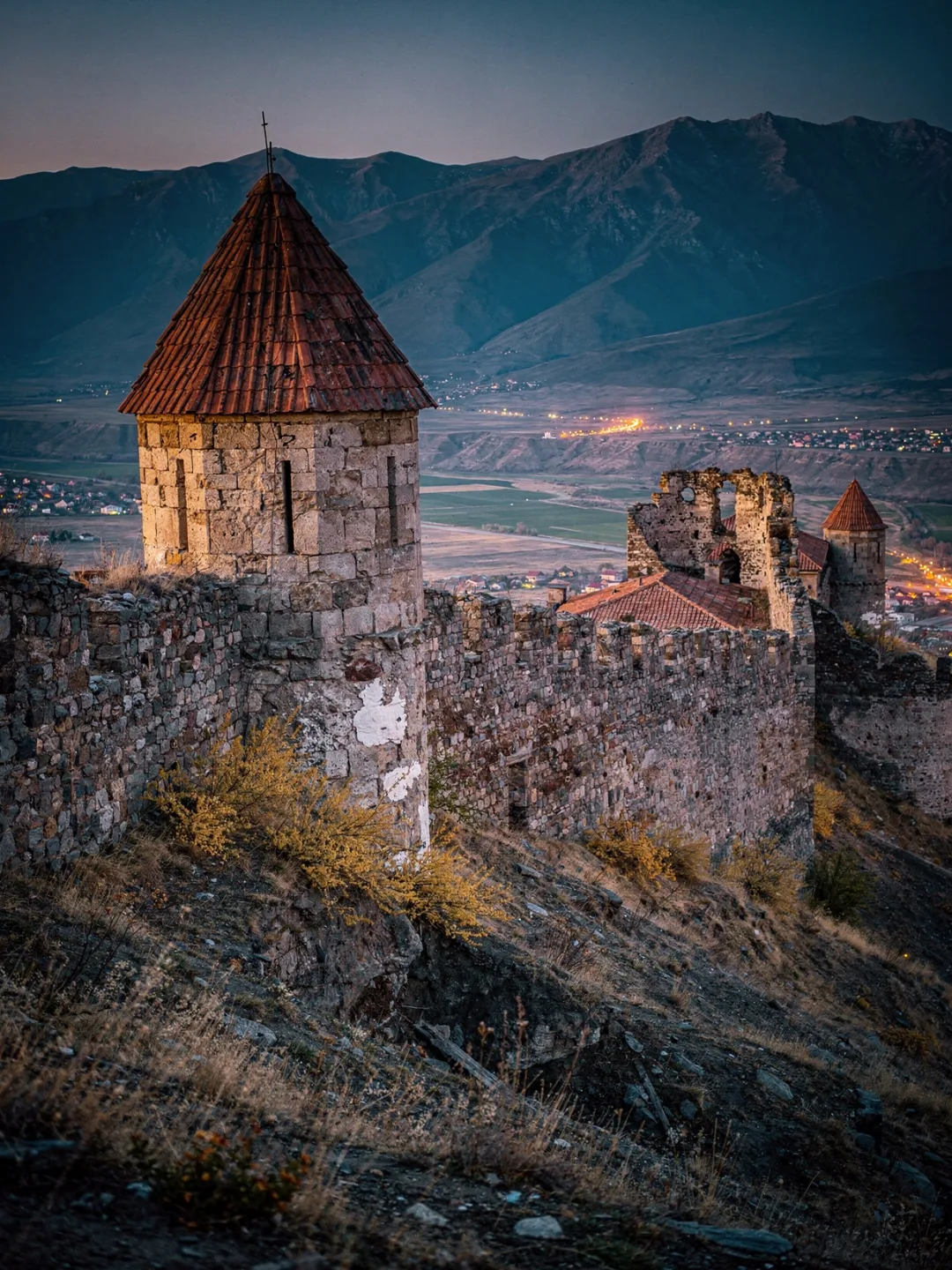
Anyone who walks the city wall of Sighnaghi counts up to twenty-three. That's how many towers King Erekle II had built in 1762, each named after a village whose inhabitants were meant to flee there in case of emergency. Emergencies came often: bands of horsemen from Dagestan repeatedly raided the plain, a threat still known in Kakheti today as Lekianoba. Four kilometers of wall along a ridge overlooking the Alazani Valley — hardly any fortress in the Caucasus runs so long.
Kakheti was long an independent kingdom, separate from Kartli to the west. It was Erekle II who finally united both crowns, ruled from Telavi, and in 1783 sought Russian protection, sealed by the Treaty of Georgievsk. The gamble didn't pay off. Eighteen years later, the Tsarist Empire simply annexed the kingdom, Telavi lost its rank as capital, and a throne became a Russian provincial administration.
Ironically, it was this new province that brought progress to wine. Alexander Chavchavadze, prince and poet, had studied in Saint Petersburg and brought European barrel-aging back to his estate at Tsinandali. From the 1830s onward, he had part of the must aged there in oak instead of qvevri, then bottled — including a Saperavi from 1841 that still rests in the estate cellar today and is considered the country's oldest surviving bottle. From then on, two traditions ran side by side: the ancient one, buried in clay, and the new one, shaped by Europe.
Phylloxera reached the Caucasus in the late 19th century and destroyed most of the native vines. Kakheti grafted onto American rootstock, saving what could be saved, but the old variety diversity never fully returned. Under the Soviet Union, the region then became the wine warehouse of an entire empire — quantity mattered, origin barely did. After independence, the next blow came in 2006: a Russian embargo wiped out roughly ninety percent of exports overnight.
In 2013, UNESCO declared the traditional qvevri method an Intangible Cultural Heritage of Humanity — precisely the technique that had never paused in Kakheti's cellars. Kingdom, Tsarist Empire, Soviet Union, independent state: the names over the land changed four times. The clay beneath the earth stayed the same.