From Herakles to Skouras
Region & History
A lion with a hide no spear could pierce is said to have once terrorized the hills around Nemea. Herakles strangled it with his bare hands — the first of twelve labors set by King Eurystheus — and wore its pelt afterward as armor. To this day, winemakers in the area call their most powerful red wine the Blood of Herakles.
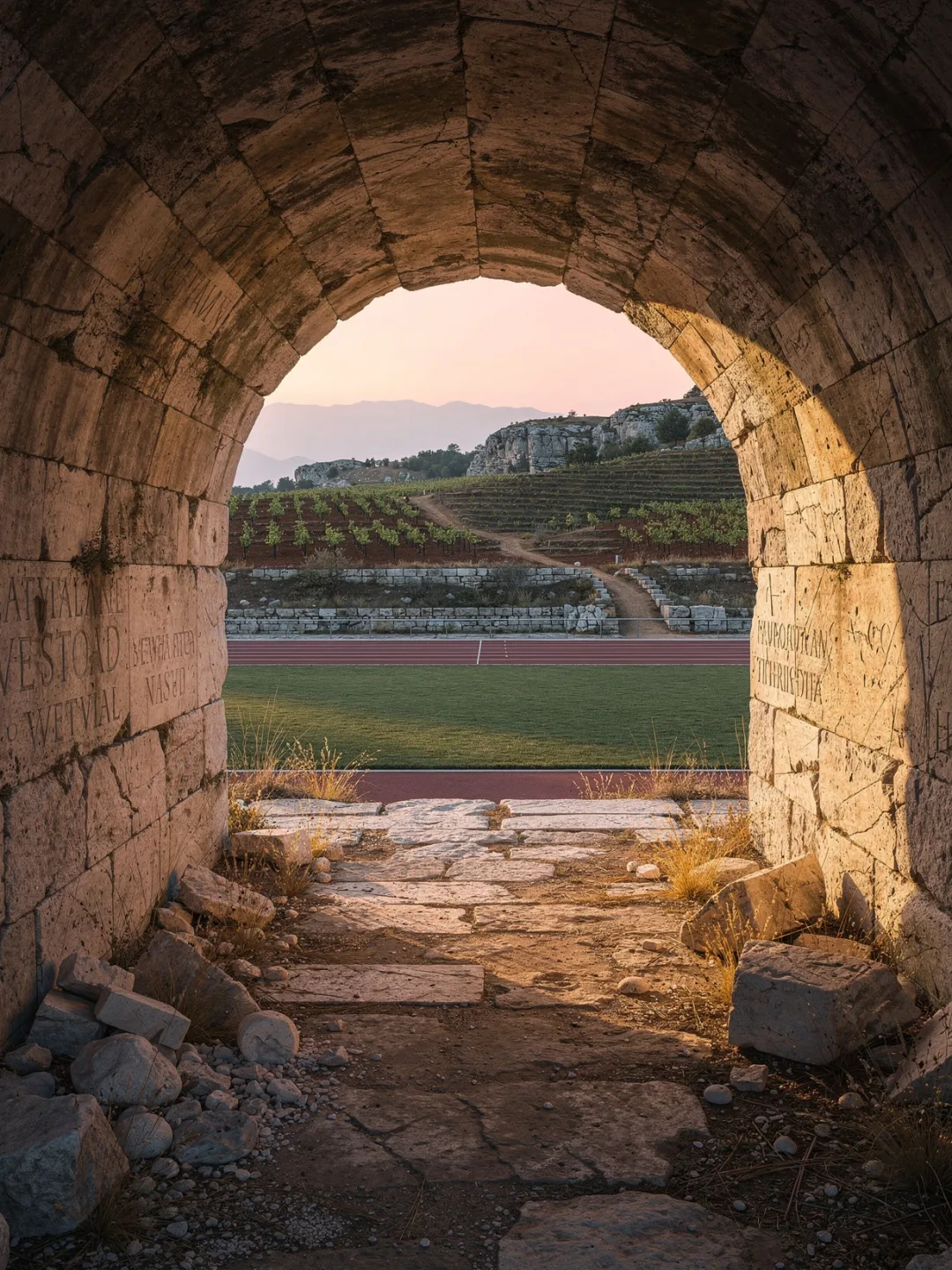
From 573 BC onward, the Greeks held the Nemean Games here every two years, one of four great Panhellenic festivals alongside Olympia, Delphi, and Isthmia. Winners received no laurel and no olive oil, but a crown of wild celery. During the Games, the valley lay almost deserted, yet drinking still went on — wine from neighboring Phlius, which ancient writers called Phliasios Oenos. Homer knew the region centuries earlier still, calling it Ampeloessa, the wine-rich land.
Little of that fame survived the centuries beyond the name on the map. Nemea supplied local taverns with simple bulk red wine until the Greek state granted the region a protected designation of origin in 1971, one of the first in the country. At first, this changed little about what was actually in the bottles.
The real break came from two men who had trained elsewhere. Giorgos Skouras returned in 1986 from Dijon, where he had studied oenology, the science of wine, and began working at a small estate in Argos, favoring new methods over old habits. Eight years later, Yiannis Paraskevopoulos and Leon Karatsalos founded their winery, Gaia, on the limestone plateau of Koutsi. Both proved that Agiorgitiko could age ten years and longer in the cellar. International critics began, for the first time, to take Greek red wine seriously.
Today the appellation stretches across seventeen communities in Korinthia and neighboring Argolis, from Ancient Nemea to Koutsi. It is registered EU-wide as a protected designation of origin. The lion still graces many labels. The wine beneath it has changed completely since the eighties.