From Enotria to DOCG
Region & History
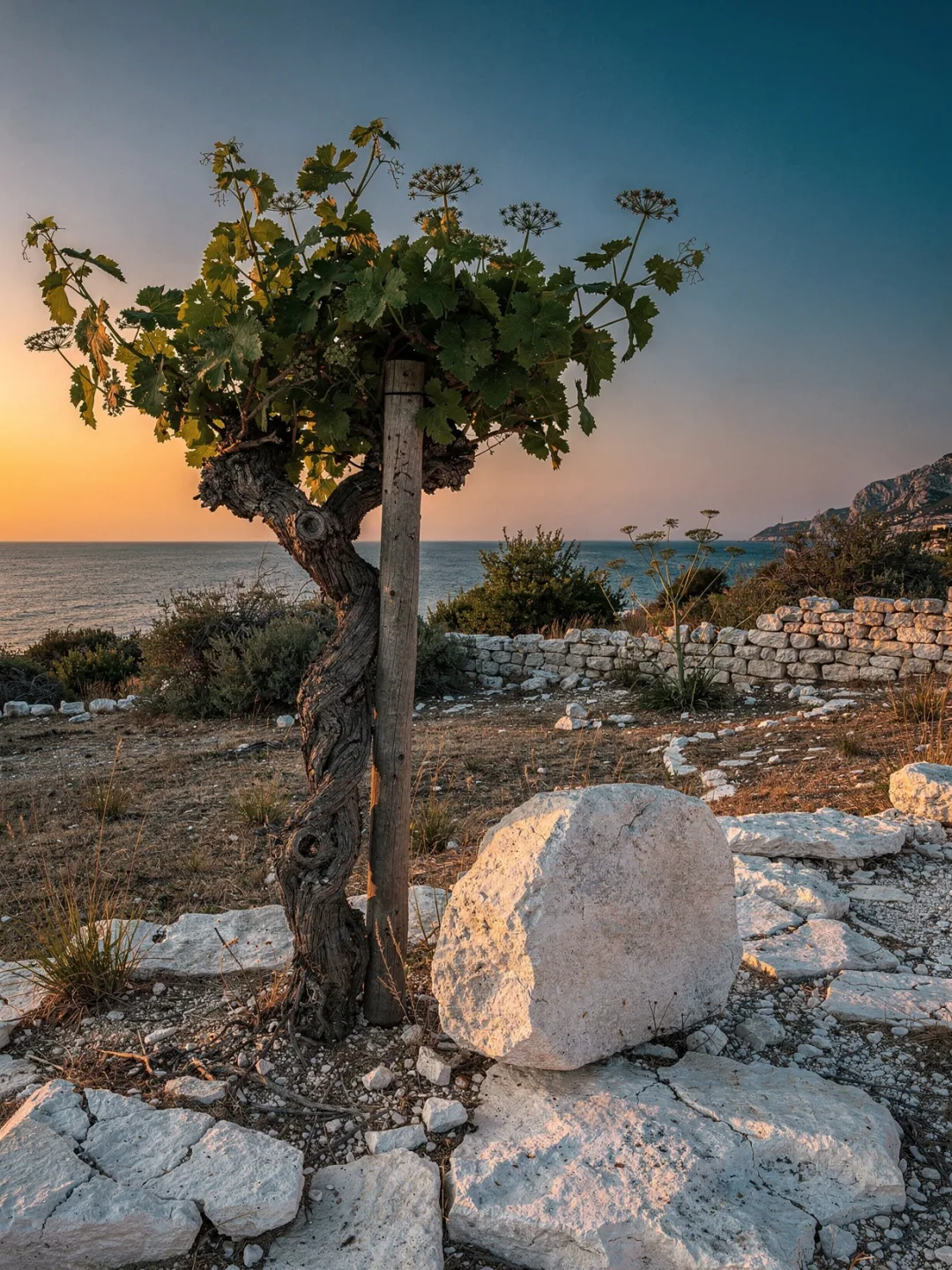
Greek sailors landed in the eighth century BC on the coast now known as Salento, and found vines that local peoples had long since trained on wooden stakes. They called the land Enotria. The word comes from oinotron, the supporting stake for the vine, not directly from wine. The name stayed in use for all of southern Italy, but nowhere did it fit as precisely as here, where the plains were planted with rows stretching to the horizon.
For a long time, nothing much happened after that. For centuries, wine from Apulia remained robust, dark, and cheap to produce. When phylloxera destroyed the vineyards of France and northern Italy in the late nineteenth century, that very quality became a business. Barrels full of red wine traveled north to bolster thinner wines. Alcohol, color, body – sold without a name of its own. Until the 1990s, hardly anyone outside the region knew the varieties behind it.
A country priest set part of this story in motion. Around 1800, Francesco Filippo Indellicati observed a vine in his vineyard near Gioia del Colle that budded later than its neighbors yet was still the first to ripen. He named the new plant Primaticcio, the early-ripener – from which came Primitivo. In some years it's harvested as early as mid-August, and anyone who tops the shoots in early summer even gets a second, smaller harvest from the side shoots in October.
Almost two hundred years later, the story got a sequel in the lab. In December 2001, geneticist Carole Meredith compared, together with Croatian colleagues, the DNA of three grapevines that no one until then had thought to connect. Primitivo from Apulia, Zinfandel from California, and the nearly forgotten Croatian variety Crljenak Kaštelanski were among them. All three turned out to be genetically identical. A wine that American settlers believed was their own discovery had been growing along the Adriatic coast the whole time – just under a different name.
The turning point came late, but fast. Starting in the 1970s, individual wine estates began bottling their best grapes themselves instead of sending them off in tanker trucks. Today the region carries four DOCG wines, Italy's highest quality tier, and twenty-eight DOC zones. Presiding over it all is the octagonal Castel del Monte, built by Emperor Frederick II in the thirteenth century and a UNESCO World Heritage Site since 1996. What was once a filling station for foreign vineyards has become an address of its own.