From Cumae to Taurasi
Region & History
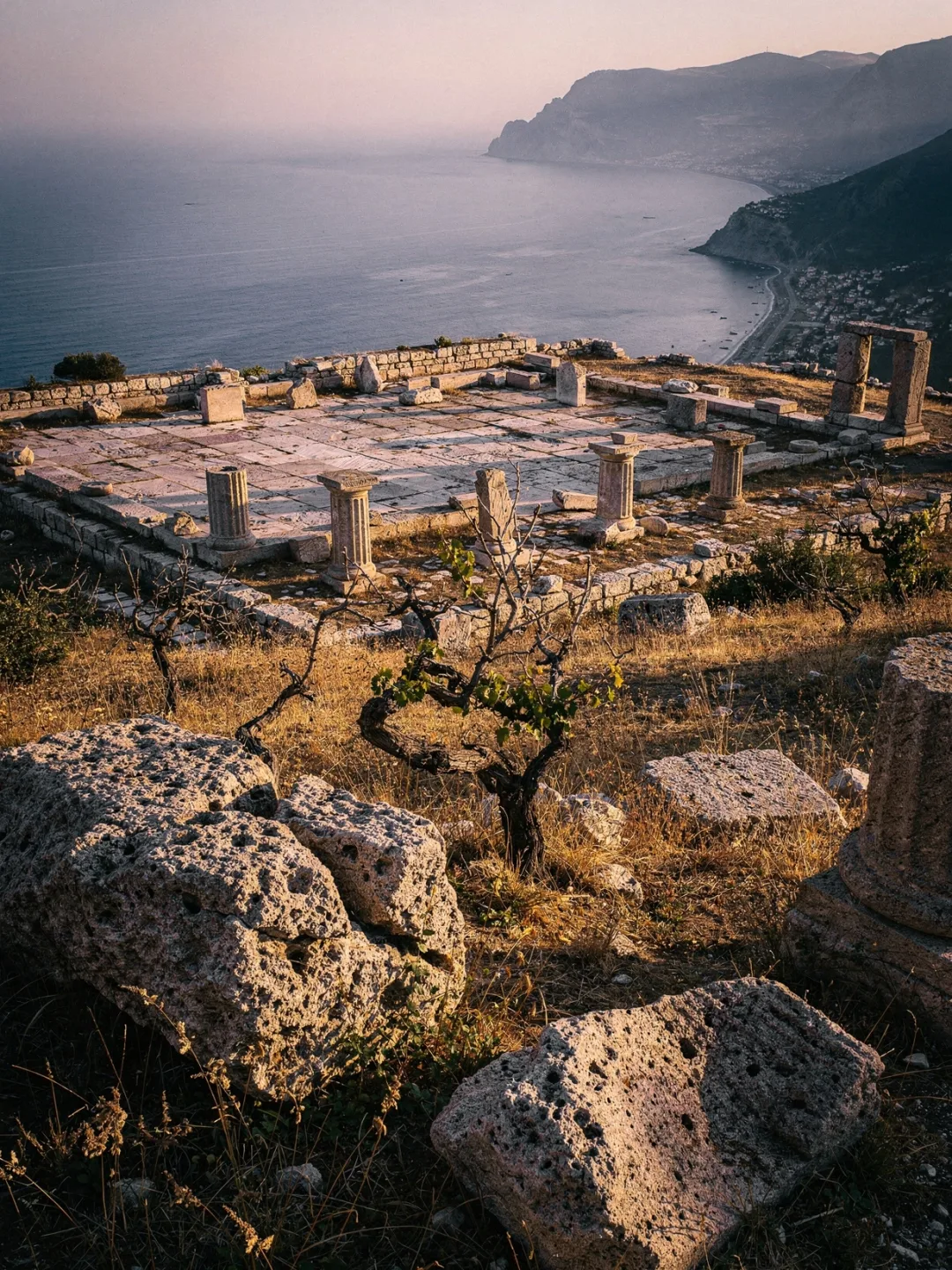
Around 740 BC, settlers from Chalcis and Eretria landed on the coast west of Naples and founded Cumae. It was the oldest Greek colony on the Italian mainland, older than Naples itself and older than Pompeii. The newcomers brought vines with them, and the volcanic soil took to them immediately. From here, viticulture spread across all of Campania.
The name of the most important red grape variety tells the same story by a roundabout route. Aglianico probably derives from the word Ellenico, Italian for Greek, distorted through Neapolitan dialect until the modern form settled under Aragonese rule in the 15th century. A few valleys further on, in the Ager Falernus, grew the most famous wine of antiquity: celebrated by Horace, capable of aging for decades, reserved for emperors. Today, only the name remains of that former glory.
After Rome came Lombards, Normans, Hohenstaufens, Angevins, and Aragonese, and every dynasty left its mark on the countryside around Naples. Only the vine remained constant. It wasn't until the 20th century that things grew difficult: two world wars, rural depopulation, and finally phylloxera, which had been devastating Europe since the 1880s and only reached Campania around 1950. Wherever sand rather than clay lay in the soil, on the slopes of Vesuvius and in the Campi Flegrei, the louse could not survive. Some vineyards there still stand today on their own, ungrafted roots.
The answer to this decline came from a single family in Atripalda. The Mastroberardinos paid farmers more for Aglianico, Fiano, and Greco than the market offered for higher-yielding varieties. In doing so, they saved these three grapes from disappearing. Without this stubbornness, these three wines would not exist today.
On November 23, 1980, an earthquake shook Irpinia and killed nearly three thousand people; entire villages in the Taurasi zone lay in ruins. Reconstruction took years. But it also brought new plantings and renewed attention to the old grape varieties. In 1993, Taurasi became the first wine of southern Italy to be elevated to the top tier, DOCG; ten years later, Fiano di Avellino and Greco di Tufo followed. Today, Taurasi is called the Barolo of the South, and that's no coincidence: both wines demand patience, and both come from a grape that ripens late and forgives nothing.