Aglianico, Fiano, Greco
Grape Varieties
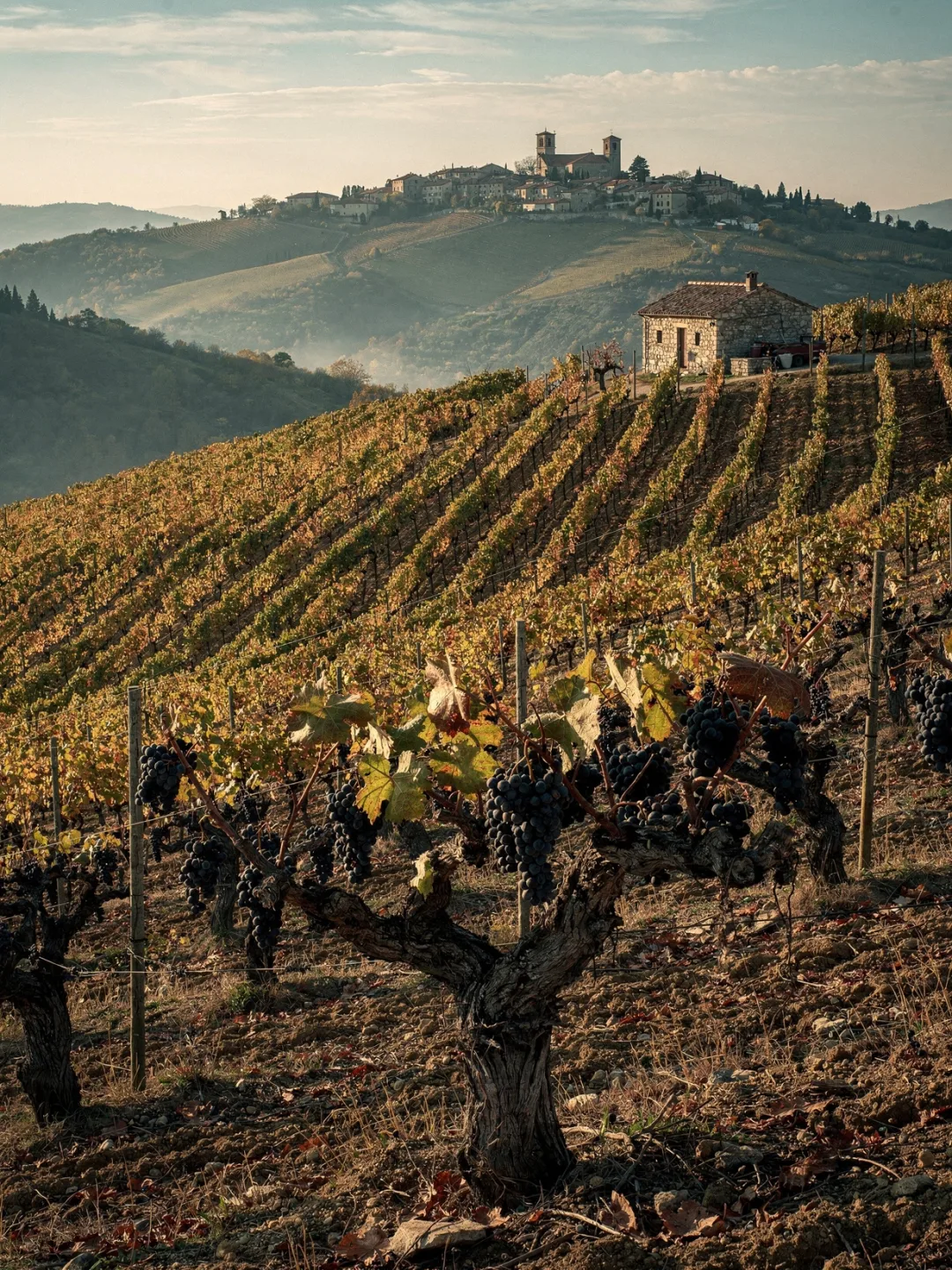
A single red grape variety carries nearly all of Campania's reputation, and that is Aglianico. It ripens so late that harvest doesn't begin until mid-October and can stretch into mid-November in cool years. That's later than almost any other Italian red grape variety. The skin is thick, the tannin correspondingly powerful, and the acidity never tires, even after years in the cellar.
Among the whites, Fiano ranks first. The ancient Romans already knew a grape called Vitis apiana, named after the bees drawn to its sweet grapes. Much suggests this was the ancestor of today's Fiano. In the glass, it shows hazelnut, acacia honey, and ripe pear, and with a few years of bottle age, notes of wax and a hint of smoke emerge. Fiano is a grape variety that rewards patience, both in the vineyard and afterward.
Greco grows mainly around the village of Tufo, on soils that mix sulfur with volcanic rock. That's exactly what you taste: citrus fruit and roasted almond, with a flinty, almost smoky note behind it. Unlike Fiano, Greco stays leaner and more linear, with an acidity that keeps the wine young, even long after it no longer is.
A third white variety appears in two distinct guises. Falanghina Beneventana grows in the hilly hinterland of Sannio and yields fuller, broader wines. Falanghina Flegrea, on the other hand, grows in the volcanic sand of the Campi Flegrei near Naples and produces leaner, saltier wines. Both share the same name. In the glass, they share almost nothing else — proof of just how strongly soil shapes a grape variety.
The second red is called Piedirosso, known in Campanian dialect as Per' e Palummo, or dove's foot, because the stem and grape cluster take on the same red color as a dove's feet as they ripen. It grows along the coast near Naples and on Vesuvius. It may be blended into Taurasi up to fifteen percent, usually to make the wine more approachable. One last minor player is Coda di Volpe, called fox's tail after the shape of its cluster; it rarely appears alone in the glass but complements Fiano and Greco as a quiet, minor component.