Cavour, Phylloxera, Chainsaw
Region & History
A single sentence from the year 1304 is enough to show how old this story is. The agronomist Pier de' Crescenzi described a vine from the Langhe hills and called it meravigliosamente vinosa — wonderfully wine-rich. He meant Nebbiolo. But the wine made from it back then had almost nothing in common with today's Barolo: sweet, slightly fizzy, often drunk that same autumn because fermentation rarely ran its full course.
That only changed around 1830, thanks to a single woman. Giulia Falletti, Marchesa di Barolo, brought the French oenologist Louis Oudart to her estates, together with the young Count Camillo Cavour, who would later unite Italy. Oudart fermented Nebbiolo fully dry for the first time — no residual sugar, no carbonation, but instead tannin and power reminiscent of Bordeaux. That was the turning point. The new dry red wine was a sensation. The Marchesa sent King Carlo Alberto 325 barrels, one for every day of the year except Lent. The king was so taken with it that he promptly bought the Verduno estate just to have his own supply. Hence the nickname still heard today: king of wines, wine of kings.
In 1879, phylloxera reached Piedmont. It ate through the roots, and within a few years entire hillsides stood bare. This hit growers hard. Many farmers replanted using American rootstock to resist the pest, but some abandoned their vineyards altogether. Instead, they planted hazelnut bushes — and out of that hardship came the Tonda Gentile, the hazelnut now found in every praline from the region.
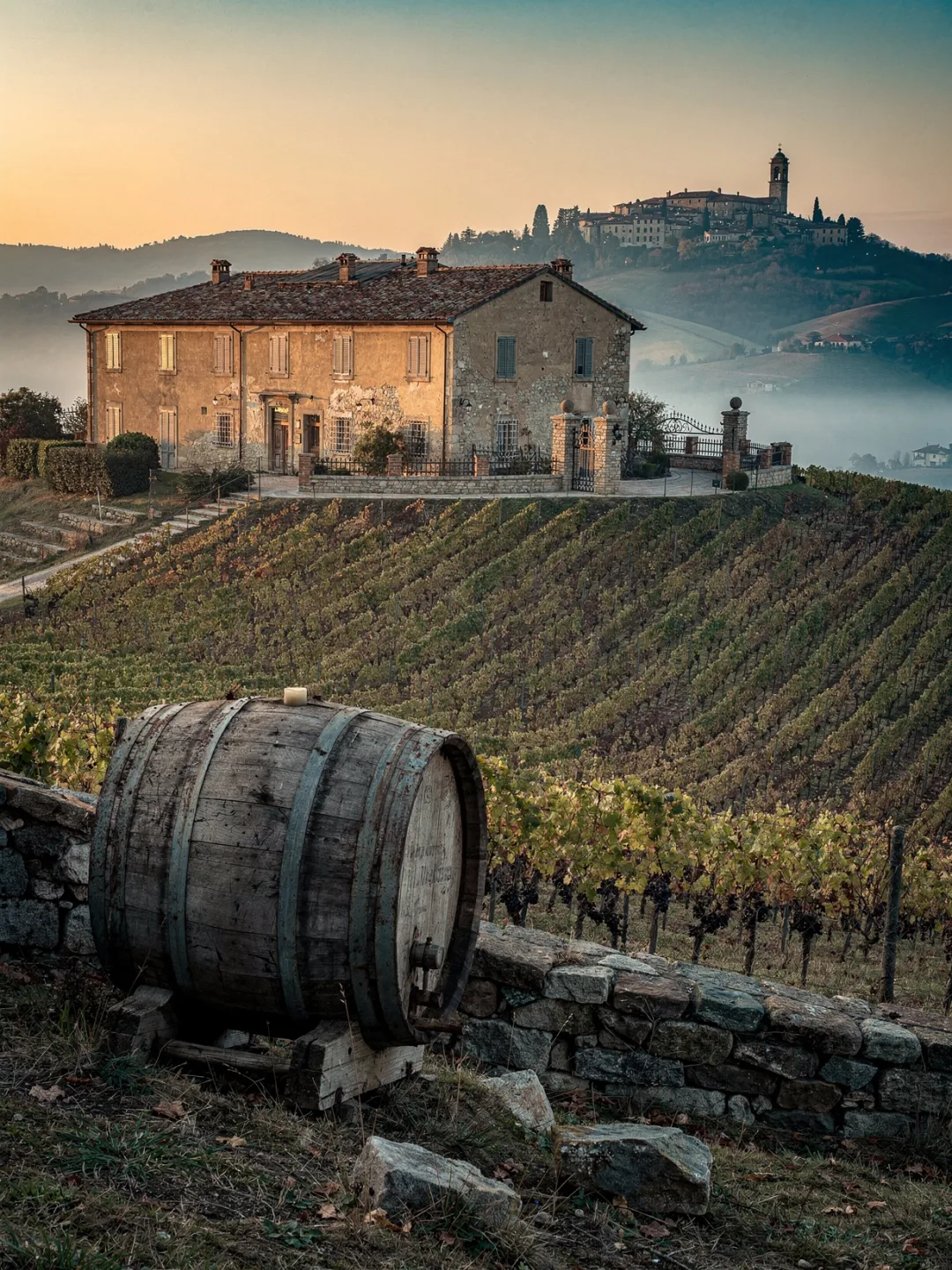
The next revolution came in 1983, and it began with a chainsaw. Elio Altare of La Morra went down into his father's cellar and sawed up the old Slavonian oak barrels, against his family's wishes. He wanted small French barriques, shorter fermentation times, a wine that could be enjoyed sooner. Other winemakers held fast to the large casks and weeks-long maceration. The dispute between modernists and traditionalists lasted over a decade and brought international fame to Barolo and Barbaresco — in the end, both sides were right, just at different times.
In 2014, UNESCO declared the vineyard landscape of Langhe-Roero and Monferrato a World Heritage Site. It was only in 2007 for Barbaresco and 2010 for Barolo that individual vineyard sites were even allowed to appear officially on labels — more than two hundred in total. That's remarkably recent. A wine that has been grown since the Middle Ages only got its map a decade and a half ago.