Histri, Rome, Venice
Region & History
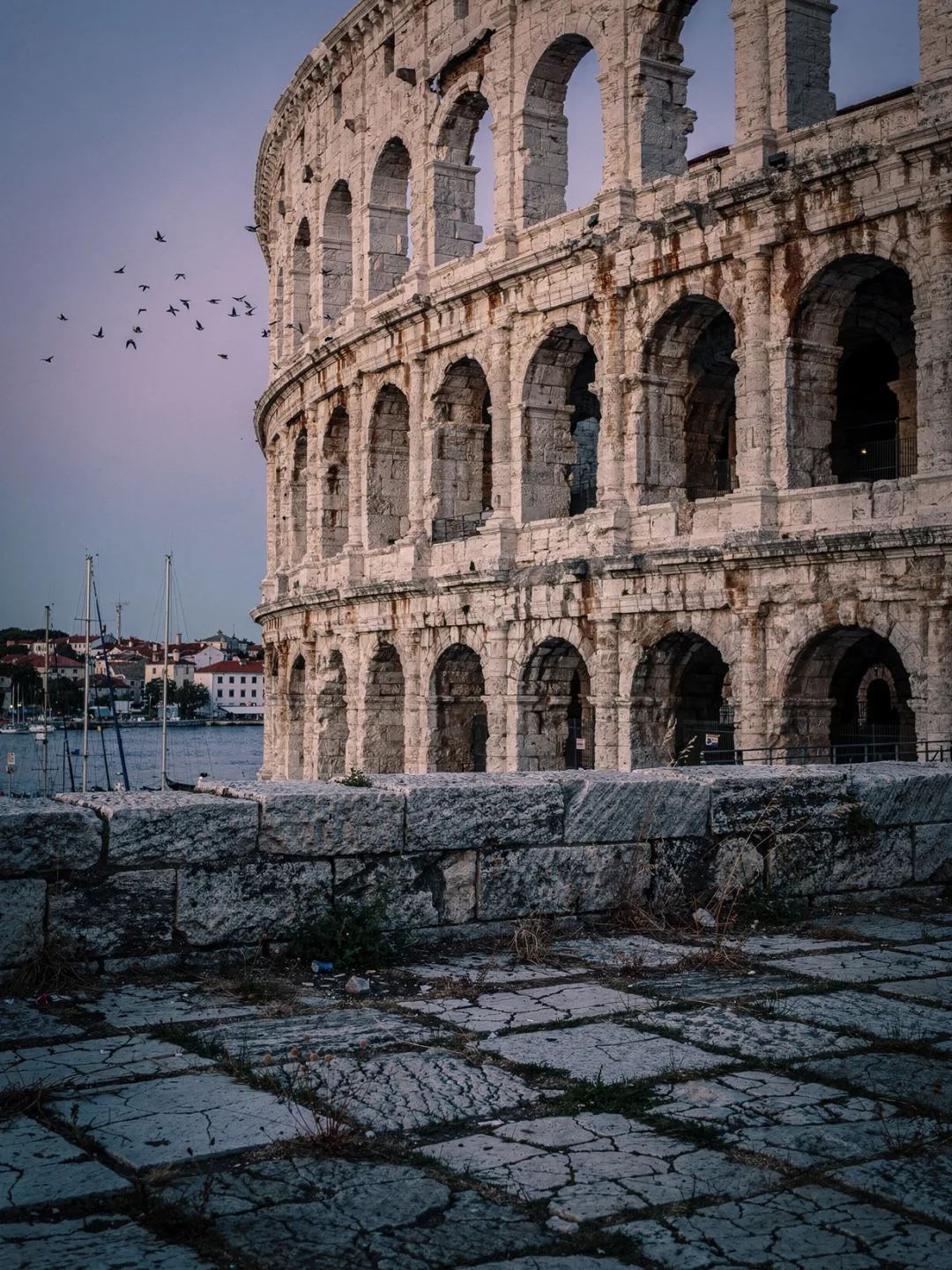
The name Istria comes from a people who no longer exist today. The Histri lived here long before Roman troops even came into view, and they resisted with their own fleet. It wasn't until 178 and 177 BC that two campaigns under the consul Manlius Vulso finally brought them to their knees. Their last stronghold, Nesactium, fell in the third assault, near the spot where Pula stands today. Rome stayed. In the first century, it built an amphitheater for around twenty thousand spectators, completed under Emperor Vespasian, and it still stands intact by the harbor today.
Five hundred years later, a different message arrived on the coast. In Poreč, Bishop Eufrazije had a church built in the sixth century: the Euphrasius Basilica. Inside, mosaics of gold and mother-of-pearl still shine today. In 1997, UNESCO added the entire episcopal complex to its World Heritage list. By then, wine had long been part of everyday life in the region. But it got its biggest boost from foreign rule.
For centuries, the coastal strip belonged to Venice, and the lagoon city traded everything that grew here. That included an aromatic white grape, Malvasia, spread across its shipping routes throughout the Mediterranean. In Istria, it became Malvazija. After Venice's fall in 1797, the peninsula changed hands several times: first Austria, then Italy from 1918, then Yugoslavia after 1945, and under the Yugoslavs, huge cooperative wineries emerged that thought in tonnes rather than in vineyard sites. A neighbor born in four different countries without ever moving house was no exception here — it was the rule.
After Croatian independence in 1991, family-run work returned. Small estates took over old parcels from the former collectives and built their own cellars, where they began working seriously with Malvazija and Teran. Success brought a dispute before the EU Court of Justice in 2017: Slovenia wanted the name Teran for itself alone. In 2020, the court ruled against Slovenia. Croatian winemakers may continue to call their wine Teran, only with the addition "Hrvatska Istra" printed in larger type beforehand — a compromise both sides still read differently to this day.