From Bacchus to Civil War
Region & History
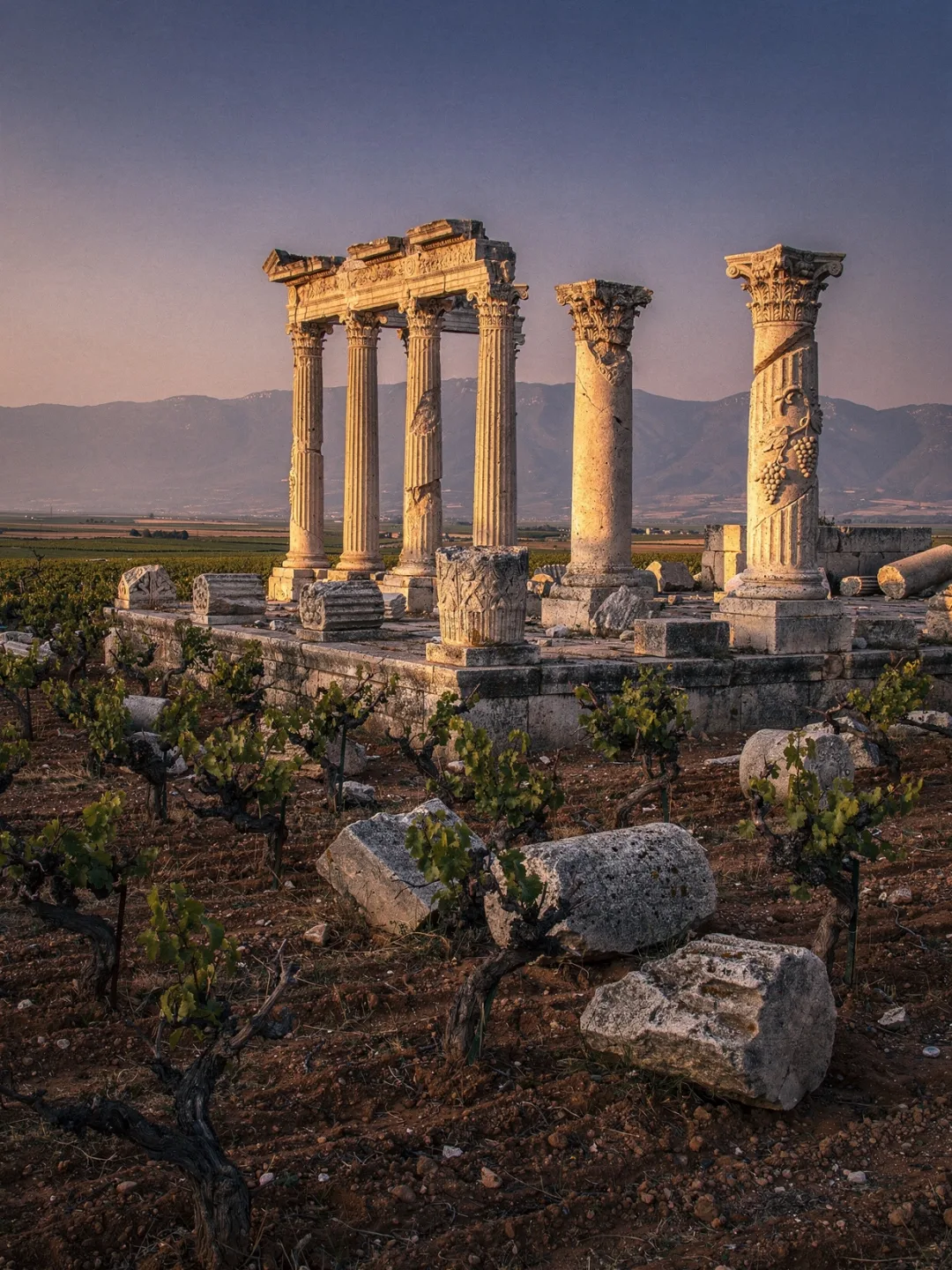
In Baalbek, right in the middle of the Bekaa Valley, stands the Temple of Bacchus. Emperor Antoninus Pius had it built around the year 150, larger than the Parthenon in Athens and to this day one of the best-preserved Roman temples anywhere. The choice of god was no coincidence. The Phoenicians had already been growing vines in this valley for centuries, long before the Romans arrived. What the builders carved into their capitals was therefore no distant legend, but the very plant growing right outside their construction site.
In 1857, French Jesuits planted the first vines of Château Ksara on twenty-five hectares between Zahle and Tanail: Cinsault, Carignan and Grenache, brought as cuttings from Algeria. It remains the oldest and largest winery in Lebanon to this day. The Vatican forced the priests to sell in 1972, ruling that monasteries should no longer run companies. Eleven years after Ksara, the French engineer François-Eugène Brun built the country's first cellar meant from the outset for open commercial sale, Domaine des Tourelles, nearby in Chtaura.
The greatest test came with the civil war from 1975 to 1990. Across the eighty hectares of vineyard belonging to Château Musar, Syrian and Israeli tanks at times faced off right in the vine rows. Only the 1976 harvest was a total loss. In 1984, two trucks from Musar took six days to cover the roughly sixty kilometers from the vineyards in the Bekaa Valley to the winery north of Beirut, because winemaker Serge Hochar had to reroute constantly around militias and checkpoints. In the end, every shipment still became wine.
After the war ended, old families returned. In 1998, brothers Sami and Ramzi Ghosn founded the Massaya winery in Tanail. Dominique Hébrard of Château Cheval Blanc and the Brunier family of the Rhône estate Vieux Télégraphe came on board as partners. Kefraya had already been established for longer: Michel de Bustros planted the first vines there in 1951 and bottled his own first wine in 1979, right in the middle of the civil war. A legally protected designation of origin like the French AOC still doesn't exist. The name Bekaa Valley remains, on the label, a geographical reference without legal protection. Even so, more than ninety percent of Lebanese wine comes from here.