Cinsault Meets Obeideh
Grape Varieties
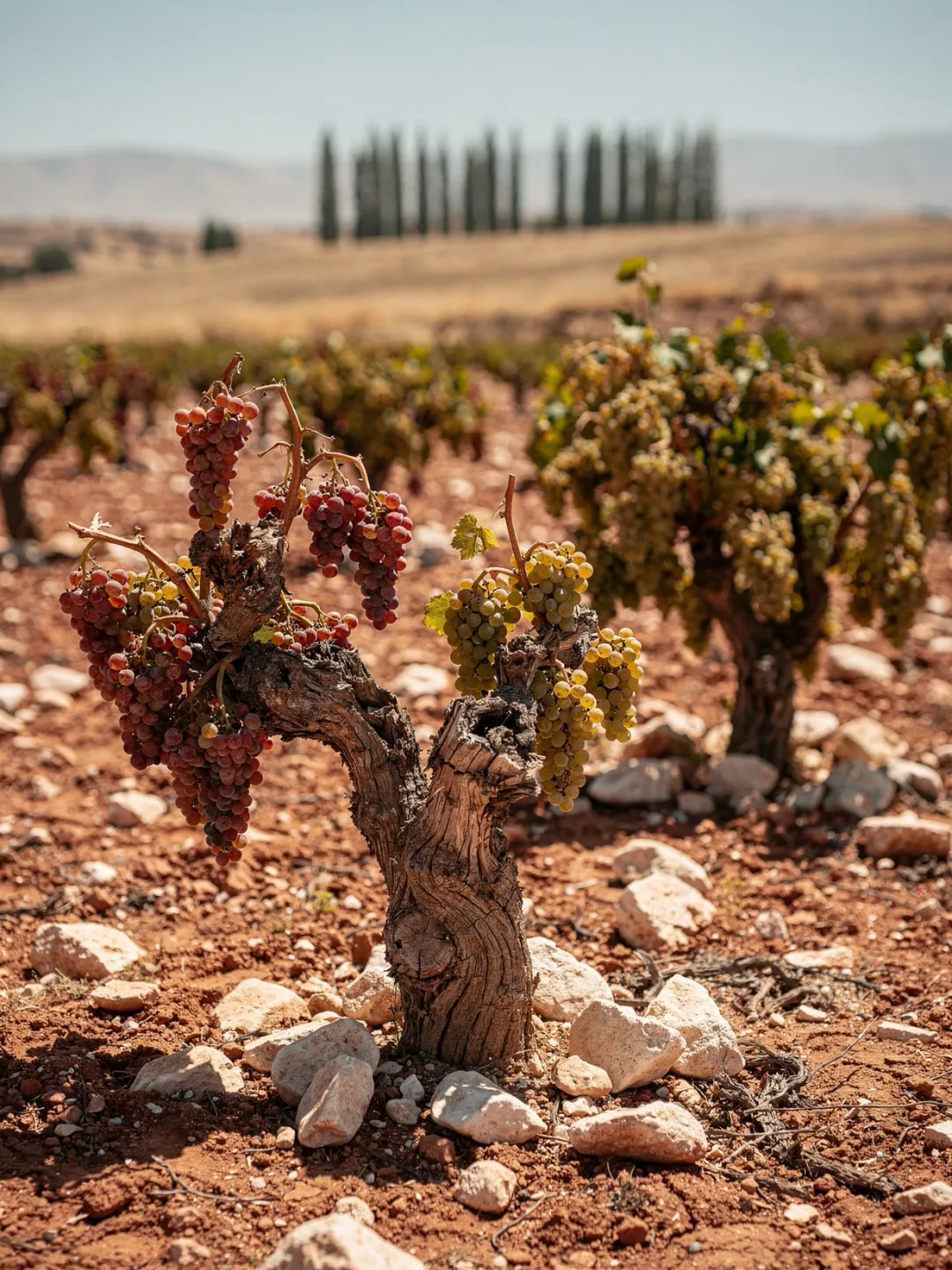
The vines standing in the Bekaa Valley today came largely from Algeria. In 1857, the Jesuits of Château Ksara brought cuttings of Cinsault, Carignan and Grenache, because the heat and dryness of their new home felt familiar. Cinsault quickly gained the upper hand. The variety has thin skin and pale red berries, tolerates heat well, and reliably delivers large yields — exactly what a nineteenth-century cellar master needed. For decades it therefore ended up mostly in simple bulk wine. It took old, unirrigated vines to turn that reputation around. Jancis Robinson named the Vieilles Vignes cuvée from Domaine des Tourelles in Chtaura her wine of the week in 2017. A later vintage earned 94 points from Decanter critic Rupert Joy.
International varieties arrived later, especially during the French Mandate period from 1920 to 1946. Cabernet Sauvignon, Merlot and Syrah joined the old trio of Cinsault, Carignan and Grenache and have since formed the backbone of most of the valley's red blends. Château Musar still blends roughly equal parts Cabernet Sauvignon, Cinsault and Carignan to this day. At Château Kefraya, by contrast, the flagship wine Comte de M carries the signature of the Rhône: Cabernet Sauvignon alongside Syrah, sometimes rounded out with a touch of Mourvèdre.
The case is entirely different for the two native white varieties. Obeideh and Merwah are considered indigenous and grow practically nowhere else in the world. For a long time it was assumed that Obeideh was related to Chardonnay and Merwah to Sémillon. A genetic study from 2024 debunked this myth: neither variety shows any detectable relationship to a known European grape. Both are true orphans of the vine world, carrying genetic material found nowhere else. In the glass, they differ clearly. Obeideh smells of citrus fruit and white blossom, while Merwah leans toward hazelnut, with a saline edge reminiscent of the nearby stony soils.
Traditionally, both varieties served the production of arak, the country's anise spirit, more than that of wine. The law stipulates that arak may only be distilled from Obeideh or Merwah. Only in recent years have wineries begun bottling them as serious white wine in their own right, rather than letting them disappear entirely into the still.