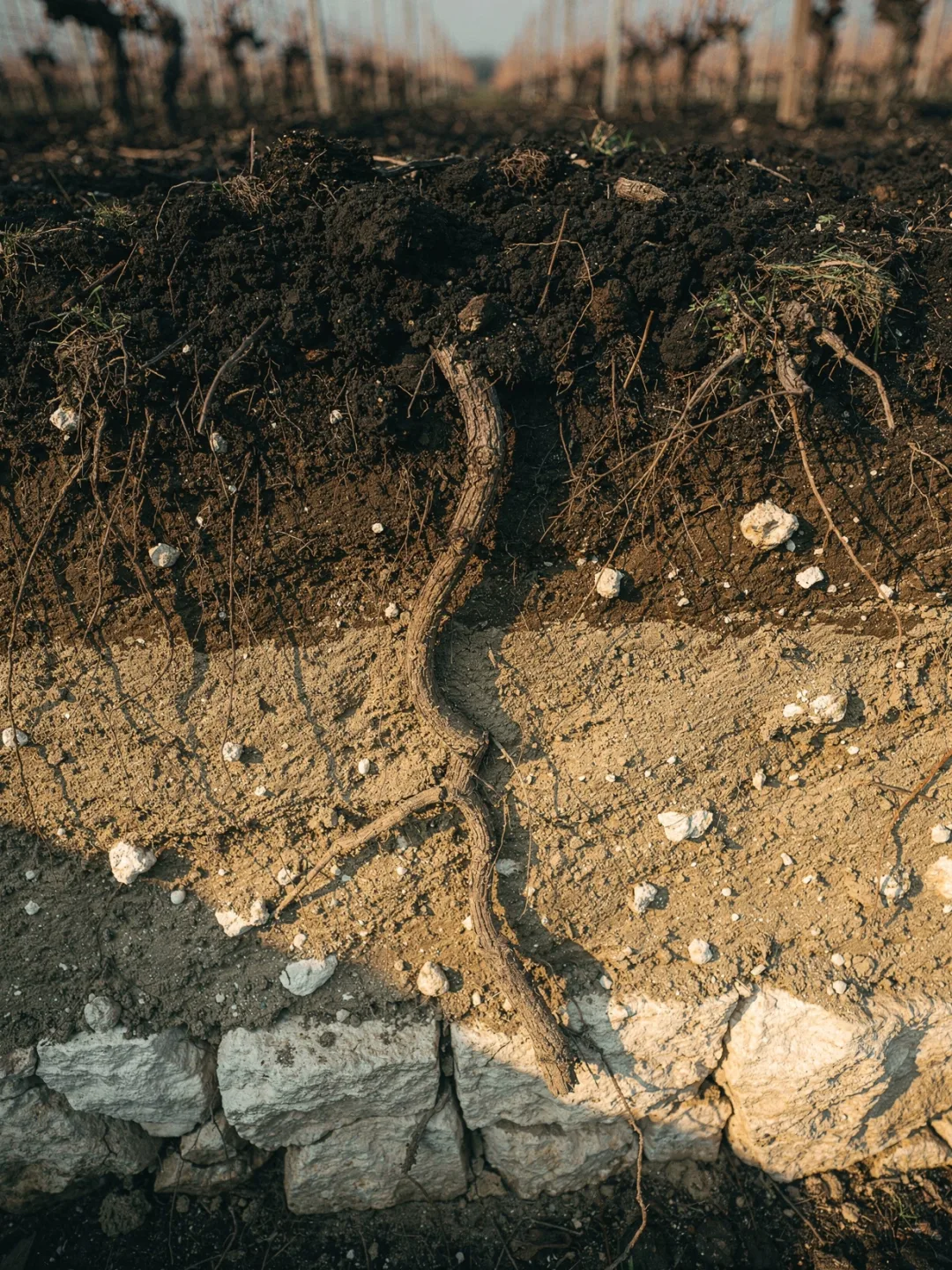
Chernozem over Limestone
Soils
Dig a hole in a vineyard near Ialoveni. The first fifty centimetres are almost black: chernozem, the famous black earth formed from loess and thousands of years of steppe grass. It's considered Moldova's most fertile soil.
Around sixty-two percent of the Codru region sits on this chernozem, in various forms ranging from calcareous to heavily leached. Where forest once stood or still stands, roughly fourteen percent of the area, you find lighter, leaner brown earths. Beneath both lies the same bedrock that gives the whole region its name from below: limestone. It's everywhere.
This very limestone was quarried from the ground for centuries to build Chișinău. The same tunnels later became the galleries of Cricova and Mileștii Mici. For the vine's roots, the same rock means something different: a reservoir. Once a root has pushed through the black earth and the lime-enriched loess layer beneath it, it finds water in the limestone that dates back to the wet spring.
Water is scarce here in summer. This reserve determines how vines fare in dry years. Vines on shallow chernozem without access to the limestone visibly suffer in August, while deep-rooted vines continue ripening evenly and produce more concentrated grapes. That's why the best white wines from Codru taste of fruit yet remain taut, because the roots had to work to reach their water. Among winemakers, this combination of chernozem and limestone is considered one of the most reliable soils for white wine in the entire country, since it stores water while still warming quickly in spring.
Dark, humus-rich black earth formed from loess, developed under thousands of years of steppe vegetation. Moldova's best-known soil.
The root: This is where the fine roots and most of the nutrients are found. In midsummer, this layer is the first to dry out.