The short answer
Tannins are astringent compounds. They're found mainly in grape skins and seeds. In the mouth, they create a dry, gripping sensation, as if everything is puckering up a little. This has nothing to do with the sweetness term dry on the label.
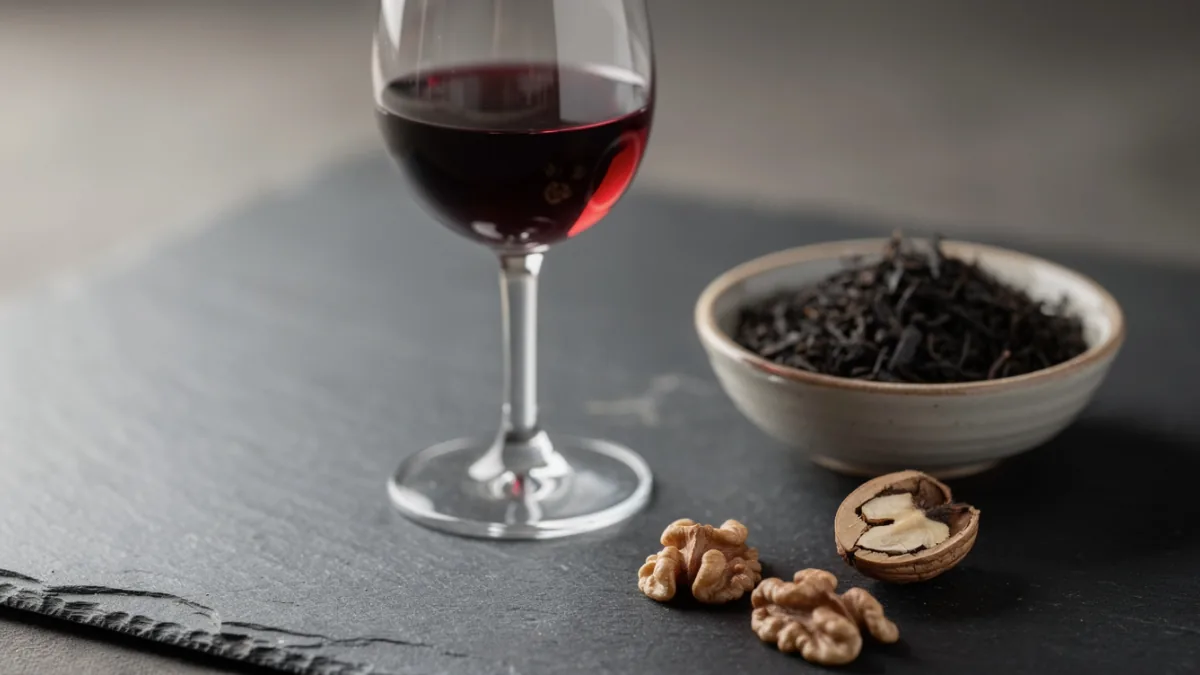
Think of strongly steeped black tea
Think of black tea steeped for a long time. That slightly puckering feeling on your tongue and gums is similar to the sensation tannins produce. Tannins are especially noticeable in red wine. Wines with extended skin contact or oak influence can also contain them. Tannins interact with components in saliva, which changes the mouthfeel.
Some people like this gripping sensation, others find it off-putting. "High tannin" is therefore first and foremost a description of style. There's no grade attached to it.
You don't taste tannins in the usual sense. Sweet, sour, salty, and bitter are perceived by your tongue. The grip of tannins, on the other hand, is more of a tactile sensation—the surface of your mouth feels rougher for a moment. That's why words like puckering, gripping, or astringent will get you further than trying to name a flavor.
Pay attention to what happens after you swallow. If the rough sensation lingers on your gums for a while, you're dealing with pronounced tannins. If it fades quickly and mostly fruit remains, you'll likely call the wine soft. Both are perfectly normal—neither says anything about the wine's quality.
How to ask for a wine that suits you
If a red wine dries out your mouth too much, say exactly that. Asking for a "non-dry wine" will likely steer you toward a sweeter bottle without solving your problem—it won't give you less tannin. "Fruity, not too bold, with a soft mouthfeel" is much more useful when asking for advice.
Also try your wine with the meal you're planning to serve. Note whether the gripping sensation becomes pleasant alongside the dish or stays too pronounced. You don't need a ten-point scale for this—a quick comparison with a bottle you already know will do.
At the shop, describe the sensation, not your verdict. Phrases like "this one puckers my mouth" or "this feels rough" are clear and specific. "Too harsh," on the other hand, is often understood as a request for more sweetness—and then you'll end up with a bottle that misses the point entirely.
Feel free to mention the meal the wine is meant to pair with, too. A wine for a barbecue and one for cheese are two different tasks, and the gripping sensation will stand out differently in each case. If you have a bottle in mind that felt too rough, use it as a reference point. "Similar fruit, but softer in the mouth" is a clear and useful request.
Dry isn't always the same as dry
On the label, dry describes the wine's sweetness level. It says nothing about mouthfeel. A white wine can be labeled dry and still glide smoothly across the tongue. A red wine can also be labeled dry and still have a bold, gripping structure. When it comes to mouthfeel, the label on the bottle simply won't help you.
The confusion arises because the same word means two different things: once as a sweetness label, and once as a sensation reminiscent of drying out. If you notice in conversation that you're talking past each other, just clarify which of the two you mean. That settles it in a single sentence.
A little experiment for home
Take two cups of black tea from the same box. Steep one briefly, and let the other steep much longer. Drink from each in turn and focus less on flavor. What matters more is the sensation on your tongue and gums. The difference between the two cups gives you a rough idea of what tannin in wine is all about.
Next, apply that to two red wines side by side, with a piece of bread on hand to reset your palate. For each one, note just two things: how pronounced the grip is on the first sip, and how long it lingers. After a few comparisons like this, you'll have developed your own personal benchmark, and you won't need to rely on someone else's description anymore.