Cuvée in Oak
Production
The region's most famous wine doesn't come from a single variety, but from a blend that has barely changed since the nineteenth century. Cabernet Sauvignon gives Negru de Purcari its structure, Saperavi from Georgia brings dark color and black fruit. A small proportion of Rara Neagră rounds out the middle. None of the three varieties alone would produce this wine.
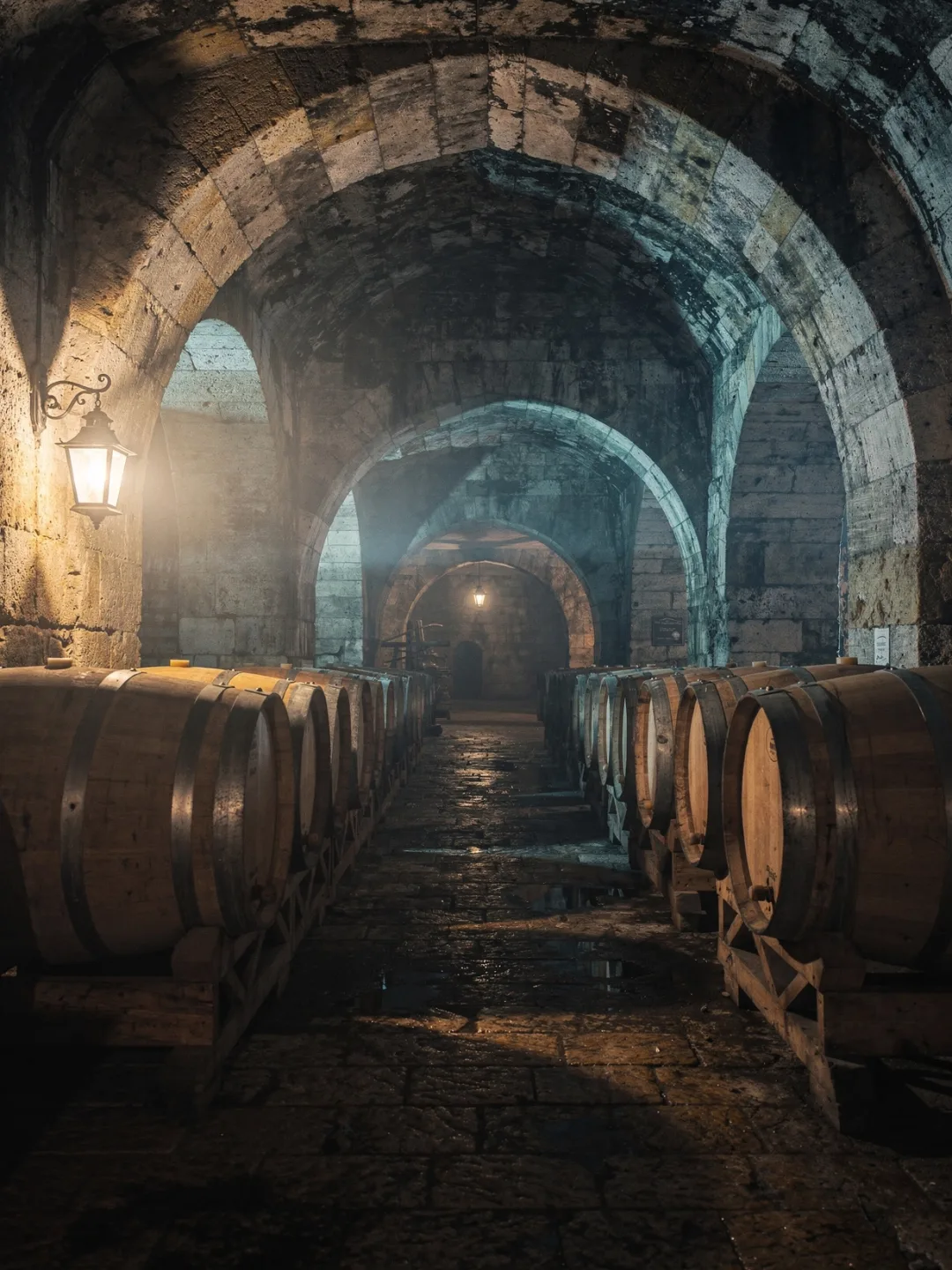
After fermentation, the cuvée ages a good eighteen months in French oak barrels. The wood contributes toasted aromas and fine tannin. The long time in barrel softens the naturally high acidity of the Rara Neagră. After that, the wine spends several more months in bottle before leaving the winery. No one here is in a hurry.
A good portion of it is still pressed where it all began: at the Purcari estate, which became Bessarabia's first official winery by decree of Tsar Nicholas I in 1827. The first cellars were built following the model of monastic complexes, cross-shaped and driven into the limestone, cool and relying on nothing but gravity. The facility was completely renovated in 2003, but the old cross-shaped cellar from the founding year still stands today and is still in use.
Anyone wanting to buy a bottle labeled Indicație Geografică Protejată Ștefan Vodă is buying more than just a name. The region's winegrowers' association sets out which varieties are permitted and how much fruit a hectare may bear, and even where exactly the grapes must grow is defined, within the four districts around Ștefan Vodă, Căușeni, Cimișlia and Basarabeasca. Besides Purcari, the smaller Vinaria Javgur also meets these rules, for example. Its wines come from the same soil.