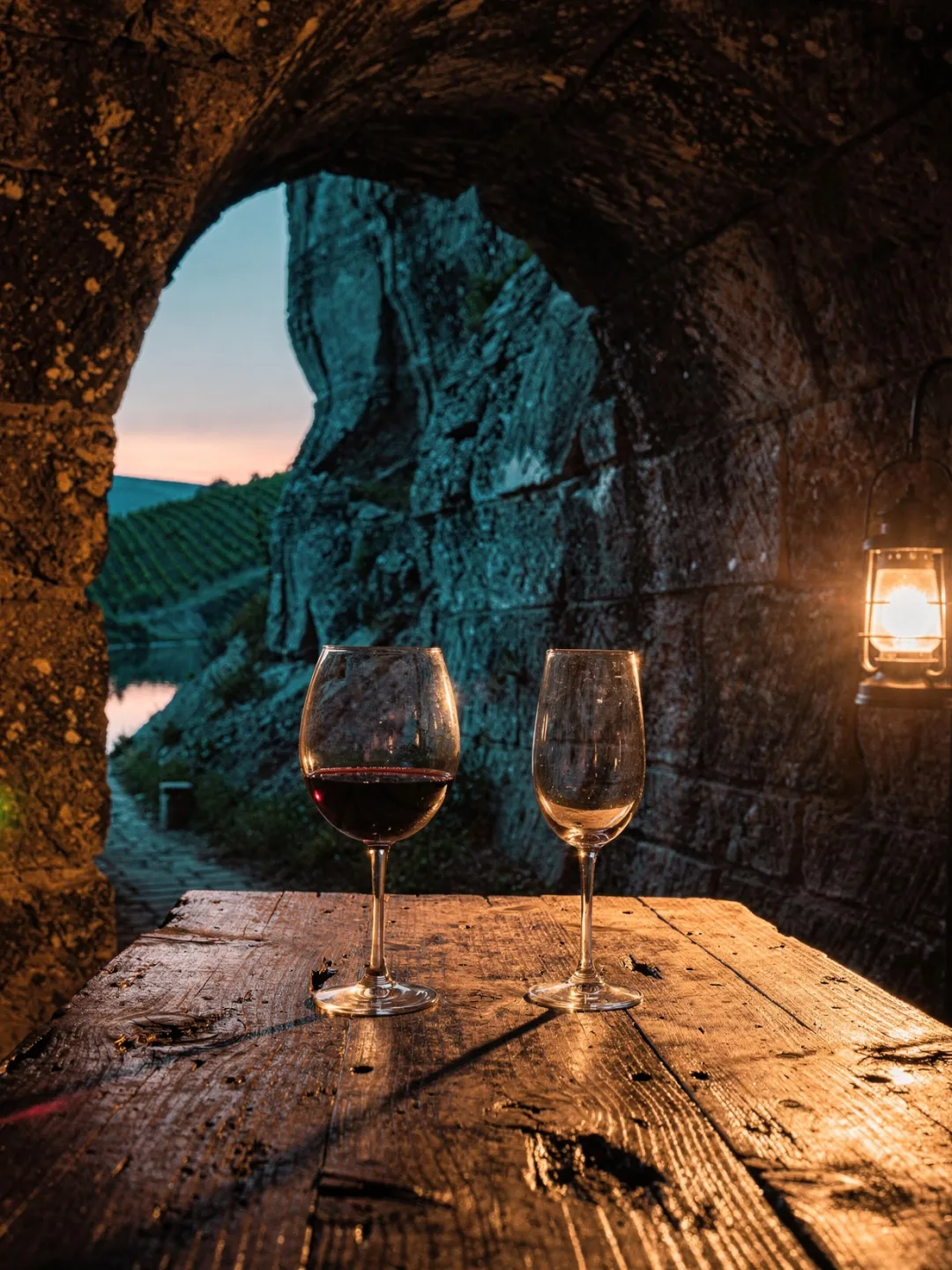
Bordeaux Glass for Purcari
Glasses
Two wines from the same area need two completely different glasses, and that's because of Rara Neagră. It's light, acid-driven and lean, almost like a bold Burgundy red, and a bulbous glass with a narrow rim helps concentrate that freshness before it dissipates into the air and the aroma escapes too quickly. Too large a glass lets its scent evaporate before it reaches the nose.
Negru de Purcari demands exactly the opposite. Cabernet Sauvignon, Saperavi and a splash of Rara Neagră together produce a dense, tannin-rich wine. After eighteen months in French oak, it often still feels closed when the bottle is opened. A large, wide-bowled glass gives it air. The tannin, that drying, velvety grip on the palate, feels rounder in it, and anyone with time will decant it into a carafe an hour beforehand.
For the region's white wines, mostly made from Fetească Albă or Sauvignon Blanc, a slender, upright glass is enough. Both varieties thrive on freshness and citrus aromas rather than richness, and a narrow bowl keeps the wine cooler for longer than a wide one would. They're served chilled. At eight to ten degrees, they're noticeably cooler than the region's red wines.
In the tasting rooms of Purcari and Javgur, two glass shapes often sit side by side on the table for exactly this reason. Anyone who tastes both wines from the same glass mostly notices how differently one and the same landscape can produce wine. Rara Neagră remains the quiet wine of Ștefan Vodă, Negru de Purcari the loud one. Both come from the same hills along the Nistru.