From Gold Rush to Rippon
Region & History
In August 1862, American Horatio Hartley and Irishman Christopher Reilly laid nearly forty kilograms of gold on the counter of the treasury in Dunedin. The rush to the Dunstan area began that very same day. Within a few months, tens of thousands of men were panning the gravel of the Clutha and Kawarau rivers for gold. Tent camps sprang up in the wilderness, camps that would later become Cromwell, Clyde, and Alexandra. Wine was the last thing on anyone's mind.
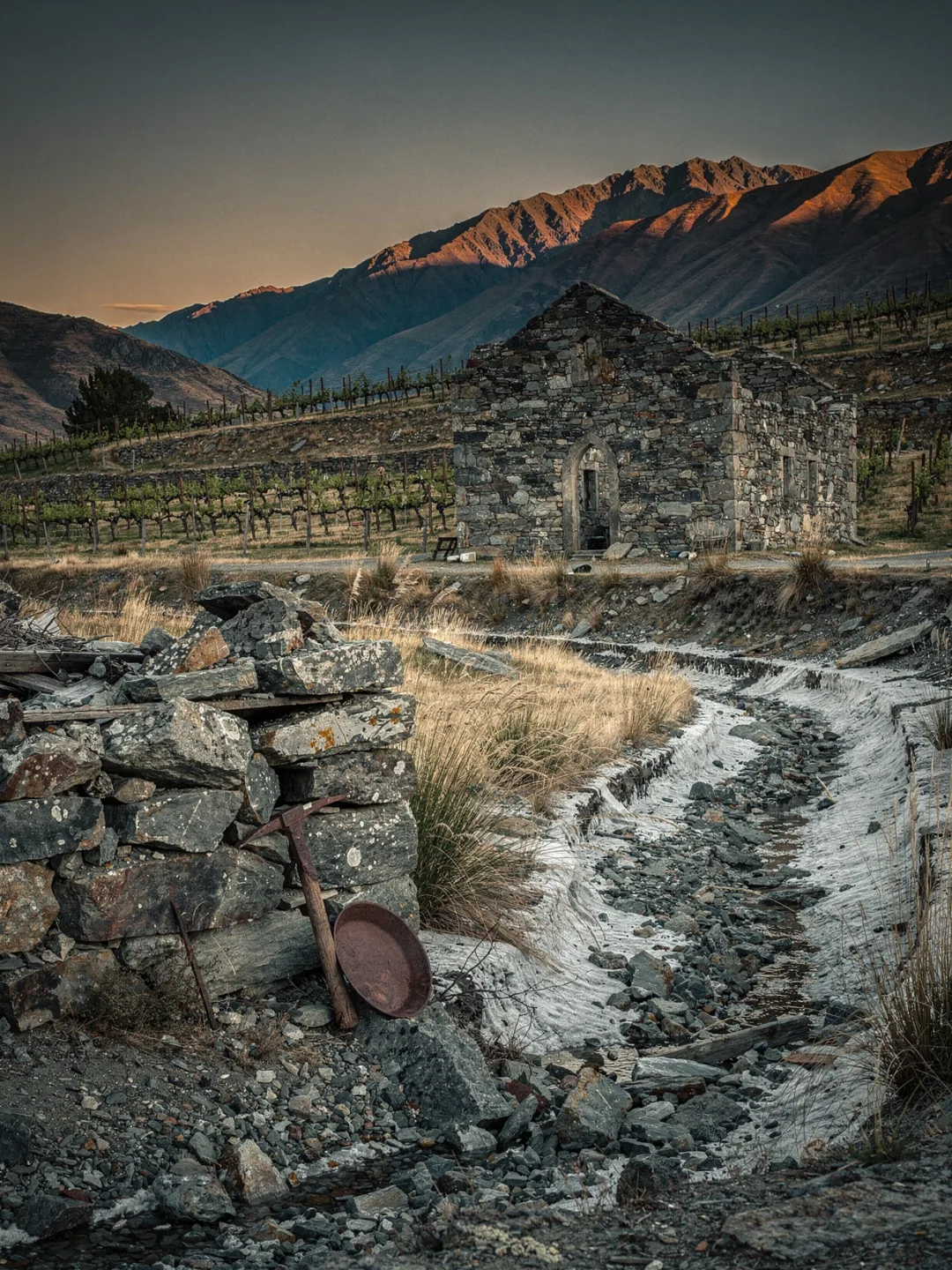
A Frenchman had other ideas, though. Jean Désiré Féraud arrived in 1863, right in the thick of the gold rush, and leased forty hectares of land near Clyde. Just a year later he planted the region's first vines and named his property Monte Christo. By 1872 the land was yielding enough that he could build himself a proper winery out of schist, which still stands today and is considered the oldest on the South Island. His wine even won a gold medal in Sydney in 1881.
The success didn't last. As the gold ran out, most of the men moved on, and the market for wine went with them. Sheep farming and orchards brought reliable income; vines didn't. Even when the government's viticultural expert Romeo Bragato toured the area in the late nineteenth century and pronounced its prospects good, nothing changed. For nearly a hundred years, no wine worthy of the name grew here.
The rediscovery came by way of a warship, of all things. Rolfe Mills served on a submarine during the Second World War and saw the schist terraces of Portugal's Douro Valley, which reminded him of the slopes above his family's land on Lake Wanaka. In 1975, he and his wife Lois planted Rippon's first experimental vines, thirty varieties at once, from Riesling to Gewürztraminer. Six years later, journalist Alan Brady staked out his own test plot in Gibbston. Back in Wellington, people thought both men were a little mad: too cold, too far south, they said.
They were proven right. In 1985, Ann Pinckney sold the first commercial Central Otago wine since the 1860s. Two years later, Gibbston Valley Wines released its first Pinot Noir, and in 1989 Rippon followed with its own. What had been a few scattered hectares grew into a region with more than two thousand hectares of vineyard today. Since 2018, New Zealand's trademark office IPONZ has recognized Central Otago as its own geographical indication, managed by the Central Otago Winegrowers Association. Unlike in the EU, there's no formal appellation regulation behind it, but rather a dedicated law from 2006. The idea, though, is exactly the same: what's on the label has to be true.