From Missionaries to Gravel
Region & History
Long before any European laid eyes on the bay, Māori called it Te Matau-a-Māui, the fish hook of the demigod Māui, with which legend says he pulled the North Island up from the sea. Cape Kidnappers is that hook. The Ngāti Kahungunu tribe has lived here since the sixteenth century. James Cook sailed past in 1769, and because his crew abducted a Tahitian boy from the shore, the headland still carries an English name commemorating that very incident. The boy was later freed.
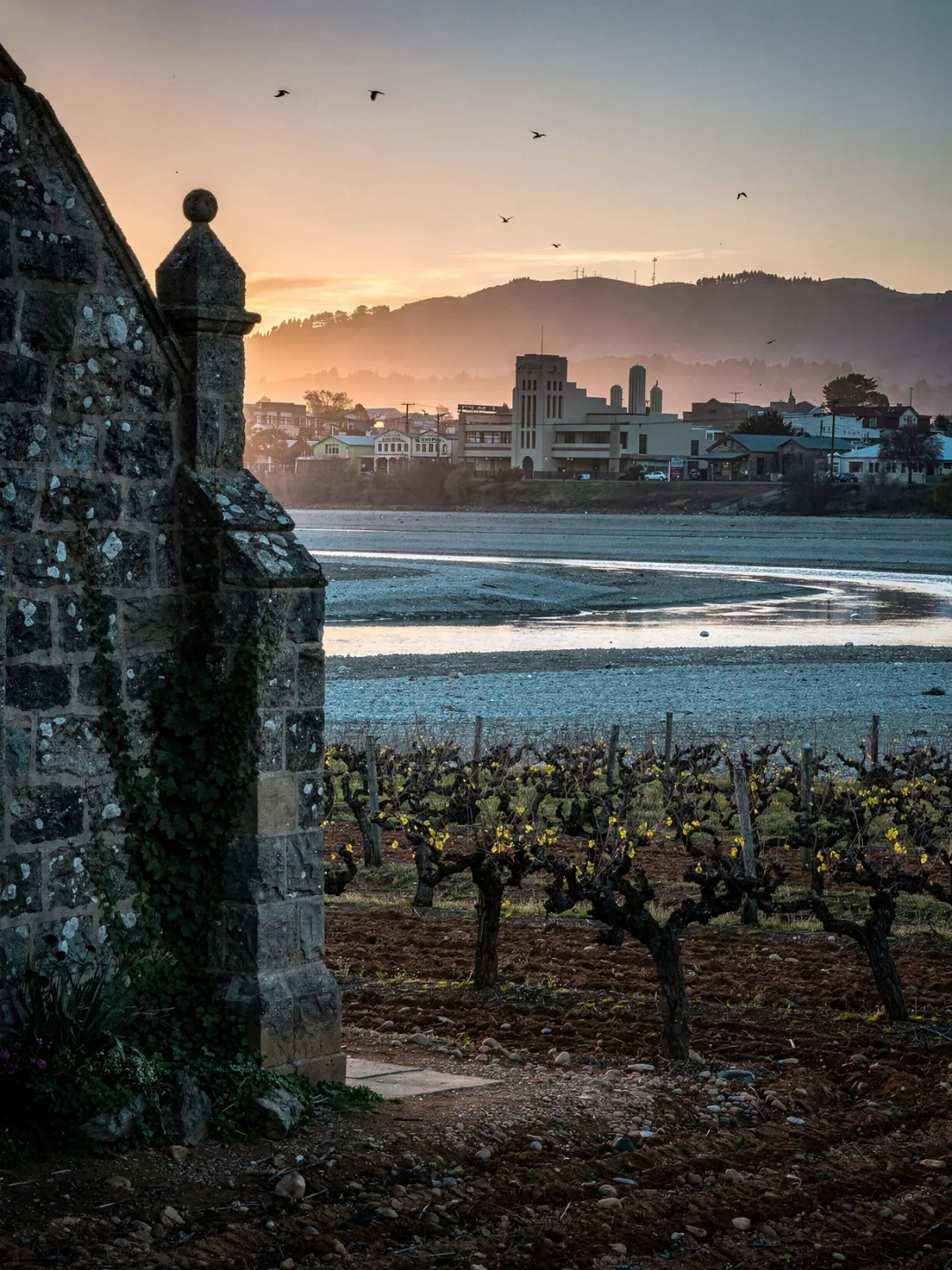
Wine didn't arrive until eighty years later, with French Marist missionaries. In 1851 they planted the first vines near Pakowhai, purely to make sacramental wine for their own congregation, and in doing so unwittingly founded Mission Estate, still New Zealand's oldest continuously operating winery today. The property later moved to the less flood-prone Meeanee. In 1909, the main building was even dismantled into eleven pieces and hauled nearly five kilometers to its current site in Taradale, all to escape the recurring floods of the Ngaruroro.
In 1931, a magnitude 7.8 earthquake struck the region. Napier lay in ruins, the stone chapel at the mission collapsed, and two priests along with seven students died beneath the rubble. Rebuilding went ahead regardless. Napier rose again as an Art Deco city, and the vineyards around it simply carried on, as if nothing had happened.
Shortly before, in 1892, Bernard Chambers had planted his first vines on the north-facing slopes of the Havelock Hills, the seed of Te Mata Estate, which has crafted wine on that same land ever since. By the early 1920s, three more estates had joined it. Hawke's Bay has counted among New Zealand's oldest wine regions ever since.
A barren stretch of gravel northwest of Hastings remained untouched for a long time, too stony for farming, and for decades used only as a shooting range, dump, and storage yard. Only in 1981 did the first vines go into the ground there. The wasteland became Gimblett Gravels. Since February 26, 2018, Hawke's Bay has also been registered as a geographical indication with New Zealand's IPONZ, a late arrival compared with Europe.