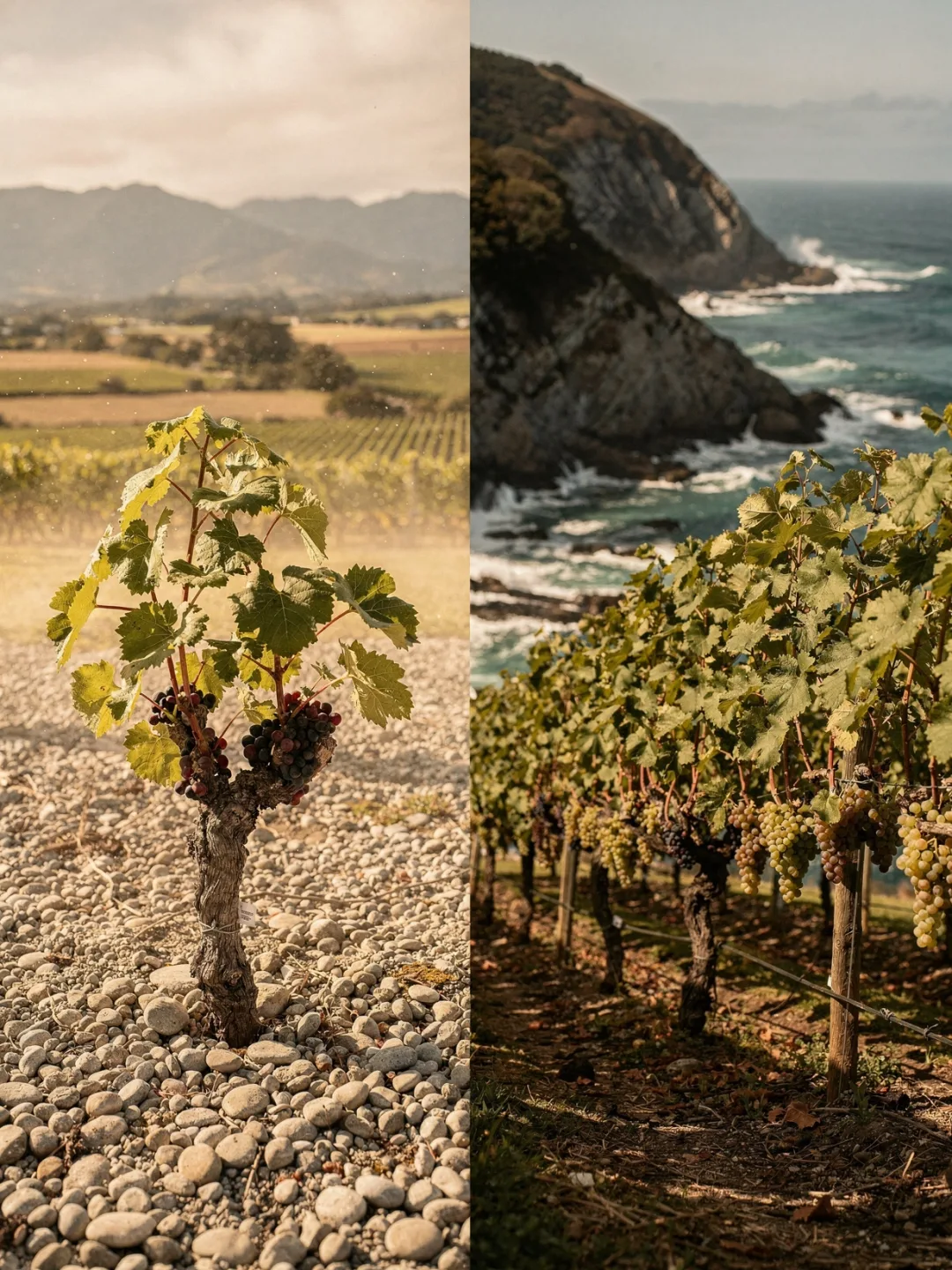
Cabernet, Merlot, Syrah
Grape Varieties
Ask about Hawke's Bay's signature grape, and a surprising number comes up first: Chardonnay covers more land than any other variety, nearly twenty-three percent of all vines in the region. Even so, the region's reputation rests on other grapes.
Cabernet Sauvignon doesn't ripen fully every year here. That's why most estates blend it with Merlot and Cabernet Franc, sometimes with a splash of Malbec, following the Bordeaux model, only under a New Zealand name for the finished cuvée. Merlot brings flesh. Cabernet Franc brings herbal notes and freshness. The result is simply called a Bordeaux blend here, and it's exactly what connoisseurs seek this region out for first.
Syrah arrived later and rose in esteem faster than any other red variety, only really planted widely from the 1990s onward. In the Gimblett Gravels it shows a cooler, spicier face than Australian Shiraz made from the same grape. It stays leaner. The alcohol comes in lower, and the peppery note survives, one that usually just cooks away in hotter climates.
Chardonnay, meanwhile, is the region's oldest proven success, grown since the 1990s in places like Te Awanga right on the coast, where the sea breeze noticeably slows the ripening of the grapes. The wine stays taut. It stays citrusy, quite unlike the broader, warmer Chardonnay from further inland.
Sauvignon Blanc and Pinot Gris fill out the rest of the white-grape plantings, almost a third combined, usually intended as easy-drinking everyday wine and rarely made with great ambition. They reveal a second face of the region. The large, sun-drenched bulk sits alongside the small, carefully blended pinnacle of Cabernet, Merlot, and Syrah that collectors know Hawke's Bay for in the first place.