A Red Dão
Tasting
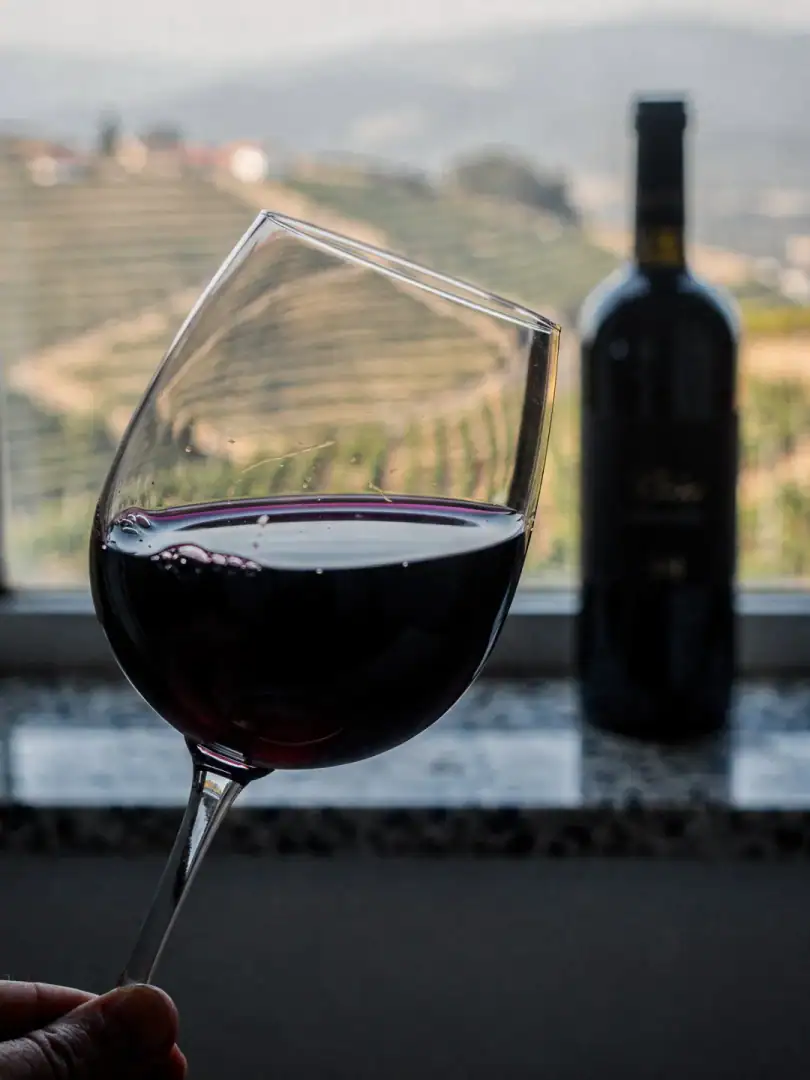
Hold a glass of red Dão against something white and tilt it slightly. The color runs darker than you'd expect from an elegant wine. A young vintage looks almost blackish-violet, because the small berries of Touriga Nacional give off so much pigment. The rim shifts with age, slowly turning brick-red in the cellar.
Smell twice, once while the glass is still and once after swirling. In the still glass, the scent of violets comes first, something hardly any other red grape shows so clearly, along with dark berries like blackberry and black cherry. After swirling, herbal and slightly resinous notes join in, sometimes a touch of mint — aromas that were previously too heavy to rise on their own.
In the mouth, it's best to separate two sensations. The acidity announces itself along the sides of the tongue and keeps the wine fresh despite its density, while the tannin feels like a velvety but firm grip on the gums. Both come from the lean granite, tighter than from richer soil, but rarely harsh.
After that, it's worth comparing an Encruzado, ideally from the same vintage, because where the red smells of violets and berries, the white shows citrus peel and white blossom. There's also a saline, almost stony note that many describe as typical of granite-grown wine. With a few years in the glass, hazelnut joins in, sometimes a touch of smoke from the barrel too.
Finally, count the finish, the time the flavor lingers after you swallow. With a simple Dão it's a few seconds; with a well-made Garrafeira, well over twenty. This length can't be forced in the cellar — it comes from ripe, healthy grapes. This is exactly where cheap and expensive Dão really differ in the end.