Cooperative to Barrique
Winemaking
The small, thick-skinned berries of Touriga Nacional put growers in the Dão on a tightrope. Too short on the skins, and the wine stays thin; too long, and the already abundant tannin turns hard and dry. Most producers today leave the must on the skins for seven to fourteen days, depending on how much structure the vintage already brings.
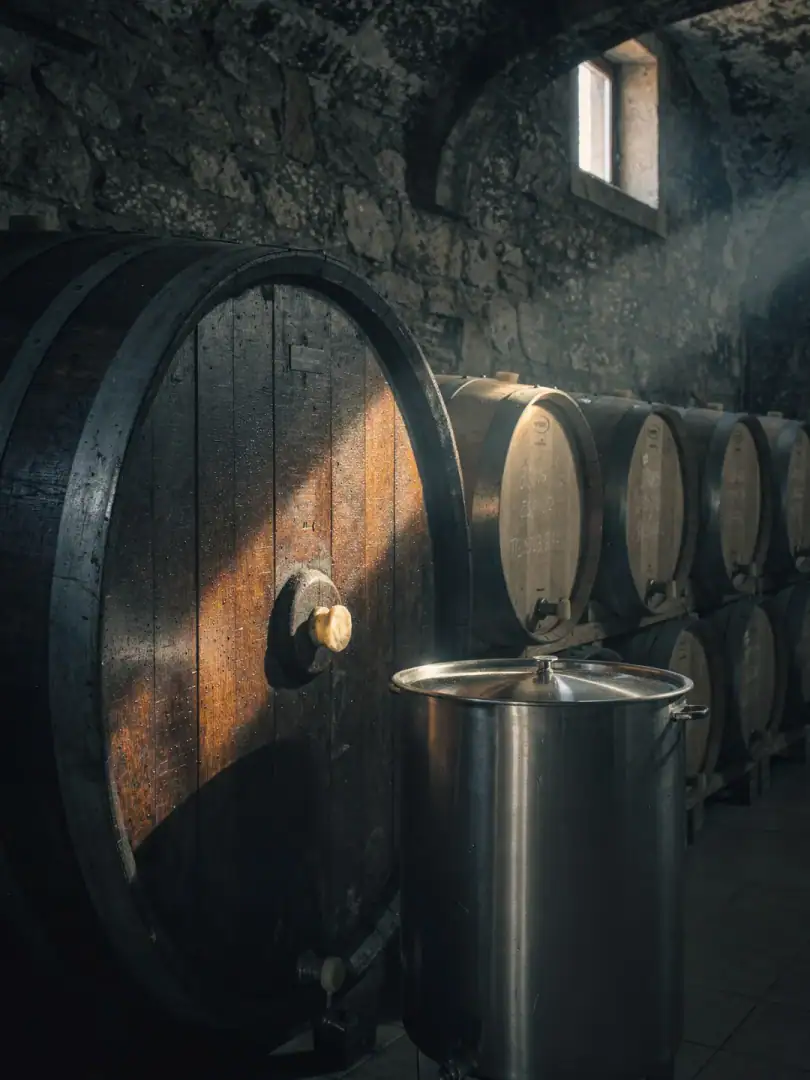
After that, the barrel decides the style. Traditionally, Dão aged in large old wooden casks that give off hardly any aroma but let oxygen through slowly — similar to the botti of Tuscany. Since the region opened up in the 1980s, estates like Quinta da Pellada have also started using small barriques, meant to give the wines more structure. Depending on taste, they also contribute toasty aromas.
At the same time, cellar technology at the cooperatives themselves has changed, as shown by the Adega de Penalva in Penalva do Castelo, which now ferments using temperature-controlled stainless steel. Only afterward does it put part of the wine into wood. Such a method would have been technically impossible during the era of mandatory delivery, since no one invested in quality that was paid for by weight anyway.
The law draws clear lines between the tiers. A basic red Dão needs at least twelve and a half percent alcohol; a Garrafeira needs at least thirteen percent plus two years in barrel. For white wine the thresholds are eleven point five and twelve percent, with at least six months in wood for the Garrafeira tier.
Yield is also capped, and it differs by color. Red grapes may yield no more than seventy hectoliters per hectare, whites up to eighty — an echo of the granite soils, which rarely give much more anyway. Anyone who harvests more forfeits the right to call the wine Dão, no matter how good it tastes.