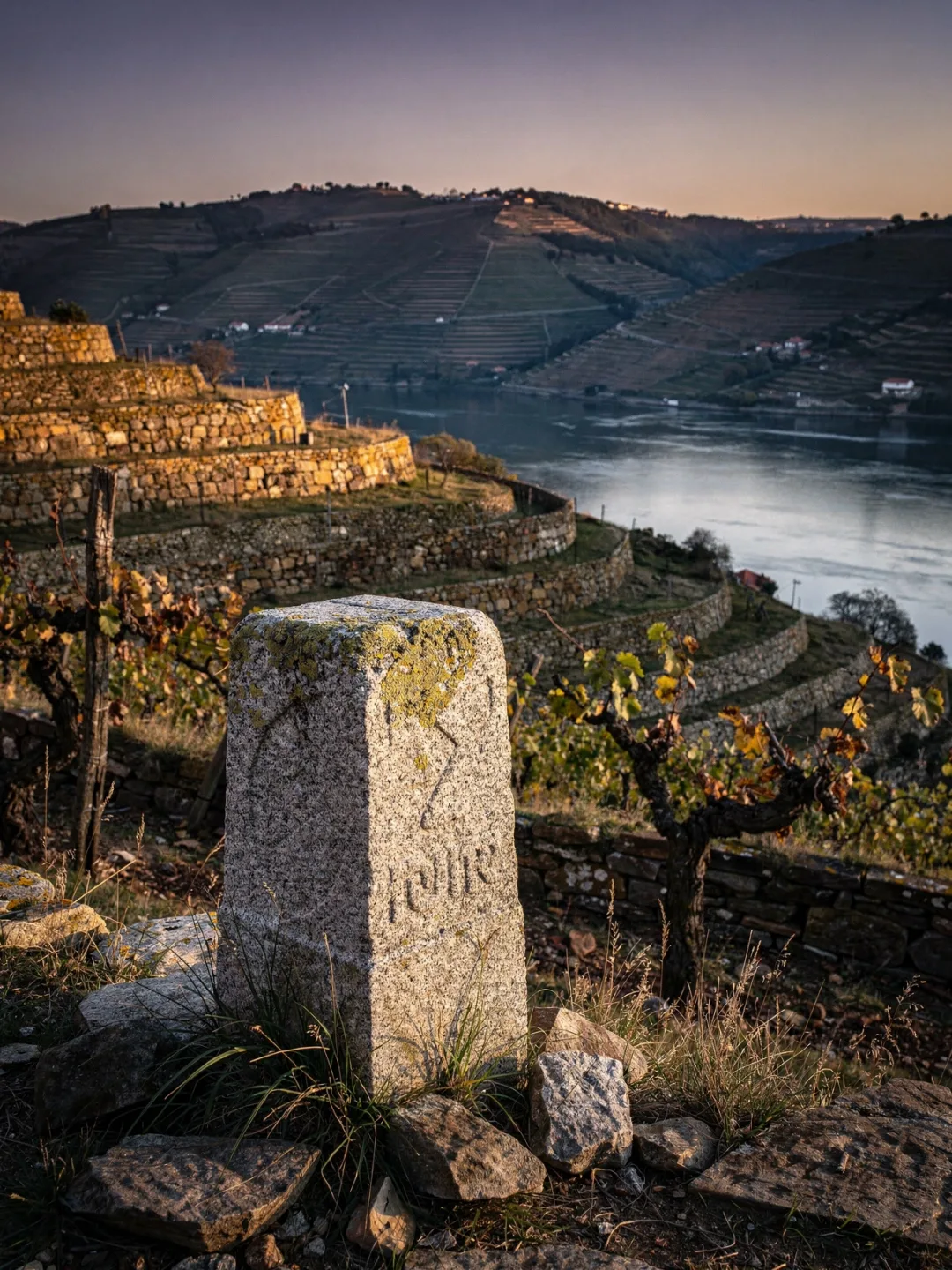
Boundary stones since 1756
Region & History
Tradition dates the beginning to 1678. Two English merchants are said to have tasted a wine at the monastery in Lamego, above the river, that was sweeter and more powerful than anything they knew — the abbot had added brandy during fermentation. Whether the story holds up in every detail, no one really knows today. What's certain is this: in 1703, the Methuen Treaty between England and Portugal cut the duty on Portuguese wine to a third of what English merchants paid for French wine. From then on, money flowed from London into the Douro Valley, and with the money came a problem.
Too much demand paired with too little control ruins any market. Merchants stretched the wine with elderberries for more color and with cheap grape must from other regions, and complaints from London piled up. Sebastião José de Carvalho e Melo, later the Marquês de Pombal, therefore founded the Companhia Geral da Agricultura das Vinhas do Alto Douro on 10 September 1756. It defined exactly which area was allowed to supply Vinho do Porto. It fixed prices and banned adulteration. Granite pillars, the marcos pombalinos, marked the new boundary directly on the ground. Some still stand in their original spots today.
This created the world's oldest regulated and demarcated wine region, a good hundred and thirty years before the French appellation system. Anyone planting outside the marked area was barred from selling their wine as Douro wine — no matter how good it tasted. This idea was new in Europe: origin as a mark of quality, not merely a grape variety or winemaker's name. To this day, the demarcated area covers roughly two hundred and fifty thousand hectares, spread across fourteen counties along the river.
A century later came phylloxera. It reached the valley in 1868 and crippled a large part of the vineyards within a few years; by the mid-1880s, the harvest had fallen to less than half its former level. Around 1890, Joaquim Pinheiro de Azevedo Leite Pereira introduced American rootstocks and grafted Portuguese varieties onto them. Only then did recovery begin. Many owners were ruined by that point. Anyone hiking through the mountains today will still find abandoned, overgrown stone walls scattered among the working terraces. They're called mortórios, silent remnants of those years that were never replanted.
The state took control in several stages. In 1932, the Casa do Douro was formed to represent growers' interests; a year later came the Instituto do Vinho do Porto, which oversaw authenticity and quality. In 2003, both bodies merged into today's Instituto dos Vinhos do Douro e do Porto, known as the IVDP, which has since also regulated the region's unfortified still Douro wines. On 14 December 2001, UNESCO declared the Alto Douro Vinhateiro, some twenty-four thousand hectares of schist terraces, a World Heritage Site — a landscape that makes two thousand years of winemaking visible.