Trade Across the Sea
Region & History
When Portuguese sailors discovered the island around 1420, it was largely covered in dense laurel forest. Madeira simply means wood in Portuguese. Henry the Navigator had this forest cleared and planted sugarcane and vines, which he had specially brought from the Greek island of Crete: Malvasia. As early as 1455, the Venetian navigator Alvise Cadamosto, on visiting the island, praised this one grape above all others.
A century later, a royal wedding opened up the market that every Madeira drinker still knows today. In 1662, Catherine of Braganza married the English King Charles II, and Madeira wine was granted a special privilege as part of the deal. Unlike every other European good, it could be shipped directly to the English colonies without first passing through a British port. American colonists could sail straight to the island. Madeira became the drink of the Founding Fathers. According to tradition, the signers of the American Declaration of Independence toasted with this very wine in 1776, and George Washington ordered it by the barrel for his officers.
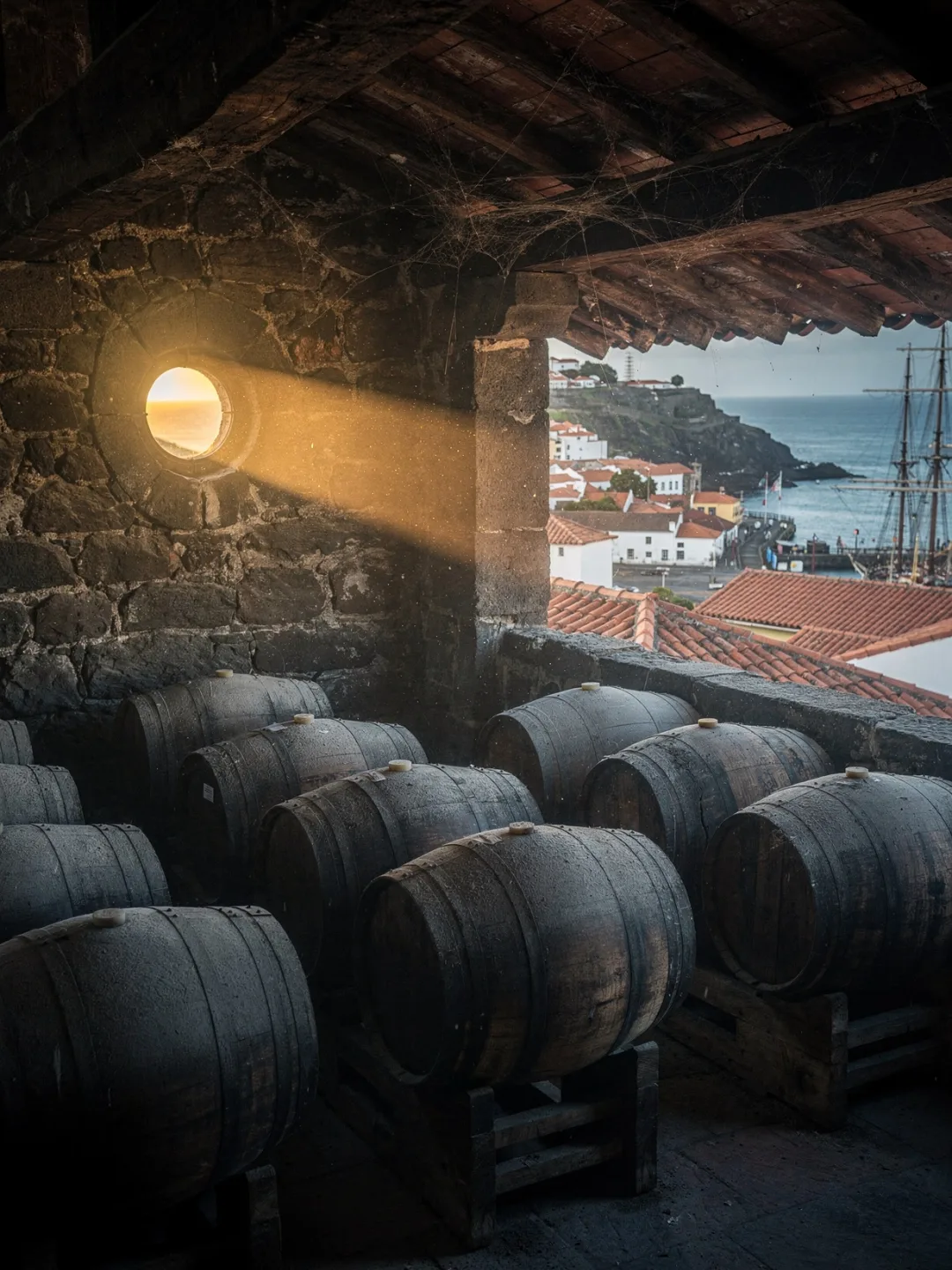
The wine's true character, however, emerged largely by accident, out on the high seas. Barrels sent as ballast on long trading voyages to India or Brazil sometimes came back unsold. After weeks in tropical heat, they tasted better than before. Shipowners then began sending wine barrels on such round trips deliberately, a practice called vinho da roda, literally 'round-trip wine', until the expense became too great. In 1794, the Funchal physician Pantaleão Fernandes found a faster solution: he had the wine artificially brought to travel temperature in heated chambers, a technique called Estufagem, still in use today.
The trade's golden age ended abruptly. Starting in 1852, the powdery mildew Oidium tuckeri destroyed around ninety percent of the island's vines within just a few years. No sooner had the winemakers recovered than phylloxera arrived in the 1870s. Of the seventy British trading houses active in 1850, only a handful remained. During the rebuilding, farmers turned to a robust, high-yielding grape called Tinta Negra, which has covered the majority of the vineyards ever since. Today, the regulatory body IVBAM, the Institute of Wine, Embroidery and Handicrafts of Madeira, oversees origin and quality.