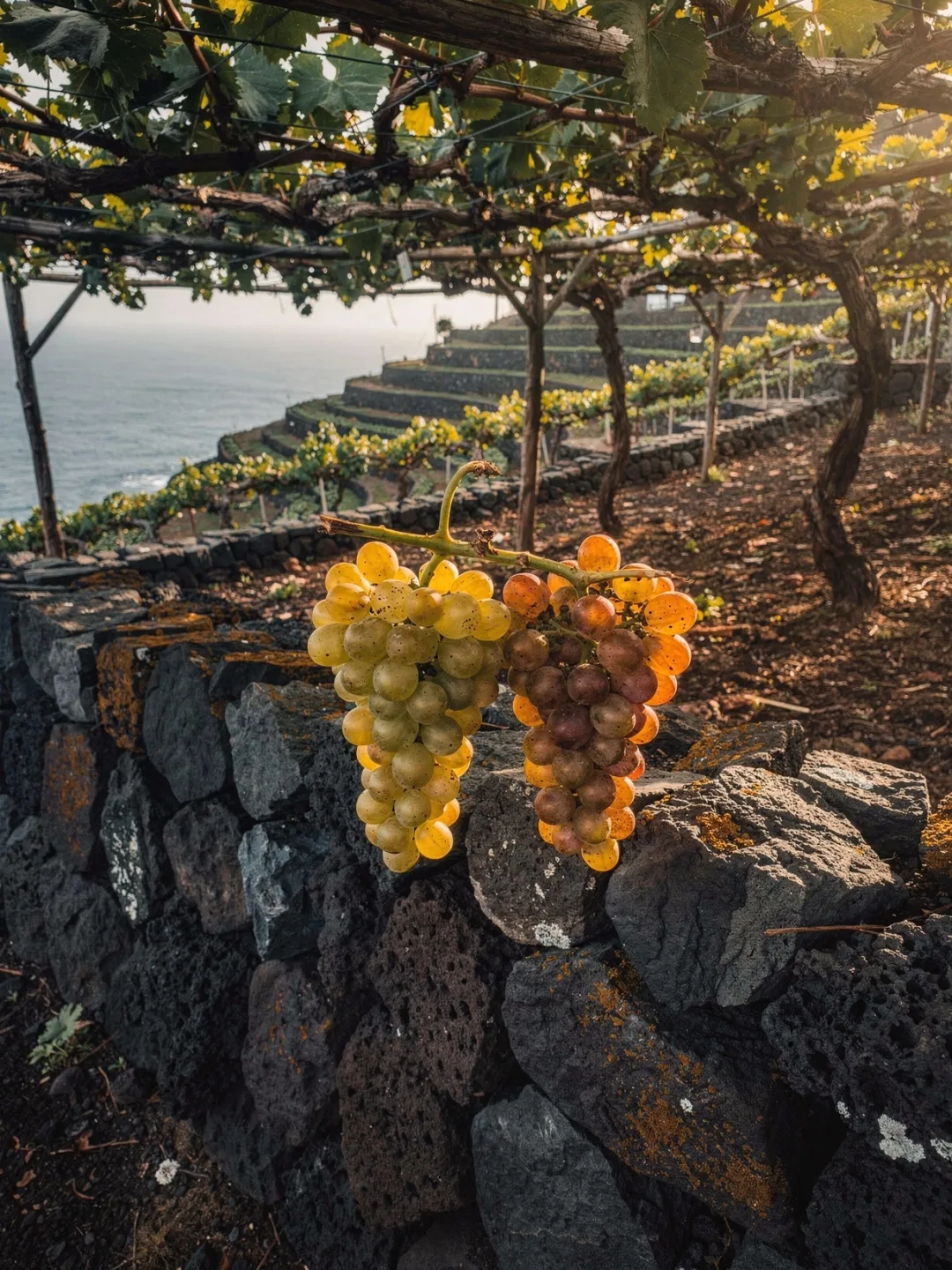
Tinta Negra & Noble Varieties
Grape Varieties
A single grape now covers almost the entire island: Tinta Negra. It grows on around ninety percent of the vineyards. It provides the raw material for the simple three-year wines as well as, given enough time in the barrel, for decent reserves. After the phylloxera disaster, winemakers planted it on a massive scale. It was robust and thrived almost everywhere—a substitute that became the mainstay.
Four other varieties are considered noble. Each represents its own level of sweetness. Sercial produces the driest wine on the island, with an acidity that almost cuts in the mouth, while Verdelho sits a notch sweeter, off-dry with a smoky undertone. Boal, often spelled Bual in international trade, tastes noticeably sweeter still, with notes of dried figs. Malvasia, called Malmsey in England, is the sweetest of all: dark, dense, with caramel and raisins. For a bottle to bear one of these four names, EU law has required since 1993 that at least eighty-five percent of the grapes come from that exact variety.
How sweet a Madeira turns out is decided not by the sugar in the cellar, but by the timing of fortification—that is, the addition of grape spirit. If fermentation is stopped early, a lot of unfermented sugar remains, and the result is Malvasia; if the yeasts are allowed to work longer, they consume almost all the sugar, leaving Sercial. The grape itself mainly sets the direction. Sercial ripens late, high up on cool slopes, while Malvasia grows in the warmest, lowest sites along the south coast.
Two other names appear only rarely now. Terrantez and Bastardo were considered distinct styles in the nineteenth century. Oidium and phylloxera, however, nearly wiped them out entirely, and today they grow only on a few small plots. Whoever finds a bottle holds a piece of the island's past in their hands. It once grew almost everywhere, before disaster struck.