Shaped by the River
Region & History
The river gave the region its second name, and for a long time it was the only one. Ribatejo literally means bank of the Tejo. Vines have grown on the wide plains on both sides of the river since antiquity, and Roman records already mention wine from this area. Chronicles from the fourteenth and fifteenth centuries tell of Portuguese kings who reportedly valued the local wine so highly that they temporarily banned the import of wine from other regions. No one knows for certain today whether every detail of this story is true. Still, the Tejo was clearly prized early on.
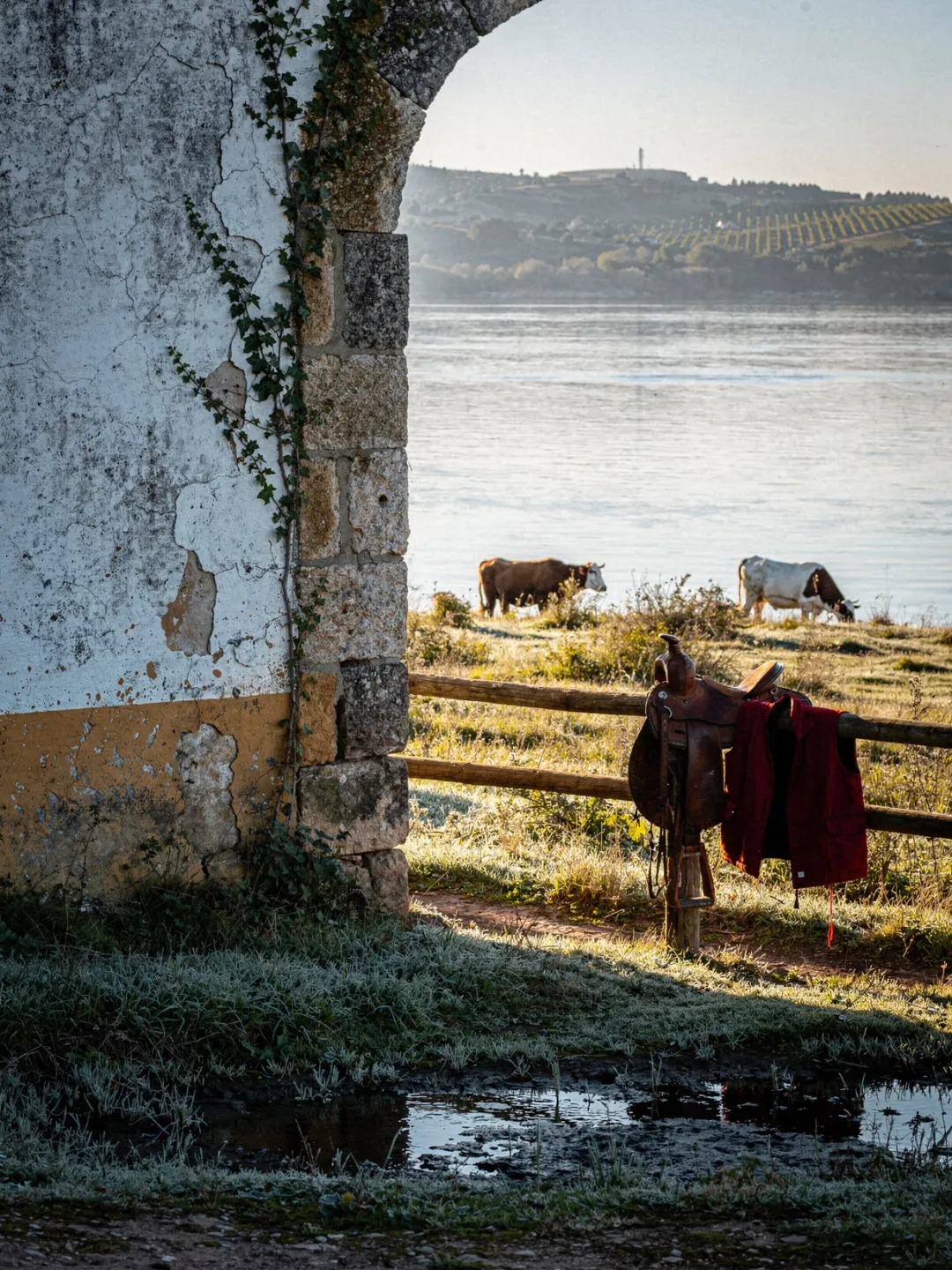
The plain only became true wine country much later. People called the area Portugal's breadbasket, because its soils yielded grain, vegetables and livestock in quantities other regions could only dream of. To this day, cattle and fighting bulls graze in the Lezíria, the broad riverside meadows of the Tejo. Mounted Campinos in red waistcoats and green caps still round them up, just as they did a hundred years ago. Wine long remained a side product. Enormous wineries pressed whatever grapes the fertile plain produced, mostly into simple, pale white wine in large quantities.
Until 2009, the region was officially called Ribatejo. Then it adopted the shorter name of the river itself, Tejo, to give the wine more international weight. Hardly anyone abroad knew Ribatejo, while the Tejo, as the river running through Lisbon, immediately conjures an image. The appellation DOC do Tejo remained the stricter tier for the best, clearly delimited sites, while Vinho Regional Tejo covers the entire, considerably larger growing area. Geographically, the region sits clearly in between. To the west lies the Atlantic-influenced Lisboa with Bucelas and Colares, to the south, across the river, the much larger Alentejo. The Tejo itself is both border and center.
The real turning point came late, in the 1990s. Until then, most growers delivered their grapes to enormous cooperative wineries, where quantity mattered more than origin or grape variety. It was only when individual quintas began bottling their own wine instead of simply selling the harvest to the cooperative that the picture noticeably changed. Old varieties like Castelão or Fernão Pires, long dismissed as mere bulk grapes, suddenly showed what they were capable of once someone took low yields and varietal winemaking seriously. The reputation as Portugal's cheap backyard slowly gave way to that of a region with its own character.