Fernão Pires Leads the Way
Grape Varieties
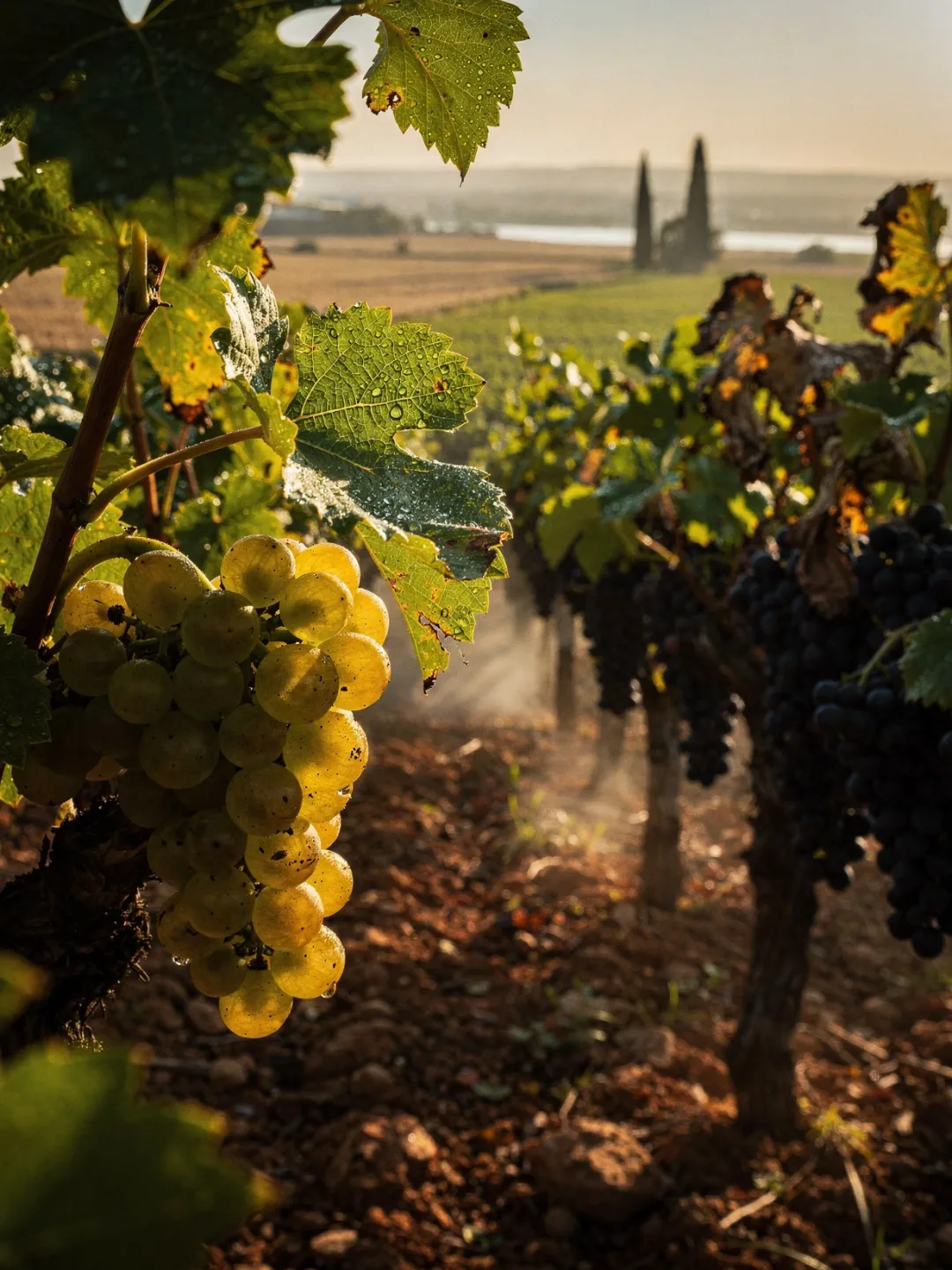
One white variety shapes the Tejo more than any other: Fernão Pires, which buds early, ripens early and forgives the winemaker almost any mistake. That made it the preferred variety of the fertile river plain. Nationwide, around 13,000 hectares are planted with it, more than any other white variety in Portugal. A large share grows here, in the zone known as Campo. In the glass it shows spicy notes, ripe pear and exotic fruit, sometimes with a light floral touch.
Among the red varieties, Castelão leads, known in the Algarve and neighboring Setúbal as Periquita. In the Tejo it varies greatly depending on the site. On the lean sands of the Charneca in the south, it produces powerful, tannin-rich wines that only become approachable after years. On the fertile soils along the river, it turns lighter and fruitier, with notes of red berries and a hint of herbs. This transformation makes Castelão one of Portugal's most temperamental varieties.
Trincadeira contributes color and spice but reacts sensitively to rot once autumn turns damp. Aragonez, known in Spain as Tempranillo, brings structure and dark fruit, while Touriga Nacional, actually native to the Douro, mainly adds extra depth in blends here. Together these varieties make up most red Tejo wines, often blended, rarely varietal.
International varieties arrived later, as they did throughout Portugal, mostly in the final decades of the twentieth century, when winemakers began looking beyond the country's borders. Cabernet Sauvignon, Merlot and Syrah now grow alongside Castelão. They're mostly planted on the warmer sites of the Charneca, where they reliably ripen. Among the whites, Arinto complements Fernão Pires. Its noticeable acidity balances out the richness the other variety brings, which is why almost every Tejo white wine ends up a blend of at least two of these varieties.