Cernoziom & marnă
Soils
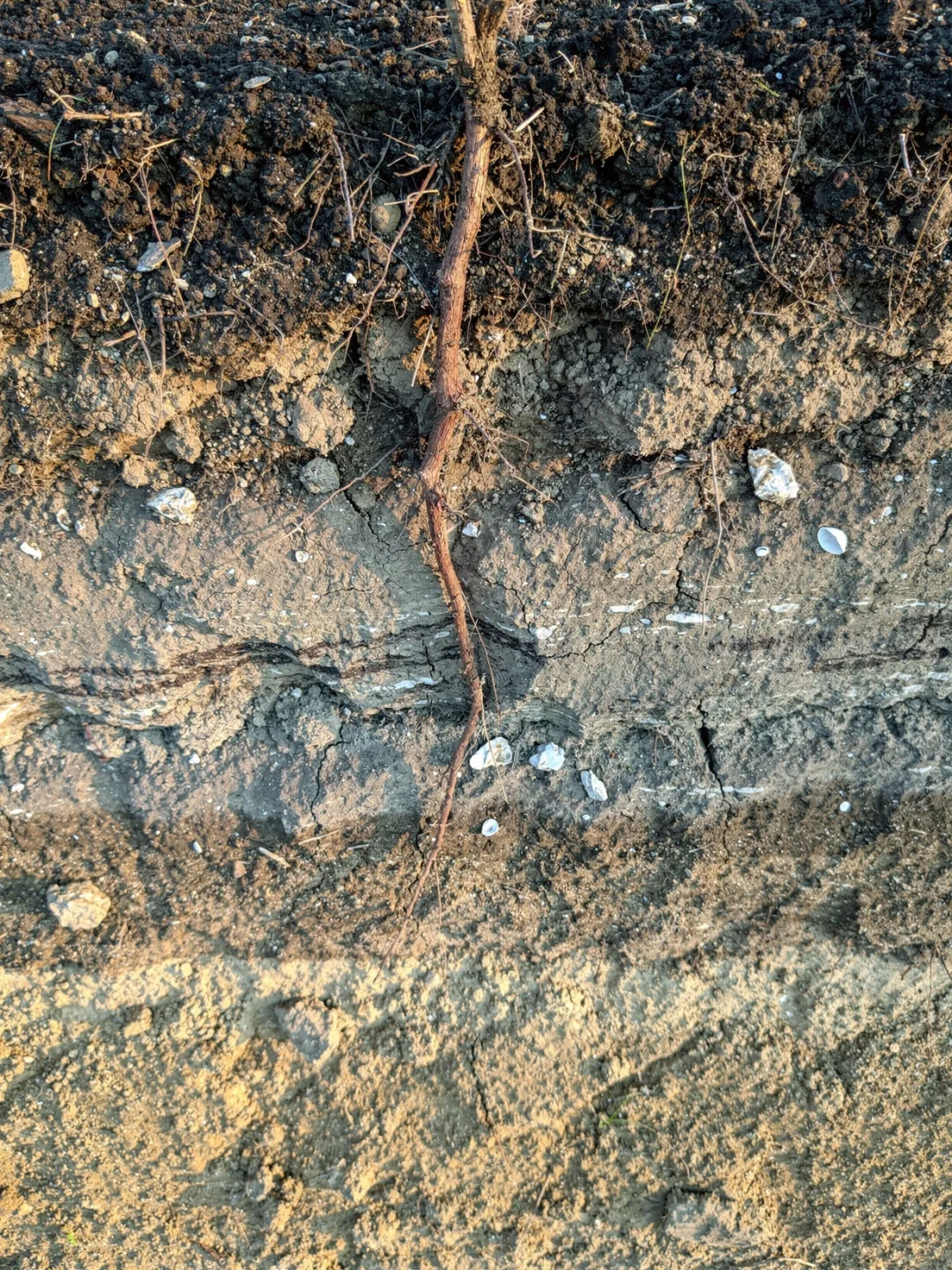
Dig a hole in a vineyard near Cotnari. You'll first hit dark, crumbly earth. This is chernozem, simply called black earth in Romania, one of the most fertile soils in the world—though here, on the high plateaus, it has been leached, since rain long ago washed the lime out of the upper layers.
Its history goes back millions of years. An inland sea once covered this area. From its Sarmatian-age deposits, a stage of the late Tertiary, formed the marls, sands, and clays on which today's soil rests. Where streams have exposed the slopes, thin bands of sandstone glint between the softer layers.
The vineyards lie on the eastern slope of a long ridge known as Dealul Mare-Hârlău, with plateaus between 350 and 500 meters. Further west, on the highest peaks, the soil turns lighter and grayer, as gray forest soil takes over from black earth—poorer in humus, but well-draining.
For the vine, this shift makes all the difference. On the deep chernozem, the soil holds water like a sponge, and the roots don't need to search deep in August. But once they reach the clay-marl layer below, water becomes scarcer, which naturally curbs yield without anyone needing to intervene. That's exactly what a grape destined for late, concentrated, noble-rot harvest needs.
One misconception persists, here as elsewhere: that the soil itself is tasted in the glass, because roots supposedly absorb minerals and pass them along directly. That's not quite right. What actually reaches the vine are dissolved nutrients in tiny quantities—far too little to produce a distinct taste. Instead, chernozem works indirectly: through water retention, warmth, and how deep it forces the roots to grow. That indirect path is what ultimately shapes sugar, acidity, and how concentrated a berry becomes once noble rot sets in.
Dark, humus-rich black earth, leached by rain on the high plateaus and therefore lower in lime than typical chernozem.
The root: Most fine roots grow here. Water and nutrients are plentiful, as long as summer doesn't turn too dry.