Why fog matters
Climate
Cotnari lies in northeastern Romania. The hills around Iași sit closer to Ukraine than to the sea. A temperate continental climate prevails here, classified as Dfb under the Köppen system, with cold winters and mild to warm summers suited equally to white wine and noble rot.
The growing season lasts around one hundred ninety days. It runs from early April to late September. During this time, the sun-facing slopes receive plenty of light, up to 93 kilocalories of solar energy per square centimeter annually, and July temperatures average between nineteen and twenty-one degrees Celsius.
Rain falls rather rarely. Average annual precipitation comes to just under 475 millimeters, notably less than in many other European wine regions. As a result, the vines rarely stand in wet conditions, which keeps away the fungal diseases that constant moisture could otherwise ruin an entire harvest.
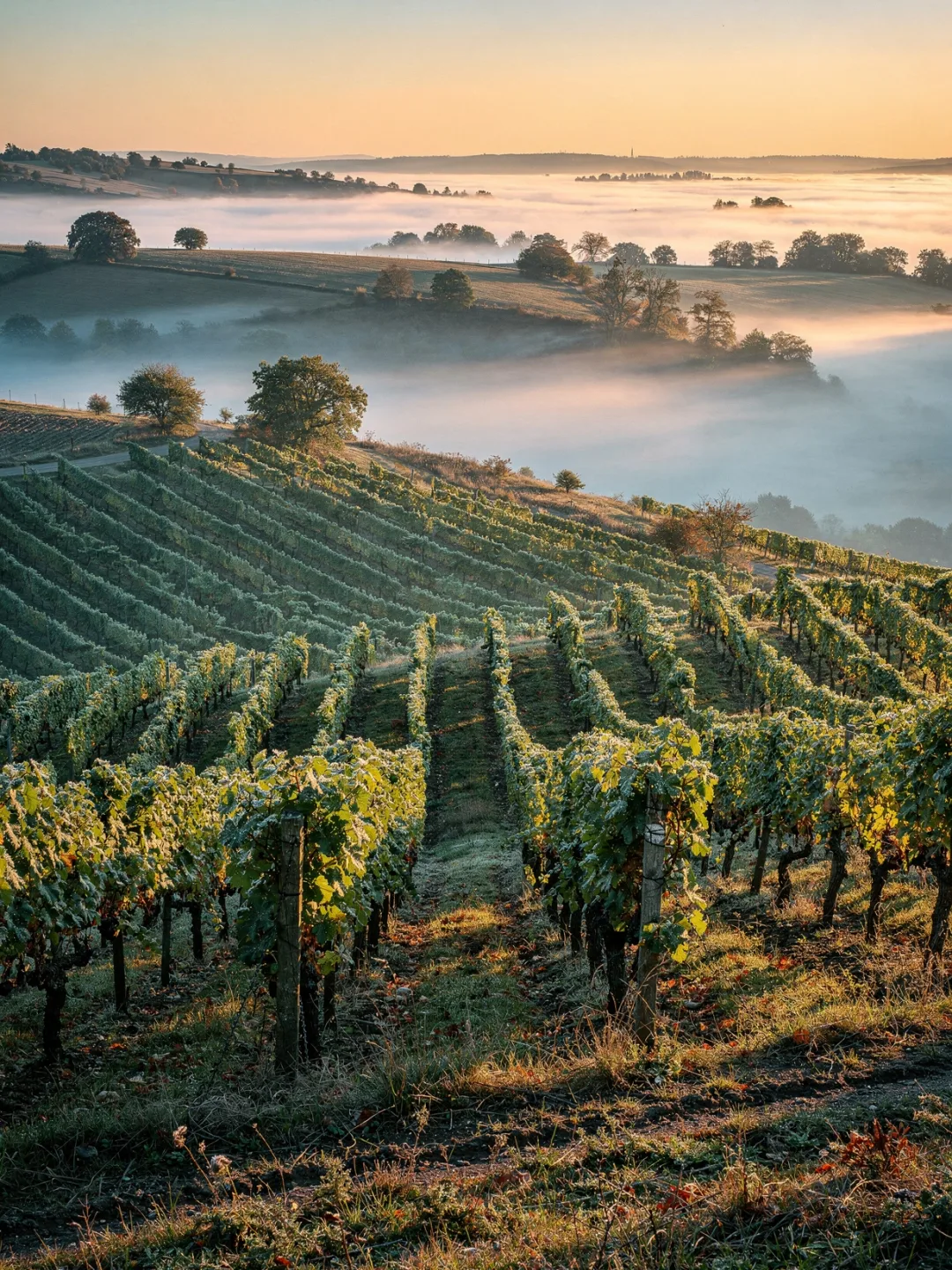
Autumn decides the fate of Cotnari's sweet wine. On some nights, fog settles over the slopes near Cotnari and Hârlău. Yet the sun still shines during the day, and it's exactly this alternation that lets the fungus Botrytis cinerea turn into noble rot rather than simply spoiling the grapes, as often happens in damper, warmer places.
Climate change is being felt here too. The region remains cooler than most wine regions of southern Europe, but even here warmer autumns are pushing the harvest later year after year. Winegrowers therefore watch closely for when the fog arrives and when the sun breaks through. The difference often comes down to just a few days.