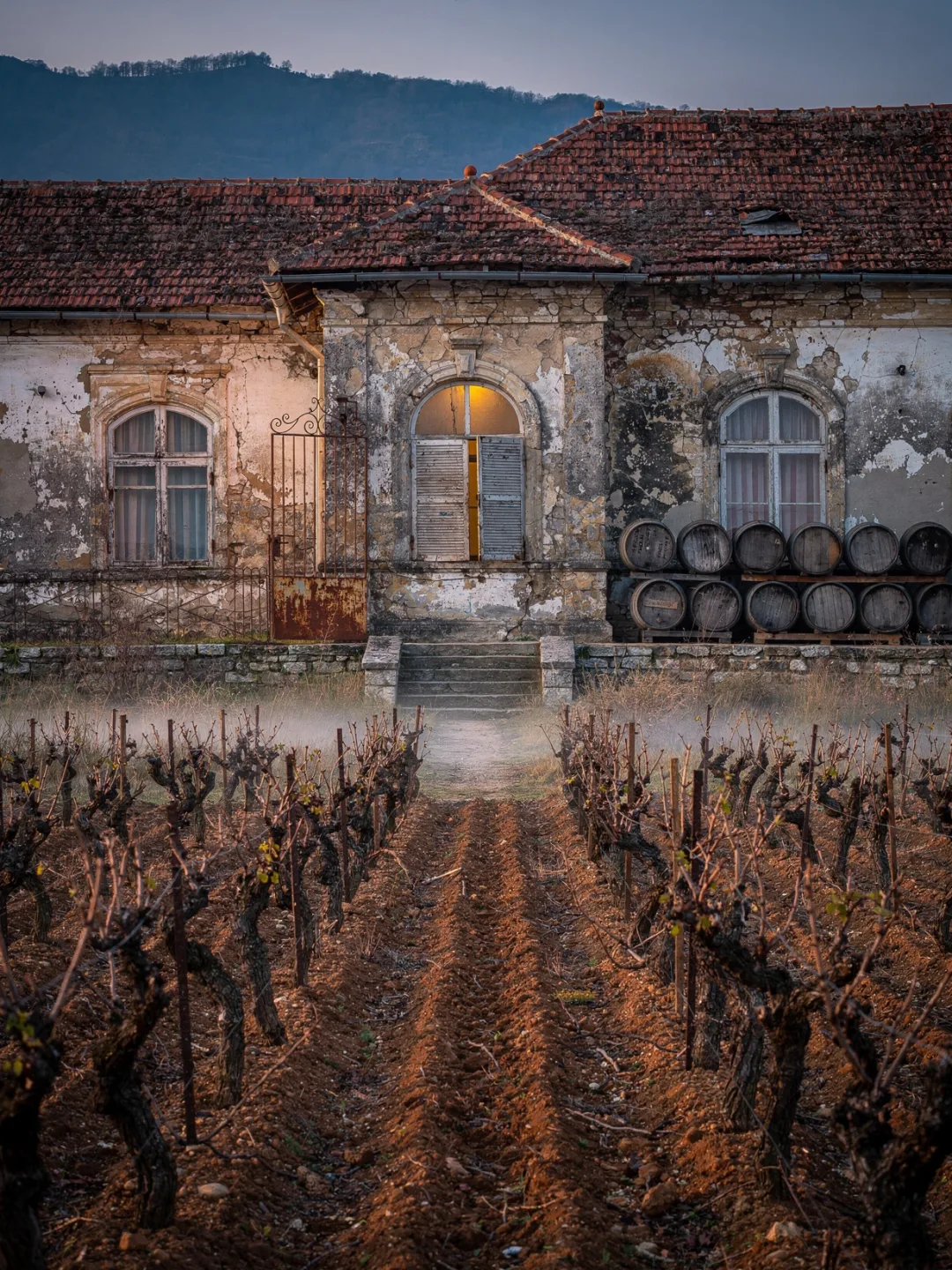
Monastery, State, Cuvée
Region & History
Vines grew here even before the Romans arrived. The region stretches sixty-five kilometers. Dealu Mare translates simply as 'big hill.' The first documents mentioning wine from this area date only from the fourteenth century, although archaeological finds reach far back into pre-Roman times, and to this day the region is regarded as the land of red wines, a narrow strip at the foot of the southern Carpathians.
At the heart of the region lies Valea Călugărească. The name translates as 'Valley of the Monks.' Winemaking here always went hand in hand with education. In 1907 a school for coopers and barrel-makers was founded there, which became the Lower Viticultural School in 1925, before turning into an experimental station for viticulture in 1950, growing in 1967 into the Research Institute for Viticulture and Winemaking — to this day the only one of its kind in Romania.
The new order no longer had room for monasteries. Collectivization was completed in 1962. Origin barely mattered in the cellars anymore. From 1949 onward, the Romanian state pushed forward the collectivization of agriculture with vigor, so that in the end around ninety percent of arable land belonged to state and collective farms, private vineyards were absorbed into large cooperatives, and the grapes became nothing more than cheap bulk goods, while only the institute in Valea Călugărească continued working with individual varieties and clones.
In 1989 the communist system fell. SERVE became Romania's first private winery. Five years after the revolution, the French count Guy Tyrel de Poix and his wife Mihaela founded this estate in Ceptura, inspired by a book that described Romania as a country full of potential. There the country's first dry rosé and its first cuvée blending native and international varieties were created. The area today holds DOC status. At the European level, this designation has been based since 13 May 2024 on Regulation (EU) 2024/1143 on protected designations of origin, which replaced the previous rules in this field.