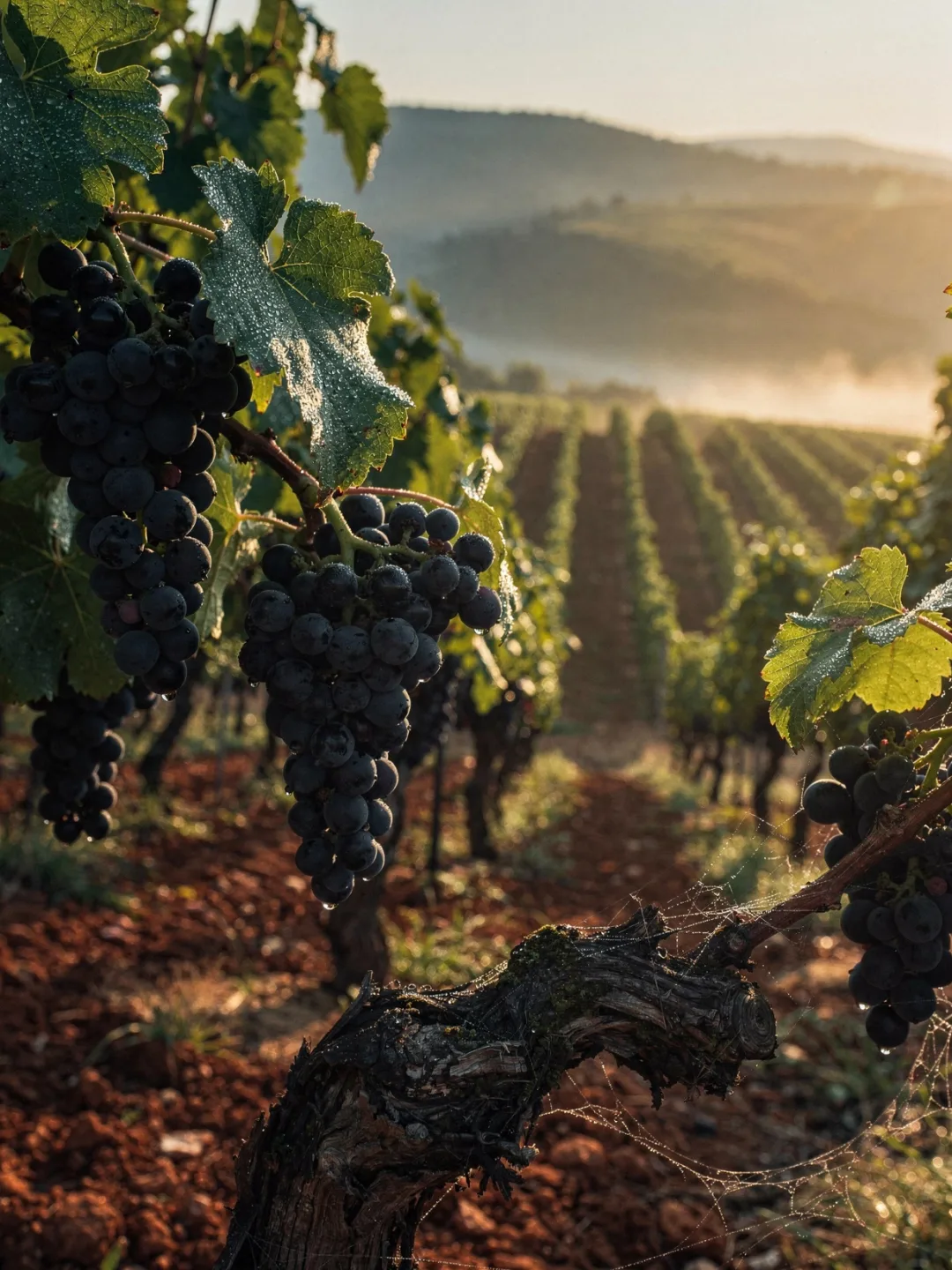
Fetească Neagră Leads the Way
Grape Varieties
A native variety sets the tone here. Fetească Neagră translates as 'Black Maiden.' Good wines age for ten years and beyond. It's considered one of Romania's oldest grape varieties altogether, showing a dark, almost impenetrable ruby red in the glass and bringing aromas of black cherry, blackberry, and plum, often rounded out by a hint of violet and, with years in the cellar, by spice, tobacco, and leather.
On the palate, the tannins grip firmly yet finely. Burgund Mare is the Romanian name for Blaufränkisch. This variety adds extra structure. That furry grip on the palate familiar from strongly steeped tea stays fine rather than harsh in Fetească Neagră, paired with medium to full body and lively acidity, which is why the grape becomes the backbone of Dealu Mare's red cuvées.
International guests have joined in since the nineties. Cabernet Sauvignon, Merlot, Pinot Noir, and Zweigelt grow here. At the time, no one in Romania had tried this. They now stand side by side in the same vineyards as Fetească Neagră, often blended together in a single cuvée, and it was precisely this mix of old variety and new arrivals that once made SERVE in Ceptura famous, when their first cuvée bridged both worlds.
In the east, everything revolves around a different grape. Tămâioasă Românească translates literally as 'Romanian Frankincense.' Fetească Albă and Fetească Regală are its paler relatives. Named for its intense scent of roses, orange blossom, and indeed frankincense, it's considered the emblematic variety of the Pietroasele commune and yields both dry and nobly sweet wines there, while its paler relatives elsewhere in the region produce fresher, lighter white wines.