From Allobroges to AOC
Region & History
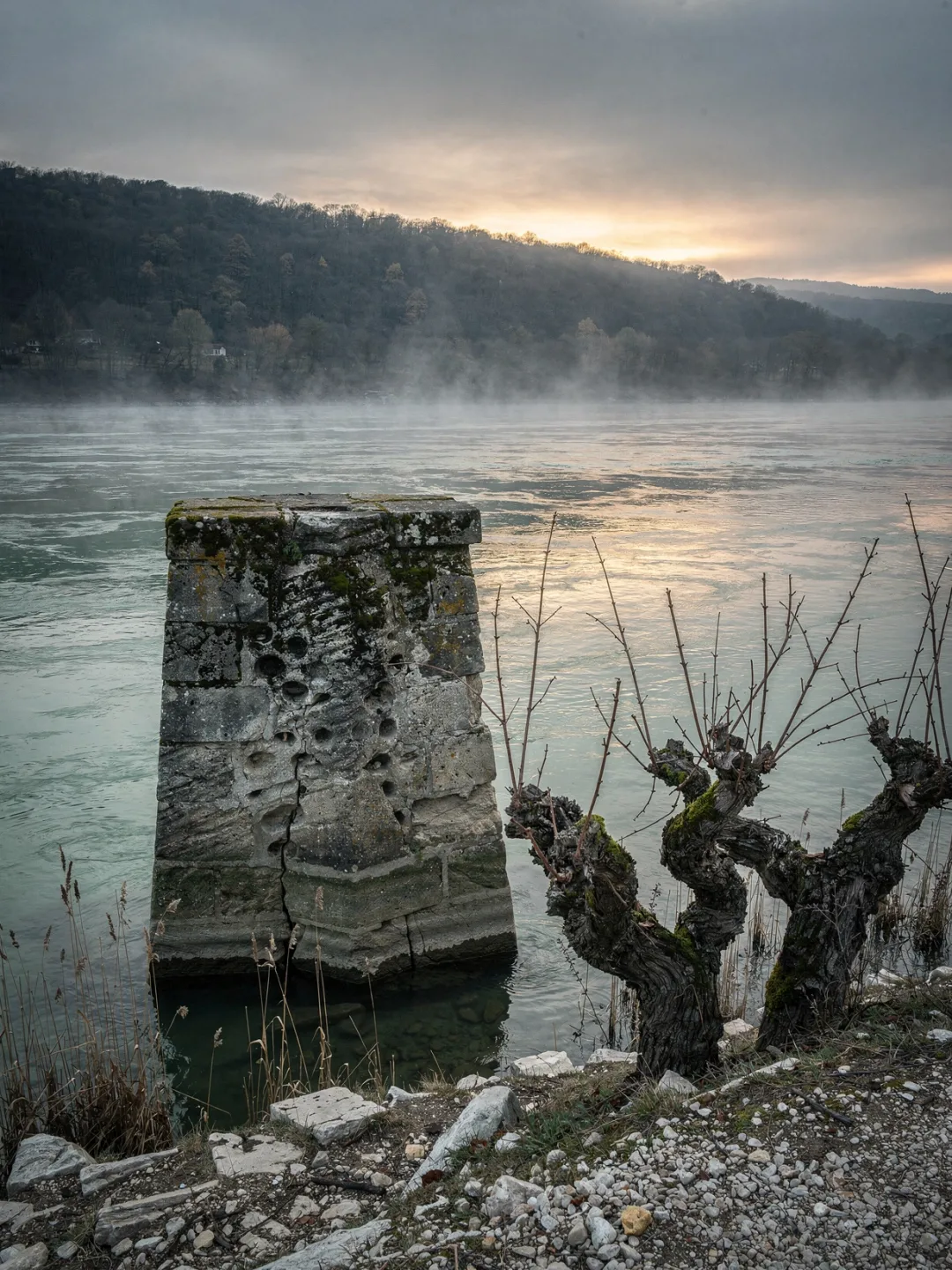
At the outermost edge of their territory, where the Rhône flows out of the lake, the Allobroges maintained a fortified settlement: Genava. Julius Caesar knew the place from personal experience. In 58 BC he had the bridge over the river torn down there to halt the migrating Helvetii. This single sentence from his war report brought Geneva into world literature for the first time. The Allobroges had long been growing wine themselves. Pliny the Elder praised their grape variety in Rome. It ripened early and even survived a harsh mountain winter, a trait that had little use in the warm south of Italy.
In the eighteenth century, viticulture reached its historic peak. More than two thousand hectares of vines covered the hills around the city. Then came the railway, and with it cheap French wine. Before the century was even over, phylloxera arrived too, costing the vines more than half their area. The vineyard was saved by grafted vines on American rootstock, against which the pest was powerless. The real turning point, however, only came a hundred years later, after a fresh crisis.
The problem wasn't new. After overly large harvests in 1982 and 1983, prices collapsed, and barrels piled up in cellars across Switzerland. Geneva drew a radical conclusion from this. In 1988, it became the first canton in the country to define by law what an Appellation d'Origine Contrôlée actually means. This includes fixed boundaries, a minimum ripeness for the grapes, and an annual blind tasting that every vintage must pass anew. At the same time, many estates tore out old Chasselas. In its place came Gamaret and Garanoir, two crossings of Gamay and Reichensteiner bred in 1970 at the Pully research station and commercially available from 1990 onward — and it was in Geneva of all places that they found their greatest success.
Today Geneva is Switzerland's third-largest wine canton, with around 1,355 hectares of vines. These are spread across the Mandement on the right bank of the Rhône, Entre Arve et Lac, and Entre Arve et Rhône to the south. Satigny alone cultivates more vineyard area than any other municipality in the country. Even the old name Perlan for Genevan Chasselas has had its own ups and downs. In the 1990s it went under along with the collapse of the Vin-Union cooperative, which had ruined the wine's reputation with cheap mass-produced bottlings. Since the 2010s it has appeared on labels again, whenever a winemaker like Daniel Brenner chooses to claim it. Today it stands for something quite different: a still, pale wine that sometimes arrives on the palate with a fine, name-giving prickle. It never quite disappeared.