Gamay Meets Gamaret
Grape Varieties
Two grape varieties still shape the look of Geneva's vineyards today, even if neither one rules alone anymore. Gamay and Chasselas together still cover around forty percent of the vineyard area, each with its own, rather old story. The rest is spread across a good twenty other varieties, more than in almost any other Swiss canton. That is exactly where the diversity lies.
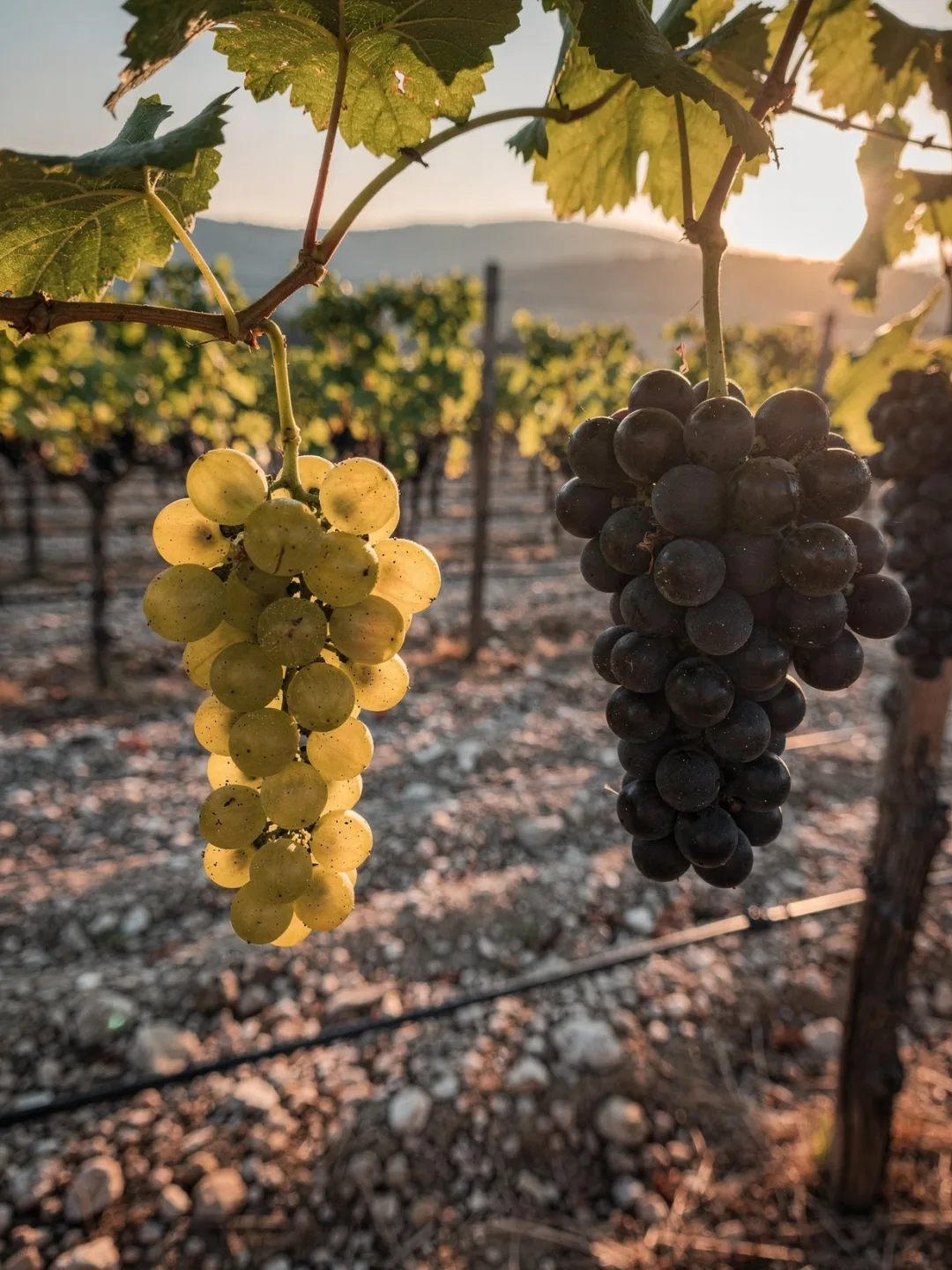
Gamay ripens early, and in a climate with unpredictable autumns, that has always been its greatest asset. Its skin is thin, and thin skins rot quickly once it rains for too long after harvest. That's exactly where Gamaret and Garanoir come in, the two crossings of Gamay and Reichensteiner. They carry thick berry skins, plenty of color pigment, and firm tannin, and a wine made from Gamaret almost always tastes denser and darker than the pale, fruity Gamay it was originally bred from.
Pinot Noir now occupies twelve percent of the area and is considered the most demanding red variety in the canton. Its grapes hang in small, tightly packed clusters whose thin skins quickly start to rot in damp conditions. That's why Pinot Noir in Geneva is almost always assigned the best, best-ventilated hillside sites. The effort pays off. What emerges is a pale, aromatic red wine with fine tannin, quite different from the bulk of Gamay grown on the valley floor.
Among the whites, the range extends far beyond Chasselas these days. Chardonnay covers around eight percent of the area and yields denser wines, often aged in oak. Sauvignon Blanc also thrives particularly well on the gravelly soils of the Mandement, especially around Satigny and Dardagny, where it shows its typical notes of blackcurrant bud and gooseberry. The difference is clear.
The most recent development comes from the laboratory of the Agroscope research station in Changins. In 2013 it introduced Divico, the first red variety highly resistant to downy and powdery mildew, thanks to wild vines from America and Asia in its genetic makeup. Divona, its white sister variety, followed shortly after. The reason is simple. Both are now growing experimentally at the state-owned winery in Lully, with the goal of getting by with far fewer treatments in difficult, damp years.