Monks, Festival, Law
Region & History
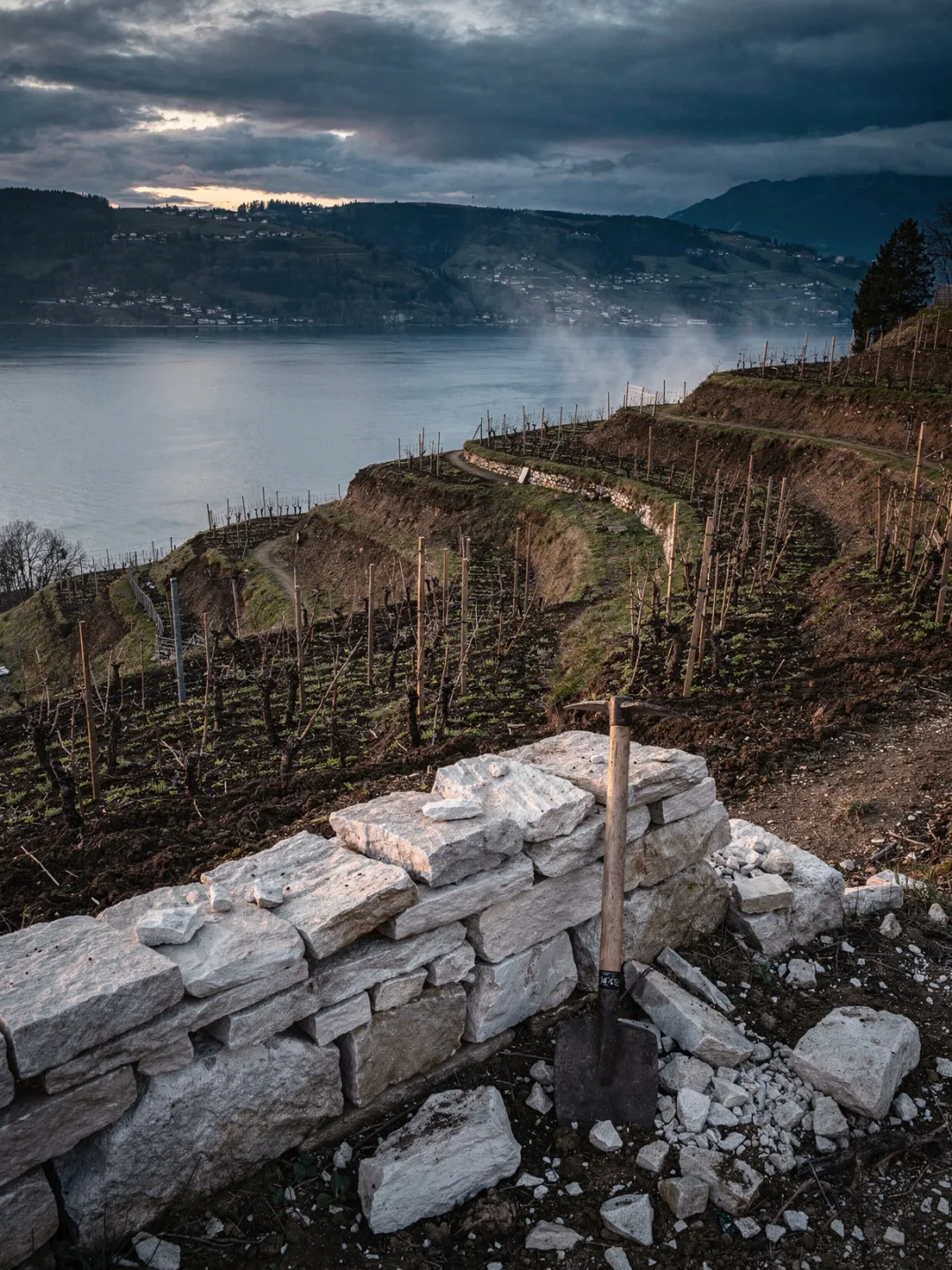
In 1138, Cistercian monks from the Hauterive monastery were given the steep land above Lake Geneva—too steep for crops, but just right for vines. So the monks took up pick and stone and shored up the loose soil with low walls, handspan by handspan, year after year. This gave rise to the first great wine-growing area on the lake: the terraces of Lavaux, still the largest contiguous vineyard area in Switzerland today. Shortly after, two more abbeys joined in, Hautcret in 1141 and Montheron a year later. For these monasteries, viticulture was no side business.
Over time, this monastic labor grew into a festival unlike any other. The winegrowers' brotherhood of Vevey calls itself the Confrérie des Vignerons. Since 1797, it has publicly celebrated the year's best vineyard workers with a parade, a coronation, and a festival lasting three weeks. How often this happens is up to the brotherhood itself—the idea being once per generation. In 2019, around 400,000 visitors came to Vevey, a town of fewer than 20,000 residents. In 2016, UNESCO added the festival to its list of intangible cultural heritage—the first Swiss tradition ever to receive this honor.
The landscape itself received its own accolade a decade later. On June 28, 2007, shortly before noon, the people of Lavaux learned that their vineyards had become a UNESCO World Heritage Site. Not as a nature reserve, but as a landscape shaped by human hands over centuries.
The law, too, caught up step by step. As early as 1949, it was established that Dézaley was an exception and had to come entirely from this single site. During a regulatory revision in 2009, this special status fell through the cracks by oversight, and Dézaley suddenly stood on equal footing with every other site in Lavaux. It wasn't until 2013 that the Vaud government set things right again. Dézaley and neighboring Calamin were officially granted Grand Cru status, with stricter ripeness requirements for the grapes and a ban on blending wines from different sites.