Dorin & Servagnin
Grape Varieties
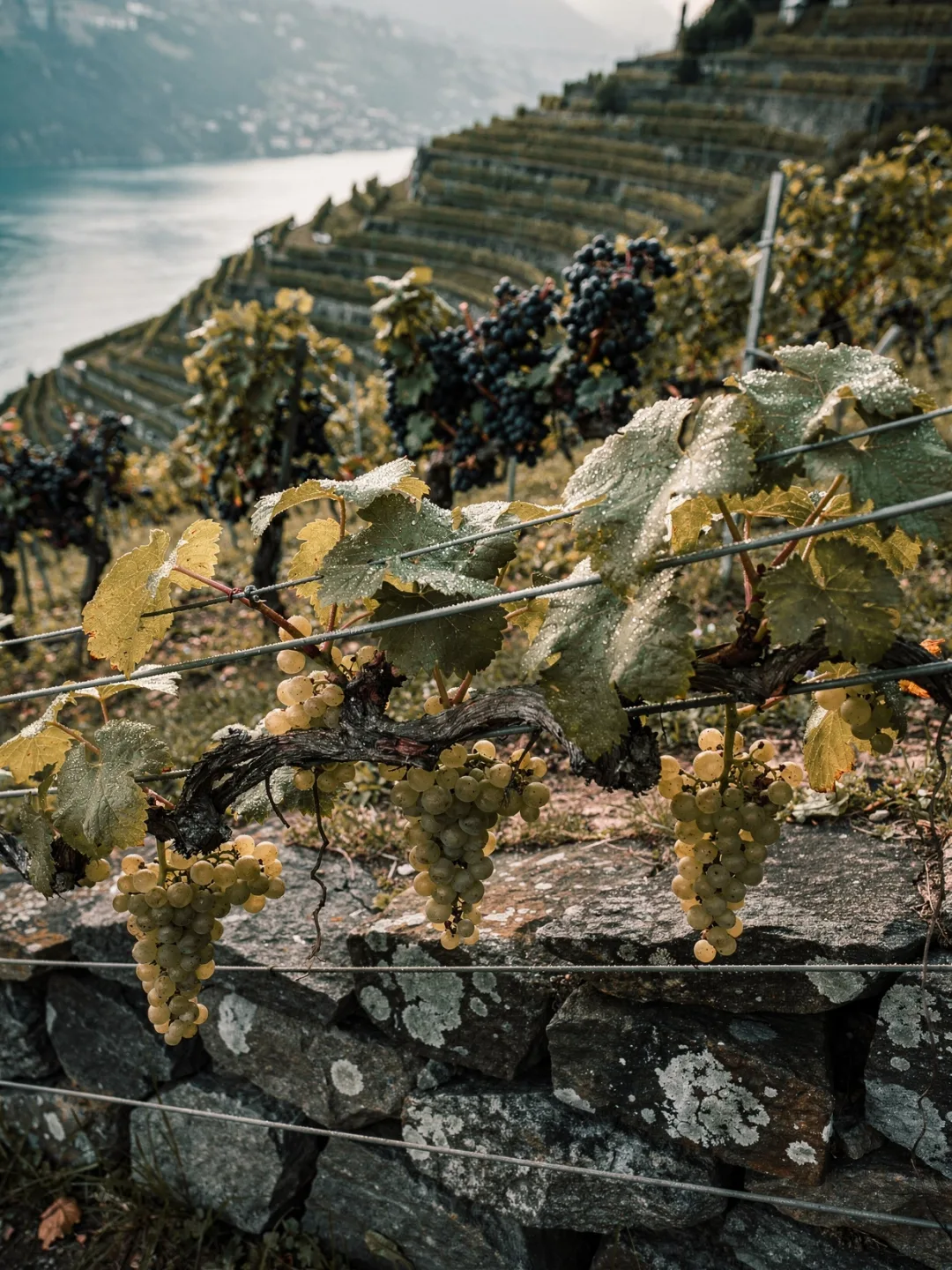
Over two-thirds of Vaud's vines carry a single, pale grape. It's called Chasselas, though hardly anyone in the canton of Vaud calls it that. On the bottle, it's labeled Dorin; in Valais the same grape is called Fendant, and in Geneva, Perlan—and anyone hearing this for the first time might assume these are three different varieties rather than one and the same. It is one.
Together it covers around 2,300 of the canton's 3,750 hectares of vines—that's 68.6 percent, more than in any other Swiss wine region. This makes Vaud the only Swiss canton that produces more white wine than red. All the others produce mostly red.
The rest is shared mainly between two red varieties, Pinot Noir and Gamay. Together they make Salvagnin, a blend recognized as its own Vaud AOC, tasting of cherry and redcurrant, with soft, barely noticeable tannin. Single-varietal bottlings exist too, but as a pair the two complement each other better: Pinot Noir brings depth, Gamay brings fruit and easy drinkability.
Servagnin has a story all its own. Legend has it that Marie of Burgundy brought this Pinot Noir clone here in 1420, arriving in Saint-Prex near Morges. For centuries it was the region's most important red variety, until it nearly vanished in the twentieth century—by the 1960s, only two vines remained standing in Saint-Prex. Winegrowers from Morges saved it, shoot by shoot, and today only wine from the Morges area may bear this name. The law requires at least sixteen months of barrel aging.
Rarer still is Plant Robert, an old Gamay variant found only in Lavaux, mainly around Cully. Its name is said to come from the old French word for stealing, because people supposedly used to pilfer the sweet grapes straight from the vines before harvest. In the 1960s, two winegrowers grafted the last known shoots onto new rootstock, saving the variety from extinction. Today it grows again on a good seven hectares, yielding spicy, dark wines with cassis and black cherry.