Divided Hills
Region & History
A grape seed from the later Iron Age was already lying in the soil of Golo Brdo, a village in the heart of the Brda hills, three hundred years before Christ. So wine grew here long before the Romans arrived. They came anyway, and they stayed. At a Roman villa near Neblo, archaeologists found the remains of a workshop where amphorae were fired for the estate's own wine, and back then the vines were still trained up living trees, a training method that persisted for nearly two thousand years.
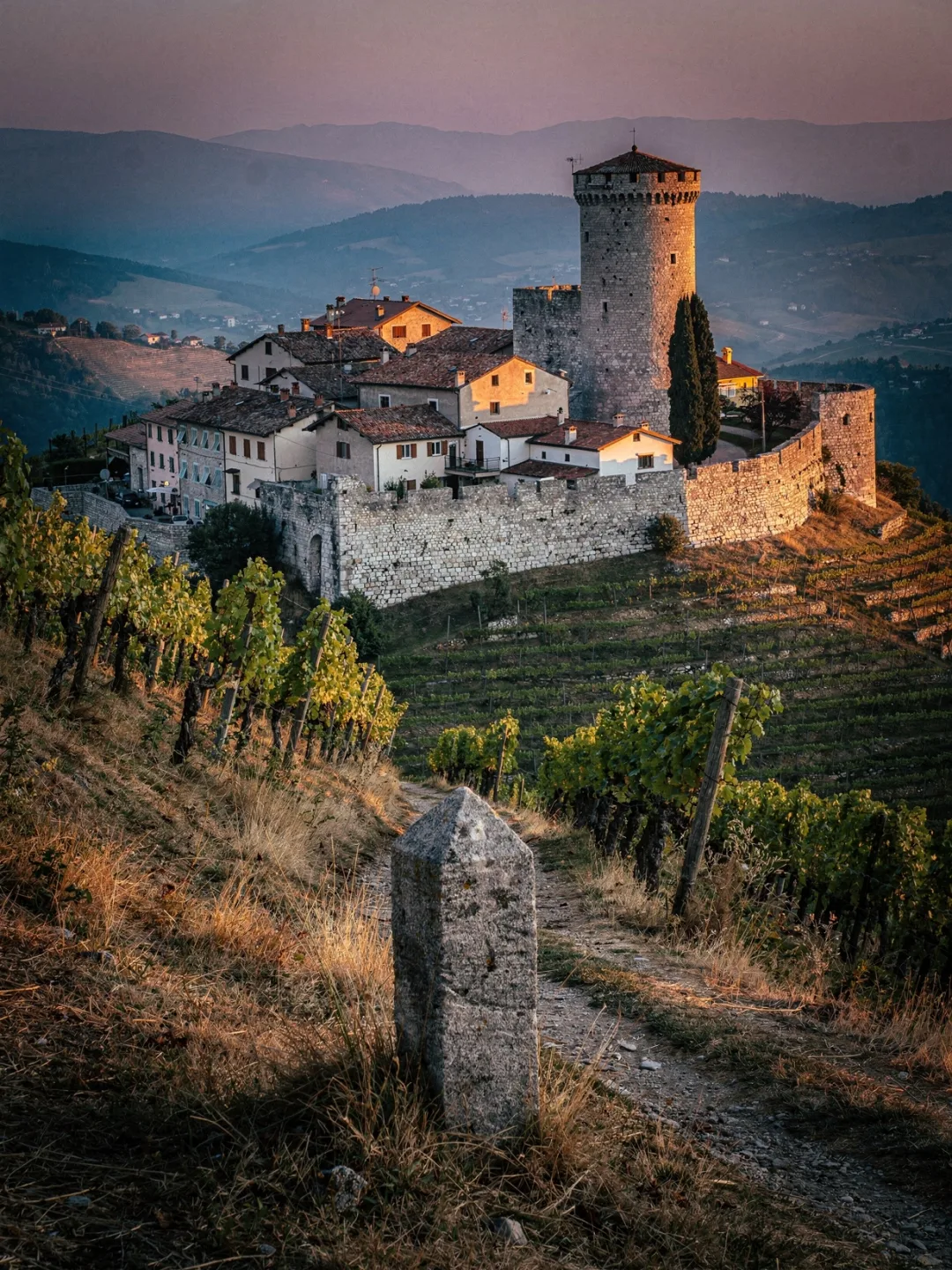
The name of the region's most important grape first appears in 1336, in a bill of sale from the village of Višnjevik: Rebula. For centuries this land belonged either to the Republic of Venice or to the Habsburgs, and the walled villages with their defensive towers still tell of raids from both directions. Then came phylloxera. Around 1870 the old vineyards died off almost entirely, and a Catalan count named Silverio De Baguer was the first to replant vines, in 1881, no longer up trees but in straight rows without any living support. The old training method became history overnight.
After the First World War, Brda belonged to Italy. In 1922, thirty-eight winegrowers pooled their resources and bought two hundred thirty hectares of land from their landlord — the area's first cooperative. Then came the next rupture, and it was more brutal than the first. The Paris Peace Treaty of 1947 drew the new state border straight through the former wine region. The town of Gorizia stayed with Italy; the hills of Brda, with their vineyards, went to communist Yugoslavia. Those who had always driven into town for market suddenly had no town left. Yugoslavia built itself a brand-new one right next door: Nova Gorica.
The growers' answer was, once again, a cooperative. In 1957, the new winery in Dobrovo took in its first harvest, and from it grew Klet Brda, today Slovenia's largest winery, where around four hundred families deliver their grapes. In 2006, Goriška Brda received EU protected designation of origin status. Of all things, the border that had once split families all but disappeared for the winegrowers themselves: in Ceglo, the Movia estate farms vines on both sides of the national border. Movia has existed since 1700 and has belonged to the Kristančič family since 1820, as if the border had never existed at all.