From Xera to Sherry
Region & History
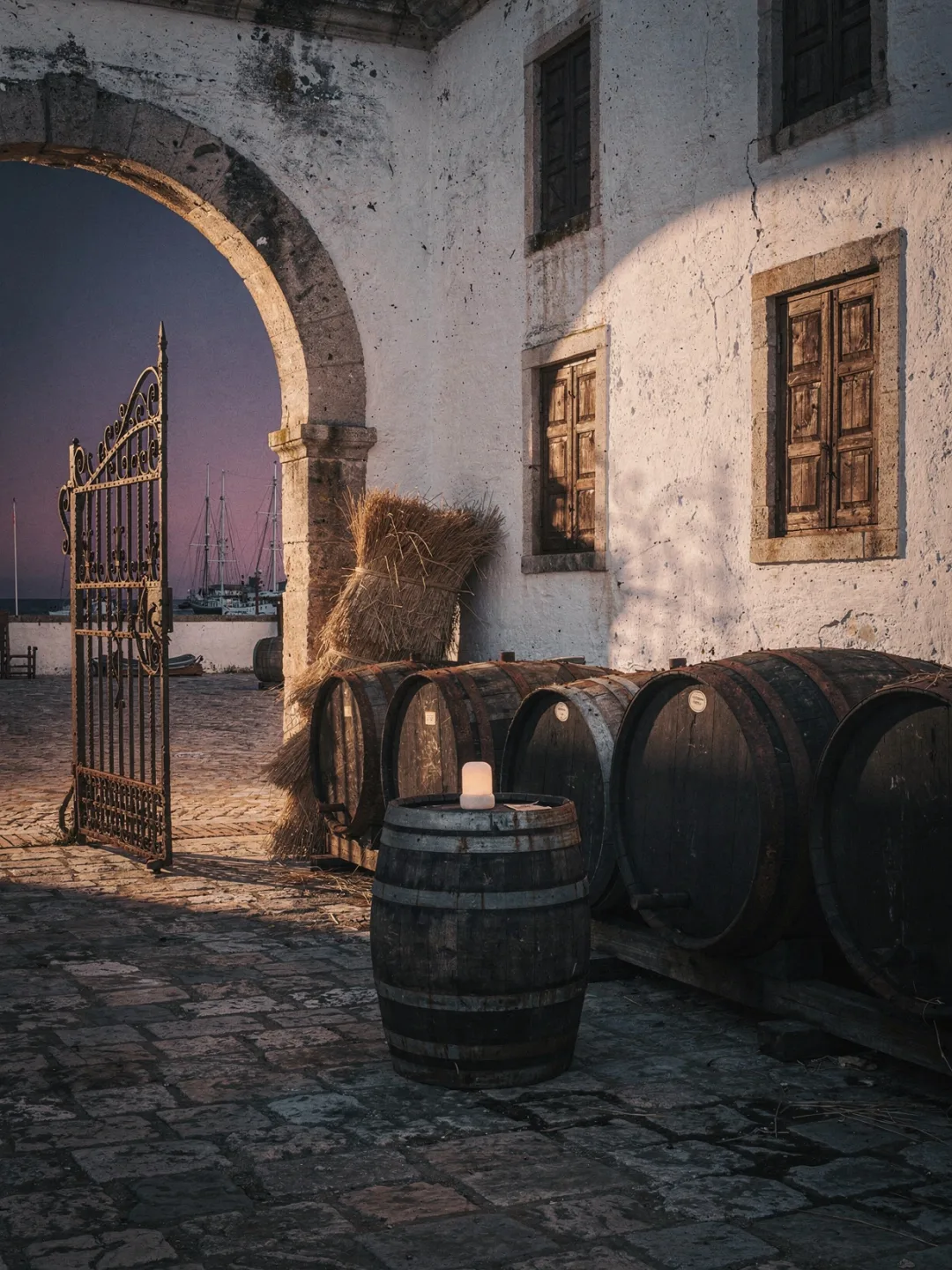
At the foot of the Castillo de Doña Blanca, just a few kilometers outside Jerez, lies a very old archaeological site. Archaeologists found a wine press there roughly three thousand years old. Phoenician traders had brought viticulture to the Bay of Cádiz and named the area Xera. That single word later split into three names for the same place. In Spanish it became Jerez, in French Xérès, in English Sherry.
The Moors arrived in the eighth century and stayed for almost five hundred years. They brought irrigation techniques and knowledge of distillation with them; on their maps the place was called Sherish. It wasn't until 1264 that Alfonso X of Castile reconquered the city, and because it then formed the border with the Moorish kingdom of Granada, it has been called Jerez de la Frontera — Jerez on the border — ever since.
A single raid shows just how coveted the wine already was in England in the sixteenth century. In 1587 Francis Drake burned the Spanish fleet in the port of Cádiz and, in passing, made off with nearly three thousand barrels of Sherry. Shakespeare soon after had his character Falstaff rave about "sherris sack." English and Irish merchants settled around the bay. Thomas Osborne Mann founded his house in El Puerto de Santa María in 1772, the Terry family two years later. In 1835 Manuel María González Ángel joined them and named his best Fino after the uncle who had taught him the craft — Tío Pepe.
Phylloxera reached the Marco de Jerez in June 1894, and a year later also Sanlúcar and El Puerto de Santa María. Entire vineyards died, and were only saved through grafting onto American rootstock. In the middle of this long recovery, in 1933, the region received Spain's very first Denominación de Origen. The same Consejo Regulador is still responsible today, jointly for Jerez-Xérès-Sherry and for Manzanilla-Sanlúcar de Barrameda.
Yet the rulebook hasn't frozen in time. In August 2026 the European Union lowered the required minimum alcohol for Fino and Pale Cream from fifteen to fourteen percent, almost a hundred years after the Consejo Regulador was founded. Spain's oldest appellation, it turns out, is still writing its own rules.