Palomino & Co.
Grape Varieties
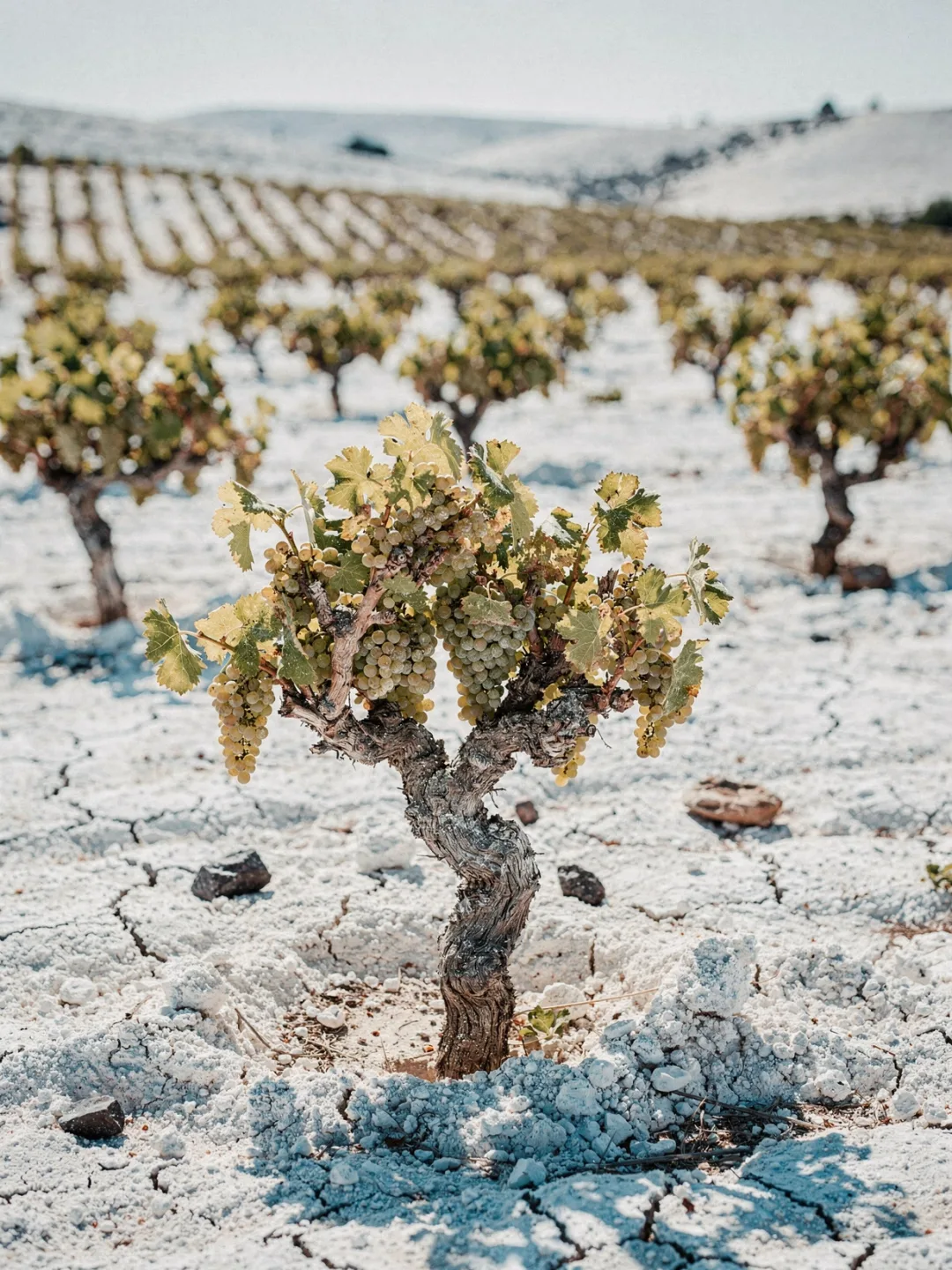
Almost the entire vineyard area in the Marco de Jerez carries a single grape. Palomino Fino now covers more than ninety-eight percent of the Denominación de Origen's vineyard land. On its own it barely tastes of anything — little aroma, plenty of acidity, thin skin. That's exactly what makes it the perfect canvas. Whatever ends up tasting of almond, bread or caramel in the glass doesn't come from the grape itself, but from what happens to it later in the cellar.
Before phylloxera, a much more varied mix of vines grew here. After the devastation at the end of the nineteenth century, growers grafted almost exclusively Palomino onto American rootstock, because it gave high yields and got along well with the yeast that makes Fino and Manzanilla possible in the first place. Two niche players remained.
Pedro Ximénez, PX for short, now covers only about half a percent of the area. After harvest, growers spread the grapes out on esparto mats in the sun. This process is called Asoleo, and the berries shrivel like raisins in the process. The must that comes out of the press afterward reaches three hundred to four hundred grams of sugar per liter. At least eighty-five percent of the must must come from such sun-dried grapes for a wine to carry the name Pedro Ximénez.
Moscatel de Alejandría covers about one percent of the area, mostly on the sandy soils near the coast. It too can be sun-dried or pressed fresh, again with the same minimum of eighty-five percent. It yields its own sweet Sherry with a floral scent reminiscent of orange blossom, though it's related to ordinary German Muskateller only through the shared Muscat family.
What eventually ends up in a deep brown, almost black Oloroso started out as pale, unremarkable grape juice fresh from the press. All three permitted varieties are white grapes. Every color between straw-yellow and mahogany develops later — through air, time and wood, never through the skin.