Kings, Monasteries, Phylloxera
Region & History
In the Ebro valley, archaeologists have excavated wine presses already in use by the Romans. Finds at Funes, Arellano, and Cascante show that between the first and fifth centuries, wine was made here on an industrial scale, not in some backyard operation. From the very start, wine was a business here.
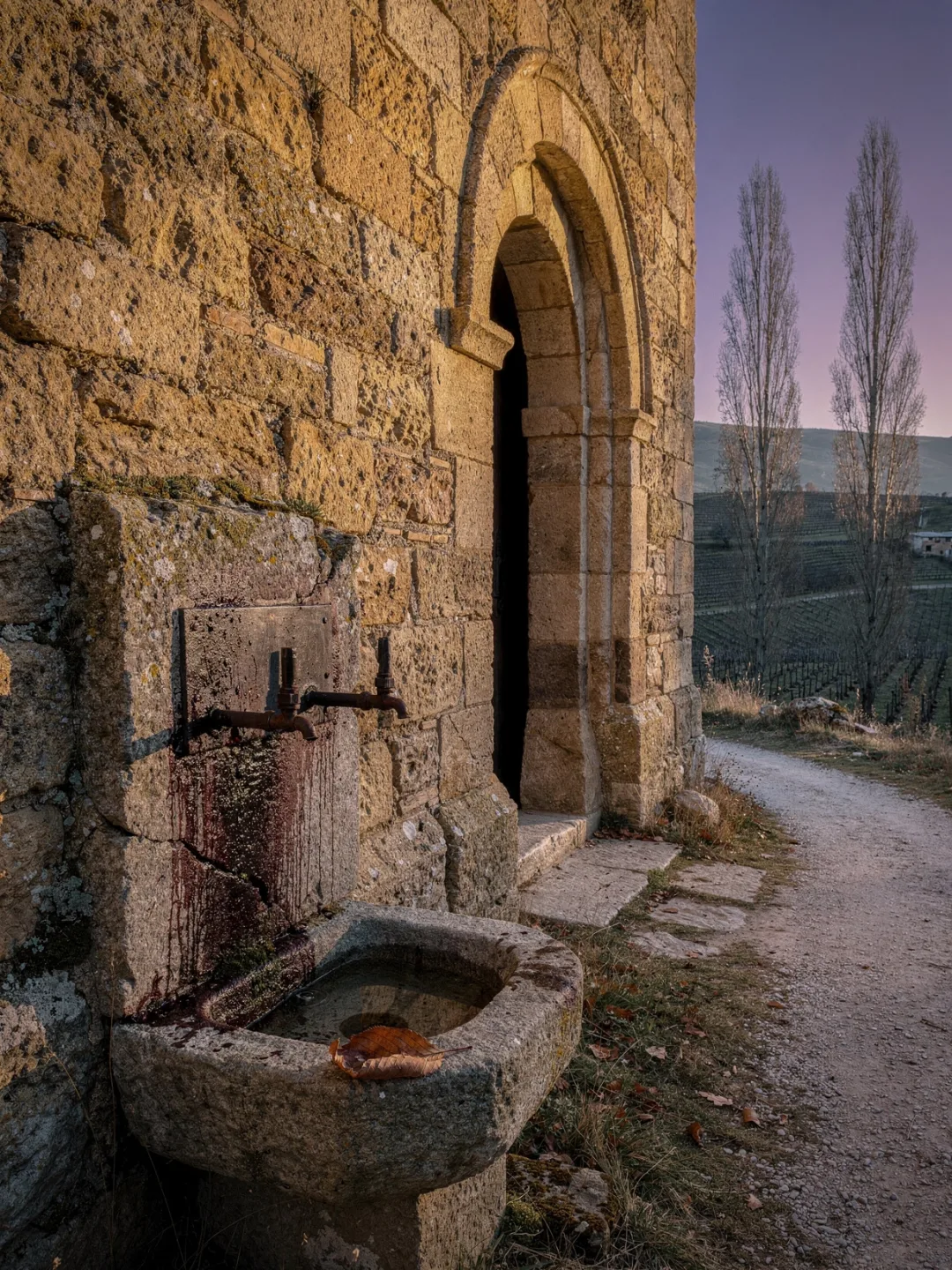
Then came the Camino de Santiago. It cut straight through Navarra almost to the gates of Pamplona, with vines lining the way on both sides. In the pilgrim hostels, a jug of wine was never missing. Monasteries like Irache were more than places of prayer: they ran their own vineyards and taught agriculture. But no one reshaped the vineyard landscape more than a king with a foreign title: Teobaldo I ruled over Navarra and Champagne from 1234 to 1253, and he brought Burgundian varieties like Chardonnay and Pinot Noir with him. Back then, his wine was called vermeyllo or clarete, half red, half pale. This pale red wine is considered the ancestor of today's rosado.
The nineteenth century first brought growth, then catastrophe. When powdery mildew and phylloxera began devastating France's vineyards in the 1850s, French merchants bought up everything they could in Navarra, and vineyard acreage grew as never before. In 1885, powdery mildew reached Navarra's vineyards too. In 1892, phylloxera followed, unstoppable. Of fifty thousand hectares, in the end barely fifteen hundred remained.
In 1912, winemakers gathered in Pamplona for a viticulture congress, and what they found was sobering: more than eighty native grape varieties had vanished. From then on, replanting focused mainly on a single, hardy variety. Garnacha tolerated drought, poor soils, and neglect, and through the sangrado method it gave rise to that pale, intensely colored rosado for which Navarra would soon become famous. It wasn't until 1933 that wine law recognized the Denominación de Origen Navarra; its Consejo Regulador followed in 1958.
In 1981, EVENA opened in Olite, a research station that helped test international varieties like Cabernet Sauvignon and Chardonnay without abandoning the region's own Garnacha. From the 1980s on, change picked up pace. Rosado alone was no longer enough for the bodegas. Just how much the Camino de Santiago still matters shows in one bodega near Estella: since 1991, Irache has let young red wine flow free from a second tap, one hundred liters a day, for every pilgrim.