Tempranillo, Garnacha, Oneca
Grape Varieties
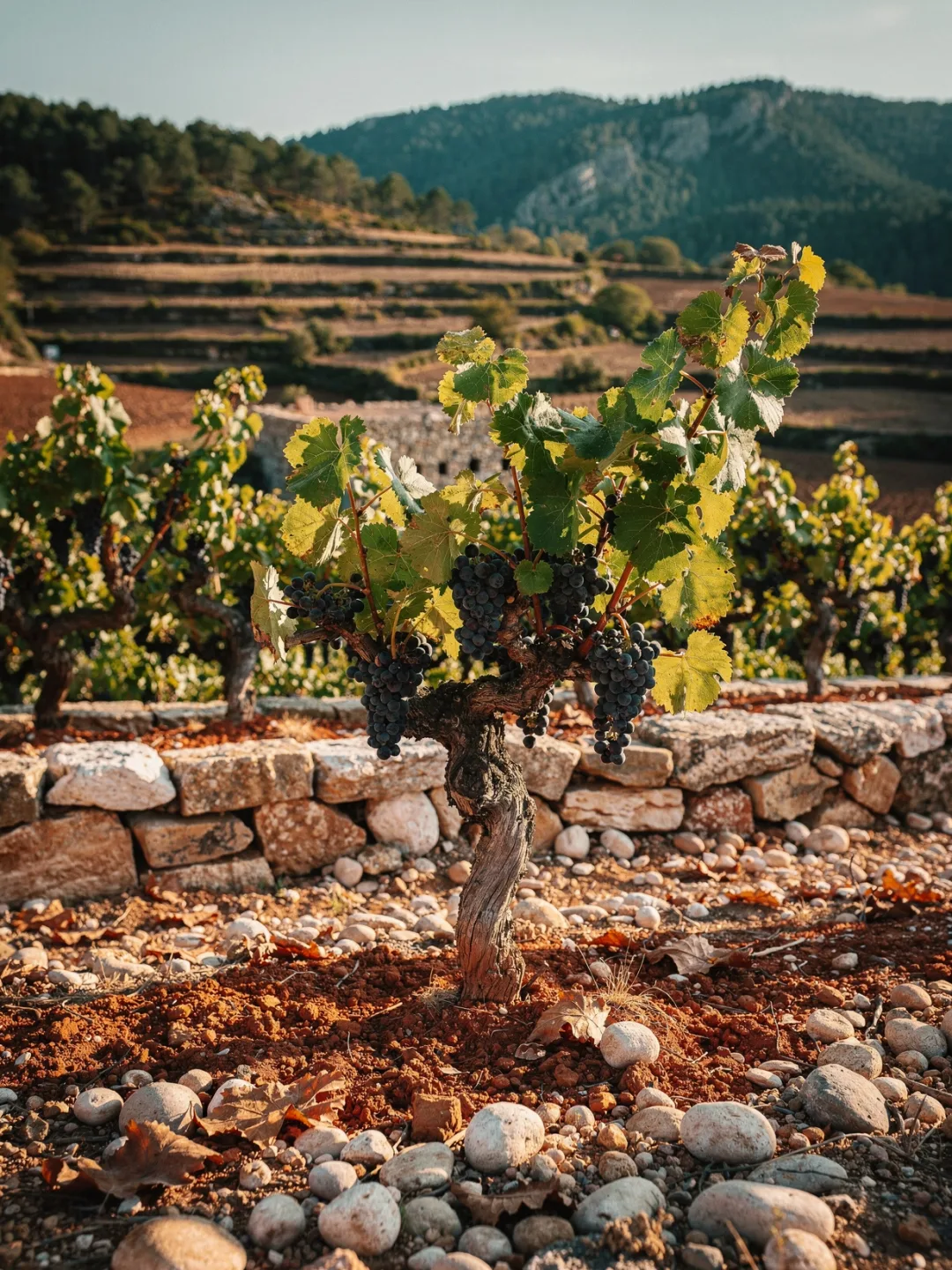
Today, one grape tops the list, and it's not the one that made Navarra famous. Tempranillo now covers around thirty-four percent of the vineyard area, roughly four thousand hectares, spread across Ribera Alta, Ribera Baja, and Tierra Estella. It ripens reliably, forgives little, and delivers the tannin structure needed for barrel aging.
Garnacha was once nearly everything. A research report from EVENA dates the first mentions of the variety in Navarra to the year 1746. By the late 1970s, it covered almost ninety percent of the entire vineyard area – resilient against drought and the powdery mildew that plagued half of Europe around 1900. Today it's the second variety behind Tempranillo, concentrated mainly in the cooler, rainier Baja Montaña, where it accounts for over half the vineyard.
This is where the classic rosado comes from. Only the sangrado method is allowed. The must is left to drain naturally from the red grapes without any pressing, while the skins briefly macerate alongside it. No more than forty liters of must per hundred kilograms of grapes may be drawn off this way. The result is intensely colored, fruity, and almost sweet-seeming on the first sip – yet the wine is dry.
Five other red varieties appear on the Consejo Regulador's list – Graciano, Mazuelo, Merlot, Cabernet Sauvignon, Syrah, and Pinot Noir – most of which were only added after 1980, when bodegas began moving away from pure rosado production in search of more structure for barrel aging. Among the whites, Viura, Chardonnay, Garnacha Blanca, and Malvasía dominate; Moscatel de Grano Menudo supplies the traditional sweet wines of the dry south.
The most recent discovery outdoes every approved list. A winemaker in Bargota had assumed for decades that a single row of vines was Garnacha Blanca. It was only the reddish shoots and an unusual aroma that raised first doubts in 2008. A DNA analysis confirmed in 2023: completely unknown, isolated since the 1940s. They named it Oneca, after the mother of Íñigo Arista, the first king of Pamplona. The first harvest yielded three thousand three hundred bottles of a variety nobody had known about for nearly seventy years.