Monks, Phylloxera, Clos
Region & History
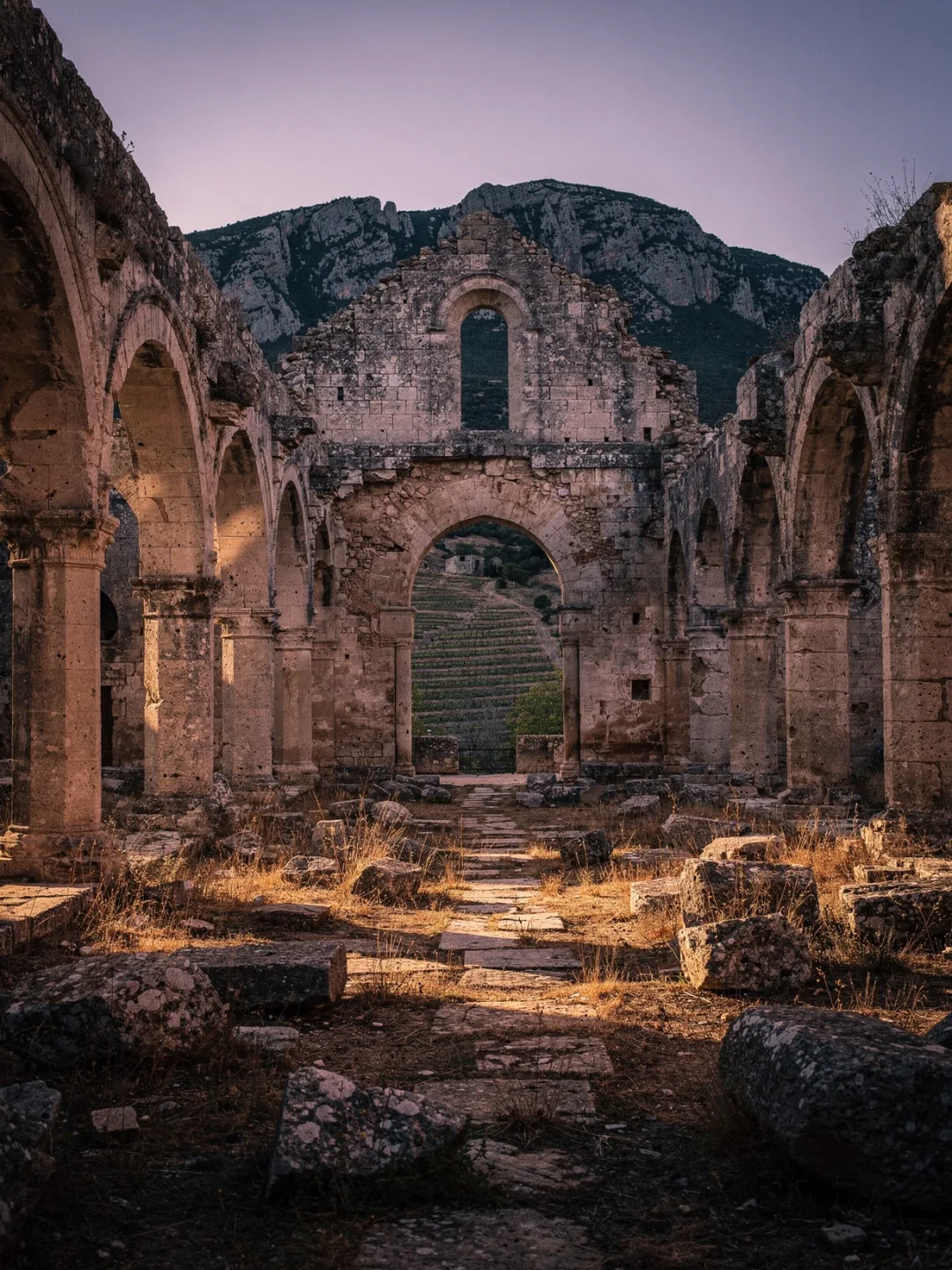
In 1194, King Alfonso II of Aragón brought a handful of monks from Provence into the Priorat, Carthusians from the order of Saint Bruno. They were to settle a recently reconquered mountain valley that was then almost empty of people. This settlement became the Scala Dei Charterhouse. It sits on a steep slope below the mountain range that still shields the valley from cold winds today. Construction dragged on, and the charterhouse wasn't consecrated until 1215.
The name Priorat comes exactly from here. Seven surrounding villages answered to the monastery's prior as if to a secular lord, and their shared territory soon simply became known as his Priorat. The monks bought land, cleared slopes, and planted vines where only gorse had grown before; by 1263, the first documented wine from their own barrels existed. Wine and monastery belonged together from then on, for nearly seven hundred years, until Mendizábal's Disentailment of 1835 expropriated every monastery in Spain and the last monks left the valley.
Five families bought the abandoned buildings and vineyards in 1844 and founded a joint company, which later became the Cellers de Scala Dei winery. Their wine traveled far. In 1878, they exhibited it at the World's Fair in Paris, a small mountain valley from Catalonia standing alongside the great names of France. Disaster soon followed. Phylloxera reached the Priorat by the end of the nineteenth century, destroying most of the roughly five thousand hectares of vines that once stood here.
What followed was nearly a hundred years of decline. Spain's 1932 wine statute recognized the Priorat as a protected zone, but the Civil War and World War II prevented any real implementation. It wasn't until July 23, 1954, that the region got its own official designation of origin. At first, little changed. In the 1960s and 70s, young people moved to the cities, vineyards ran wild, and those who stayed mostly sold their grapes loose to cooperatives.
The turning point came in 1979, with a winemaker from Barcelona: René Barbier. He bought the first parcels, convinced by the old slate soil, and brought friends into the valley, including Álvaro Palacios, Josep Lluís Pérez, Carles Pastrana, and Daphne Glorian. The five of them shared a single winery in Gratallops for the 1989 to 1991 vintages. They bottled the same wine under five different names: Clos Mogador, Clos Dofí, Clos Martinet, Clos de l'Obac, and Clos Erasmus. Only from 1992 onward did their paths separate, each with their own cellar, and the English-speaking trade press later dubbed the group simply the Gang of Five.