Huguenots and KWV
Region & History
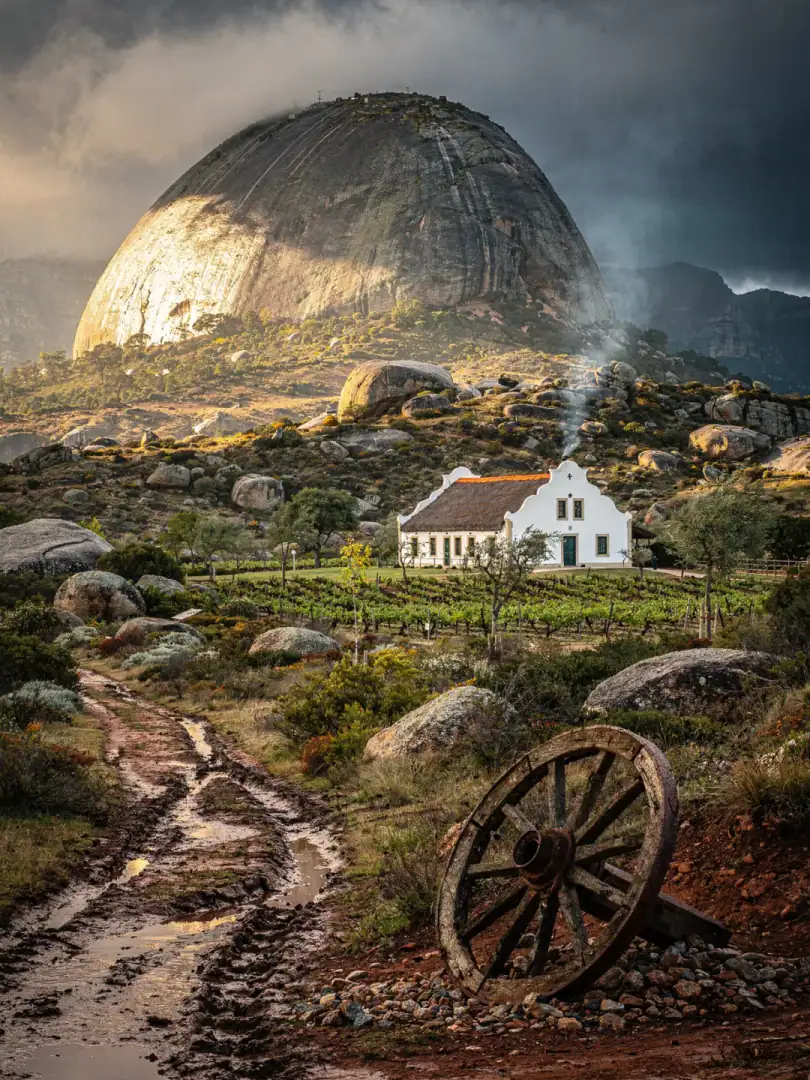
In 1657, an official searching for a route into the interior stood here before a rock face. After a downpour, its wet granite domes gleamed silver in the sun. Abraham Gabbema named the place de Diamondt en de Peerlberg, Diamond and Pearl Mountain. The diamond soon vanished from the name. The pearl remained, and Peerlberg became Paarl.
Thirty years later, the next wave arrived. From 1688, French Huguenots cleared the plain at the foot of the Paarlberg. They planted vines and fruit trees. They also brought names that still appear on the region's wine labels today. Their farms bore white, curved gables in the Cape Dutch style, thatched with reed and almost always symmetrical. A good dozen still stand, covered in ivy, right in the middle of active vineyards.
Two hundred thirty years after the Huguenots came the next turning point, this time not an immigration but a crisis. Too many farms were producing too much cheap wine, and prices collapsed. In 1918, growers led by Charles Kohler founded a cooperative in Paarl called KWV to enforce minimum prices and pull surplus wine off the market. From 1924, KWV was granted legal power to allocate quotas and dictate prices. This control lasted until 1997, when the free market returned and KWV itself became a private company.
One of KWV's most defining figures arrived here by a roundabout path. In 1925, Abraham Perold crossed Pinot Noir with Cinsaut at Stellenbosch University, creating Pinotage. Three years later he himself moved to KWV in Paarl. He left his young seedlings behind in Stellenbosch, where they were nearly forgotten before a colleague rescued them. Fifty years later, another winery in Paarl made history: in 1975, Nederburg auctioned off a noble-sweet Chenin Blanc for the first time, grown from botrytis, for which there had previously been no legal market at all, launching what would become South Africa's most famous wine auction.