Chenin & Pinotage
Grape Varieties
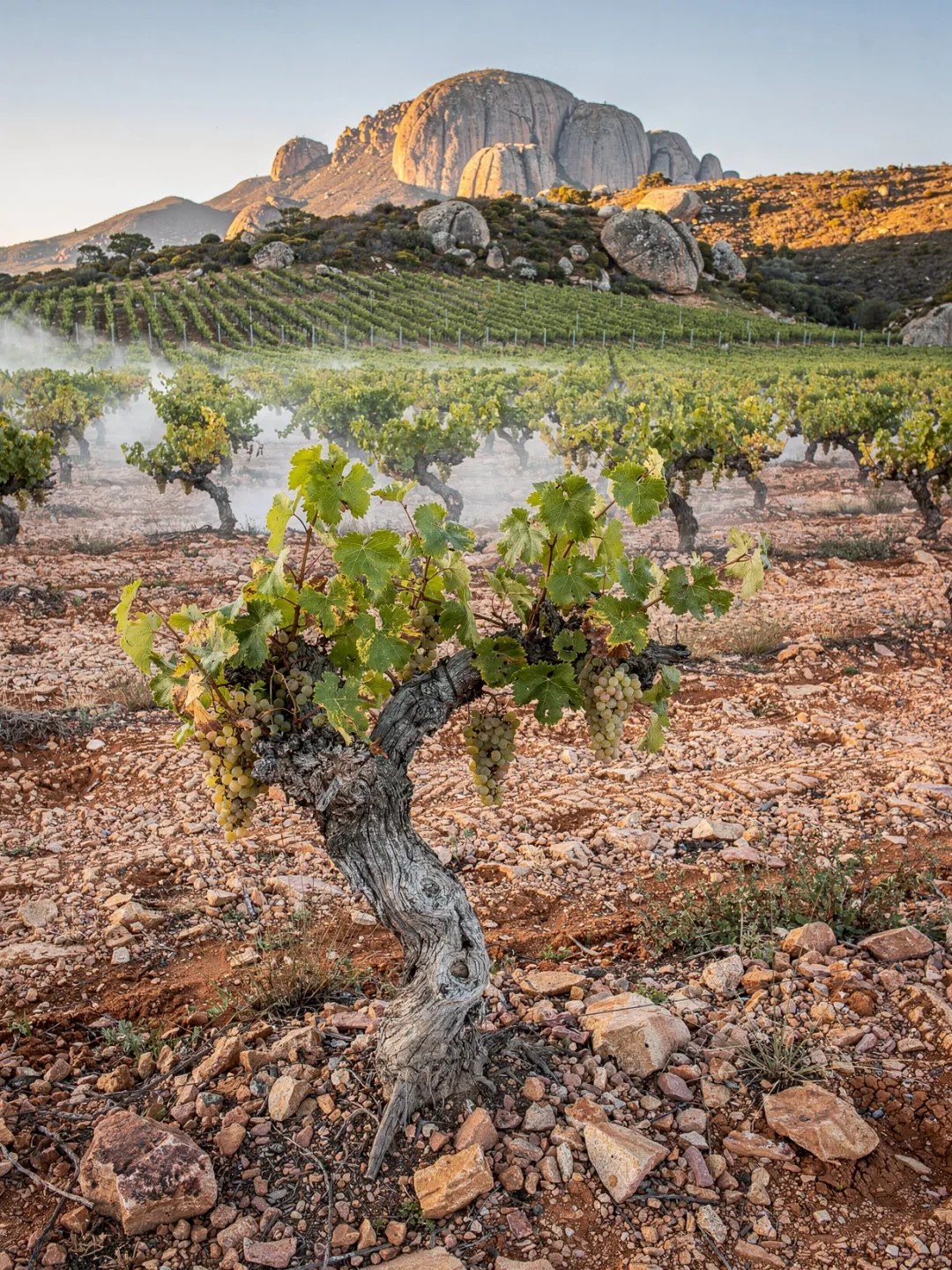
White wine dominates the acreage here, and one variety more than any other: Chenin Blanc. Many vines stand as bush vines, without wire or stake, planted directly in the earth. Some have stood this way for over forty years, and because they've never been irrigated, their roots drive deep into the weathered granite. Necessity becomes virtue here. Little water means small, concentrated berries. An old Chenin from Paarl tastes of quince, honey, and a trace of wax, quite unlike the lean, zesty Chenins meant to be drunk young and chilled.
Among the red grapes, Pinotage leads, that cross of Pinot Noir and Cinsaut found nowhere else in the world in such quantity. Young, it often smells of banana and nail polish, a scent that puts off many drinkers when fermentation runs too hot. Made well, with cool fermentation and restrained oak, it instead shows dark berries, smoke, and an earthy undertone that echoes the granite soils it comes from.
Where the Simonsberg casts its shadow to the east lies the ward of Simonsberg-Paarl. There, from shallow, stony granite soil, grow the district's densest red wines: Cabernet Sauvignon and Shiraz with plenty of tannin and dark fruit. To the northwest, at the foot of the bare Paardeberg, lies Voor-Paardeberg, drier and windier. There, Shiraz and Rhône varieties like Grenache thrive, making do with low yields. Both wards take their names from mountains and taste like them too, austere and mineral.
A fourth grape falls into none of these categories, because it's rarely drunk without being pressed and fortified: Hanepoot, as Muscat d'Alexandrie is known here. From it comes sweet, amber-colored Jerepigo and Muskadel. Dried, it also ends up as raisins in the factories around Paarl, among the country's largest processors of dried fruit. Few grapes link the winery and the orchard as directly as this one.