Oaks & Quotas
Region & History
In 1679, the Cape governor Simon van der Stel sent an expedition into the interior. They found a river and, since it was the first one on their route, simply named it Eerste River — First River. Van der Stel founded a settlement on its bank and gave it his own name: Stellenbosch. After Cape Town, it is South Africa's second-oldest European settlement, and it grew so quickly that it received its own administration as early as 1682.
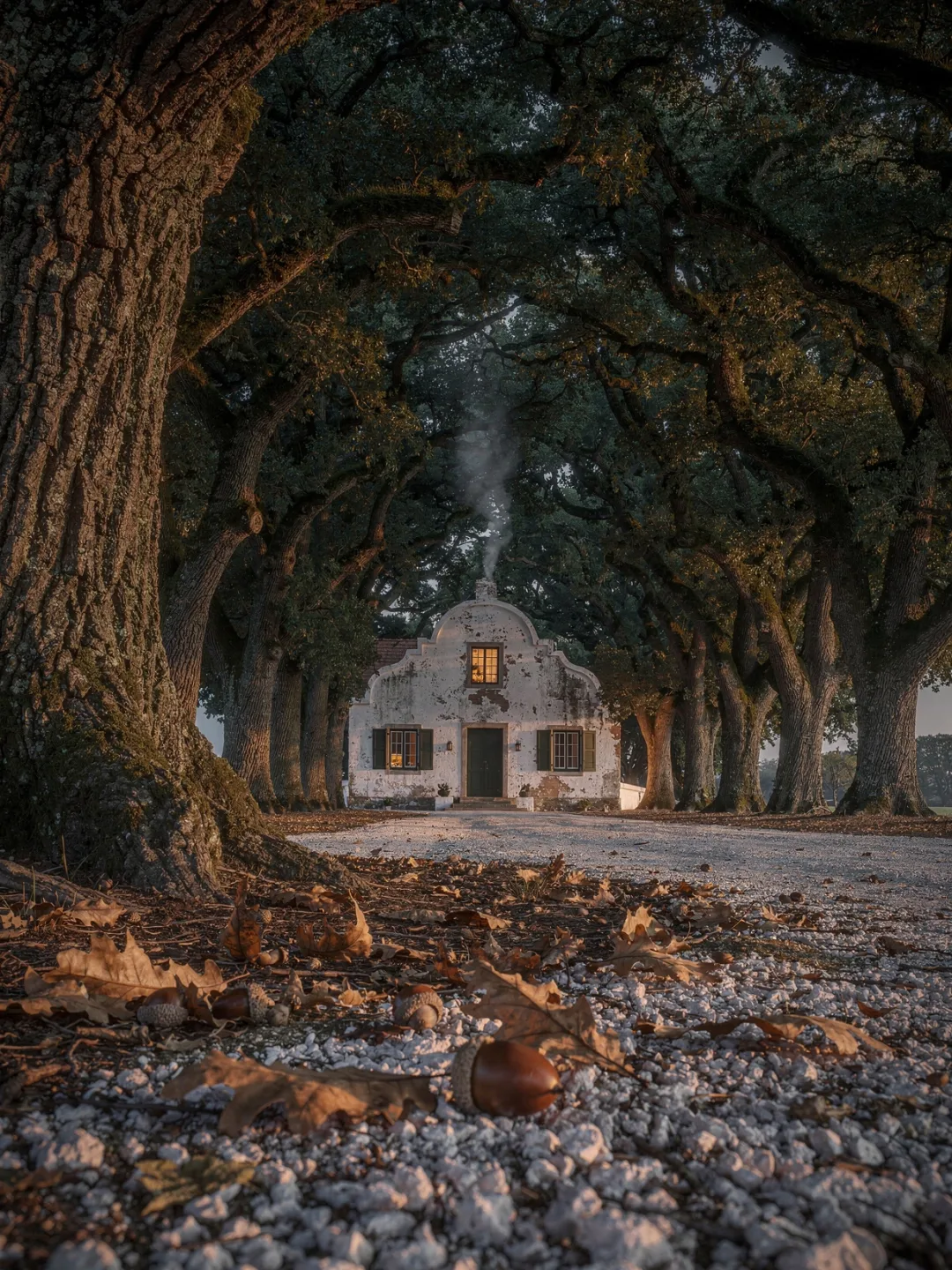
Van der Stel wanted more than houses and streets. Between 1685 and 1690, French Huguenots arrived in the country, Protestant refugees from France, bringing winemaking knowledge that gave a decisive push to viticulture at the Cape. Around 1687, van der Stel also had roughly twelve thousand European oaks planted, with every resident required to plant trees themselves. The avenues still stand today, some trunks over two hundred years old, and they gave the town its second name: Eikestad, the Oak Town.
What came afterward was less idyllic. In 1918, winemakers from the Cape region founded the KWV, a cooperative formed to address the constant surplus of cheap wine. From 1957, it distributed planting rights through a quota system, holding legal power over prices, acreage, and even planting material itself. For Stellenbosch, this meant decades of both security and stagnation. There was guaranteed sale for the wine, but little incentive to prioritize quality over quantity. Only with the end of apartheid in 1994 did export markets open up. Production nearly quadrupled within ten years, and the KWV lost its special legal privileges in 1997.
Alongside this, the Wine of Origin system was established in 1973, enshrined in law and overseen by the Wine and Spirit Board. From then on, origin, grape variety, and vintage on the label had to be accurate, verified rather than simply claimed. Stellenbosch was among the first officially demarcated districts. Two years earlier, in April 1971, three winemakers, Frans Malan, Niel Joubert, and Spatz Sperling, had founded South Africa's first wine route with eleven estates. Today there are more than one hundred fifty.