Pinotage & Cabernet
Grape Varieties
A single, almost accidental crossing continues to shape Stellenbosch's reputation to this day. On November 17, 1924, Abraham Izak Perold, professor of viticulture at Stellenbosch University, hand-pollinated a flower of the red variety Cinsaut, long known here as Hermitage, with pollen from Pinot Noir. The following year, he grew the first seedlings from the resulting seeds at the Welgevallen experimental farm. In 1928, Perold moved to the KWV in Paarl, and he forgot about the young plants in the garden of his official residence. They would almost have vanished into the undergrowth had a young assistant, Charlie Niehaus, not discovered and rescued them during a cleanup.
It wasn't until 1941 that C. T. de Waal filled the first barrel with this new variety. Its name first appeared on a label only in 1961, on a Lanzerac Pinotage from the 1959 vintage. The name is a portmanteau of Pinot and the old name Hermitage. Today, Pinotage accounts for a tenth of the district's vineyard area. Its skin is thick, its tannin robust, and its aromatics range from plum and smoke to, when fermentation goes wrong, banana and burnt rubber.
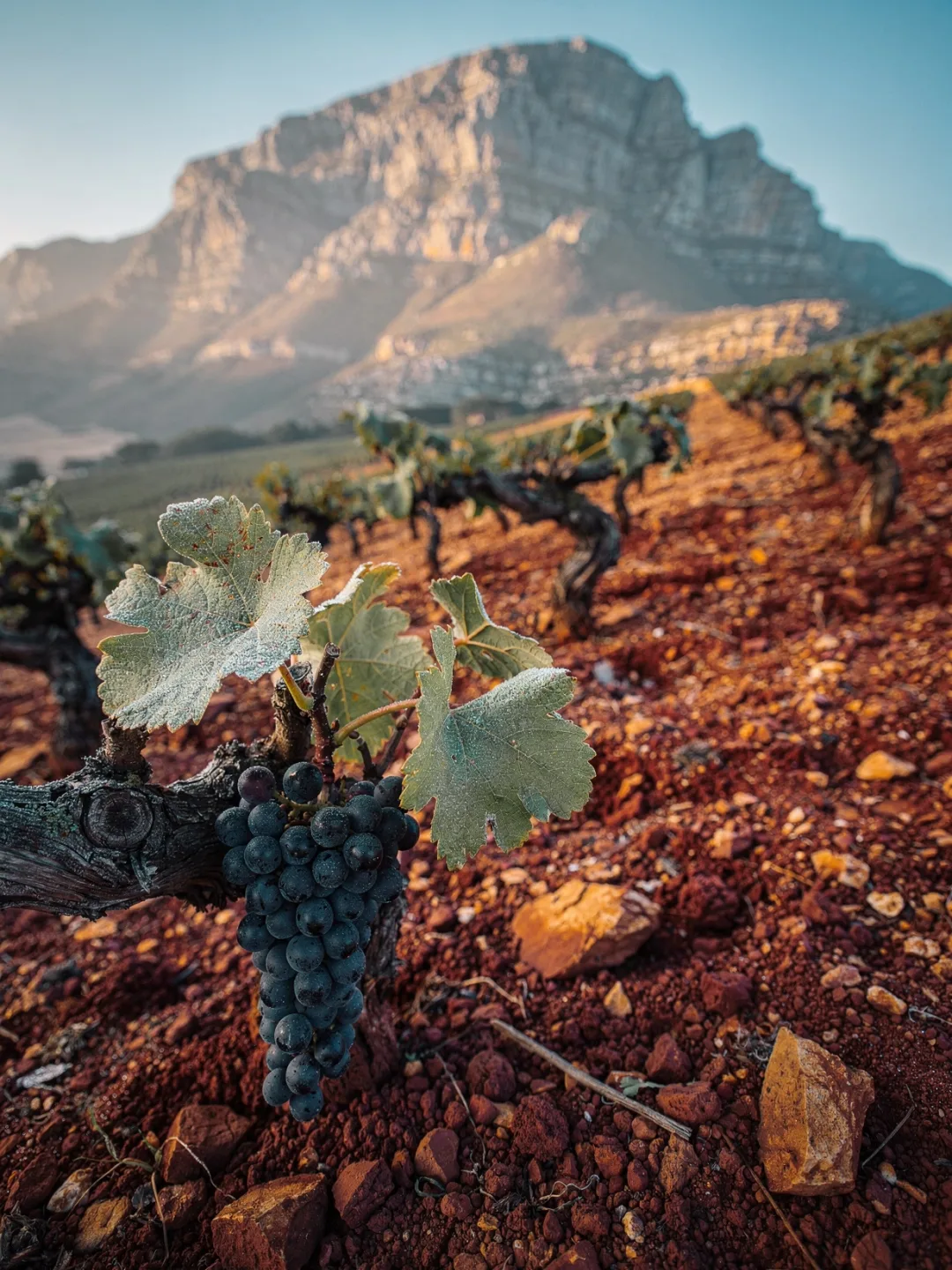
Even so, Pinotage isn't the most widely planted grape variety in Stellenbosch — Cabernet Sauvignon is. The slopes around Simonsberg, Helderberg, and Jonkershoek are considered a little Bordeaux of their own. Here the berries grow smaller and the skins thicker than on the warmer plains further north. It's precisely for this reason that the district carries the nickname Kingdom of Cabernet.
From the meeting of these two varieties emerged a third, distinctly South African format: the Cape Blend. There's no fixed recipe, only a convention: Pinotage typically makes up thirty to seventy percent of the blend, rounded out with Cabernet Sauvignon, Merlot, or Shiraz, and aged in French barriques. Stellenbosch is considered the birthplace of this idea. The first cuvées deliberately marketed under this name emerged here in the late 1990s.
White wine remains a smaller share but is growing. Chenin Blanc and Sauvignon Blanc grow in the cooler sites near False Bay, where salty sea air slows ripening. Their share of new plantings has been growing for years, even as the red varieties continue to define the district's reputation.