Aszú & Louis XIV
Region & History
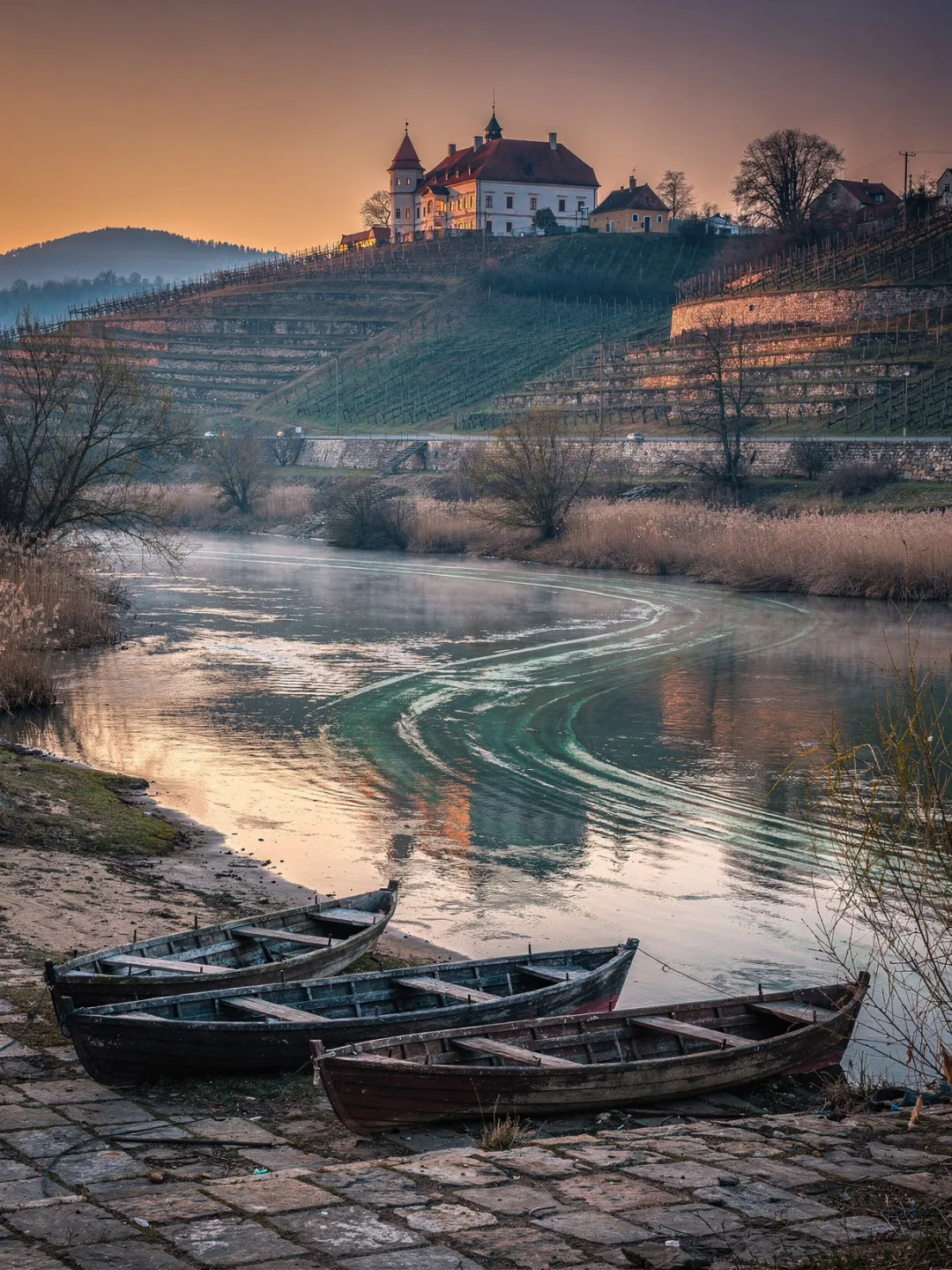
Where the Bodrog flows into the Tisza lies the town that gave its name to an entire wine region: Tokaj. On the southern slopes of the Zemplén Mountains, vines grew here long before anyone had heard the word Aszú.
Legend places the invention in the year 1630. Zsuzsanna Lorántffy, wife of Prince György Rákóczi I, delayed the harvest in her Oremus vineyard near Sátoraljaújhely out of fear of a Turkish invasion. By the time the grapes were picked, only raisins hung on the vines. Her cellar master, Máté Szepsi Laczkó, pressed them separately from the rest of the must and ended up with a wine of unexpected sweetness. Yet the practice of separating such raisined grapes is documented as early as 1571, in a contract concerning the Mézes Mály vineyard. So the story is older than its most famous year.
The wine became famous through another Rákóczi. In 1703, in the middle of the uprising against the Habsburgs, Prince Ferenc Rákóczi II sent a barrel of Tokaji to the court of Louis XIV to win him over to his cause. The Sun King is said to have called it Vinum Regum, Rex Vinorum afterward, wine of kings, king of wines. Whether he really said it, nobody knows. The phrase still appears on half the labels today regardless.
In 1737, Emperor Charles VI drew a fixed boundary around the growing region by decree and determined who within it could call which wine what. It was one of the earliest appellation controls in the world, decades before Bordeaux even began thinking about a classification. Between 1730 and 1772 came the ranking of individual vineyard sites into four classes, from Grand First Growth down to Third Class, depending on soil, aspect, and how reliably noble rot developed there.
Phylloxera reached Tokaj in 1885 and destroyed nearly all the old vines. What survived under Communism afterward belonged to the state enterprise Monimpex, which prioritized quantity over provenance. Only after 1990 did care return: British author Hugh Johnson founded the Royal Tokaji Wine Company with partners, and the insurance group AXA took over the Disznókő estate. Both brought the capital needed for a return to single-vineyard wines. In 2002, UNESCO declared the cultural landscape of Tokaj-Hegyalja a World Heritage Site. The reason was a thousand-year-old relationship between soil and grape, not a single building.