Furmint & Co.
Grape Varieties
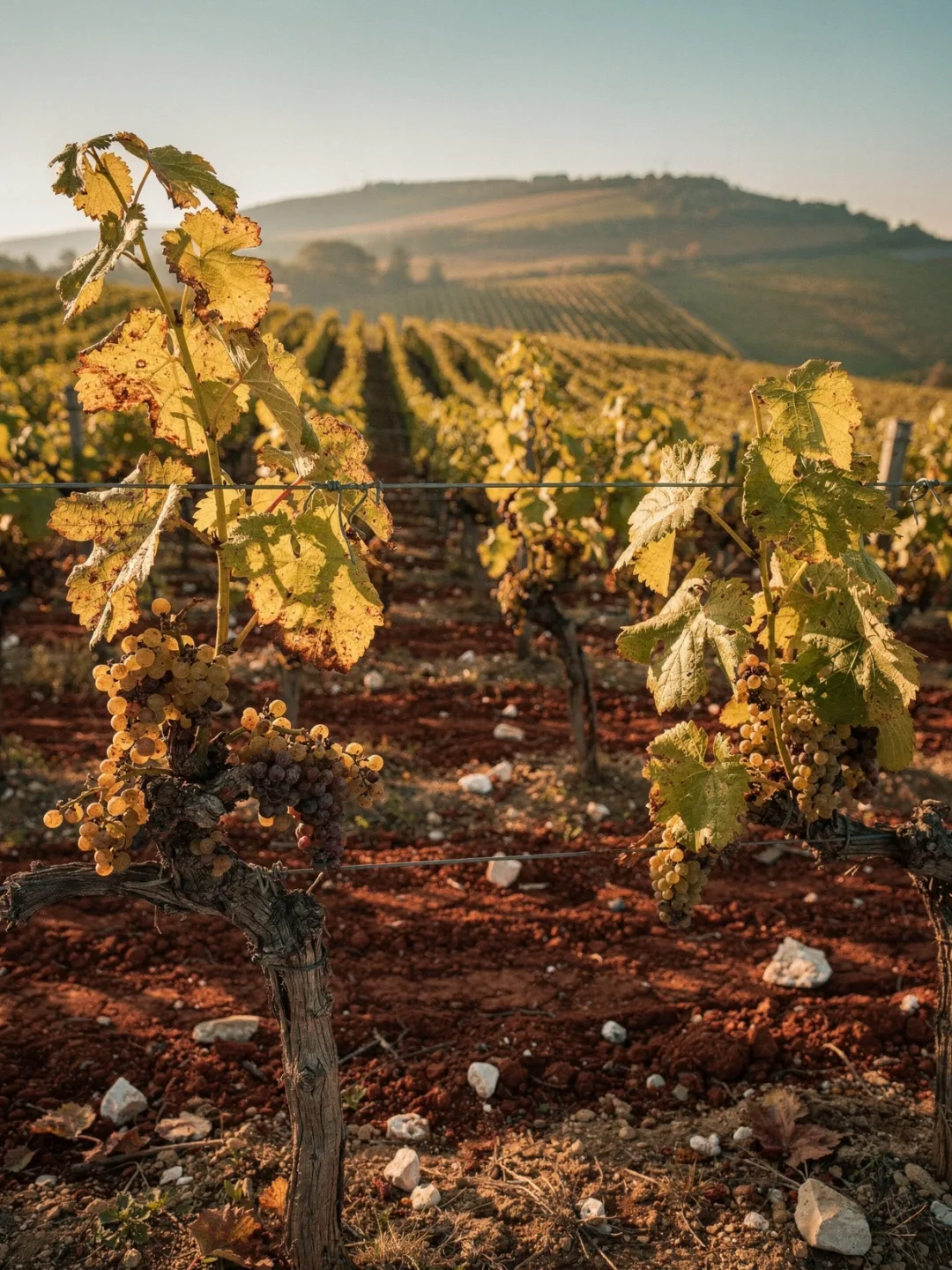
One grape variety carries almost the entire weight here: Furmint. It accounts for sixty percent of the vineyard area, ripens late, and has a thin skin, which is exactly what makes it so valuable.
Thin skins let moisture pass through easily. That's exactly what a fungus called Botrytis cinerea needs to infect the berry from within without spoiling it. In Furmint, this works more reliably than in almost any other white variety. Add to that an acidity that still carries through even once the berry has long since shriveled into a raisin. Genetically, Furmint is related to Gouais Blanc, the same parent variety behind Chardonnay and Riesling, a connection only DNA analysis revealed, not taste.
The second name is Hárslevelű, meaning linden leaf, named for the shape of its leaves. It accounts for about a fifth of the vineyard area, blooms later than Furmint, and produces a softer, more aromatic wine with notes of linden blossom and white pepper. Where Furmint provides the acidity, Hárslevelű delivers the body. Together the two form the backbone of nearly every Aszú.
Then there's Sárgamuskotály, a Muscat variety with a grapey, almost perfumed aroma, that makes up around a tenth of the vineyard area and gives an Aszú its floral top notes. Three further varieties are permitted but rare: Kövérszőlő, an almost vanished old vine with thick-skinned berries, and two crossings from the research station at Tarcal, Zéta and Kabar. Both were bred to supplement Furmint and Hárslevelű in difficult years.
What connects these varieties is no accident. All six tolerate the humid autumn air off the Bodrog and Tisza without rotting prematurely. All six also retain enough acidity so that the finished wine tastes not merely sweet, but fresh as well. A wine that is only sweet with no acidity is not considered a successful Aszú in Tokaj. It's considered a flaw.