Immigrants & Tannat
Region & History
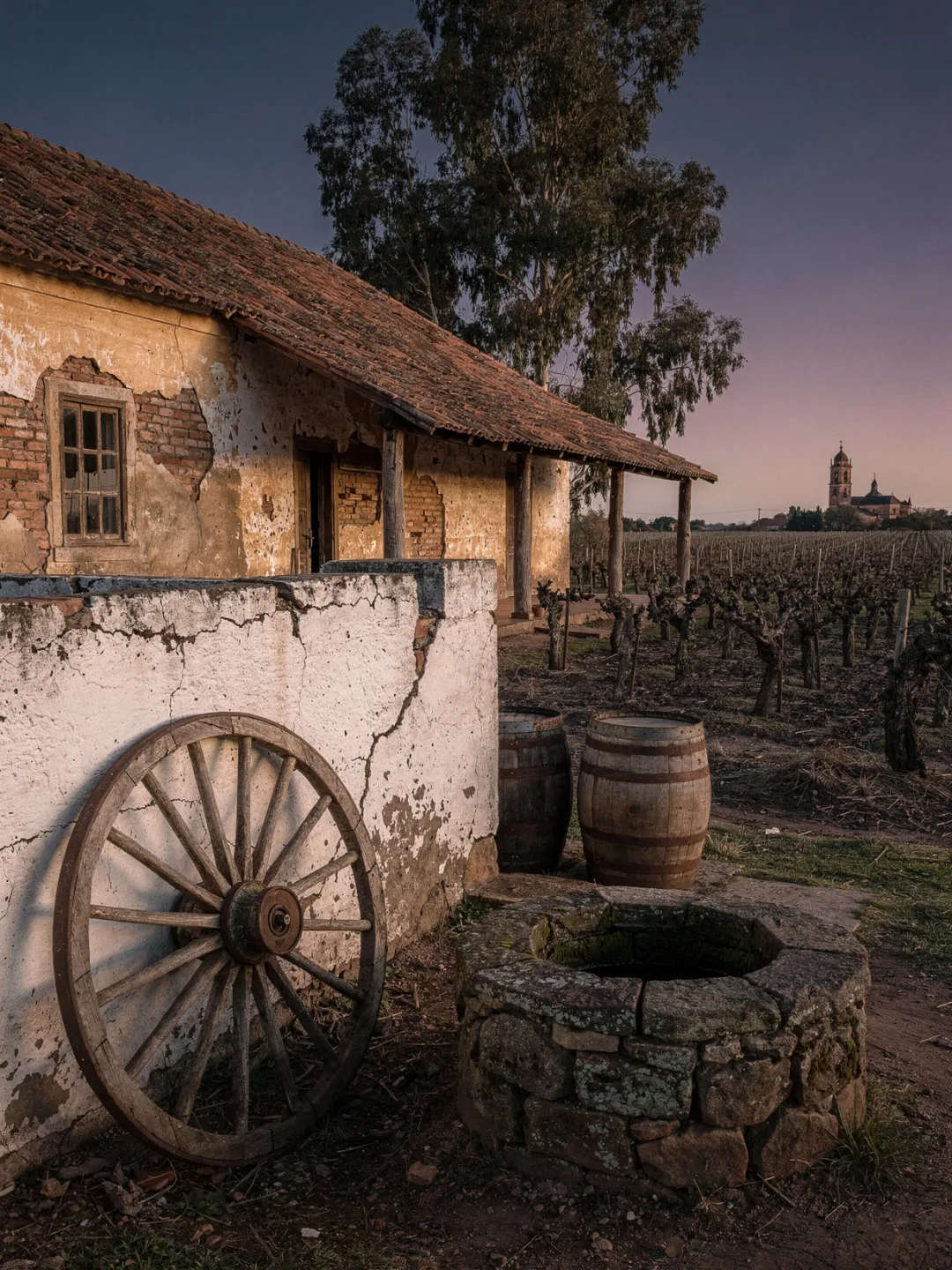
North of Montevideo, the land rolls gently, barely an hour's drive from the capital. This is exactly where Uruguay's oldest wine district lies. Its story doesn't begin with a single heroic figure. Starting in the 1870s, Italian, Spanish, and Basque immigrants arrived in droves. They brought vine cuttings in their luggage and planted them because they missed the wine of their old homeland.
On February 25, 1883, Francisco Vidiella harvested the country's first documented crop in what is now Montevideo's Colón district. His vineyard was small, thirty-six hectares, planted with a French variety he called the Peñarol grape. Later it took on his own name: Vidiella, actually Folle Noire. Further north, at the same time, a Basque immigrant named Pascual Harriague was experimenting with another variety from southern France: Tannat. The two never knew each other. Yet together they laid the foundation on which all of Canelones would later build.
Around the turn of the century, the land filled with family-run estates. Establecimiento Juanicó traces back to 1830 as an estate and has been making wine since the 1830s, Pizzorno followed in 1910, Castillo Viejo in 1927, Varela Zarranz in 1933, and De Lucca in 1945. Mostly Italian and Spanish surnames appeared on the labels, mostly on small plots around places like Juanicó, Las Piedras, and Toledo.
In 1979, the Deicas family bought the Juanicó winery. Shortly after, they noticed something: the clay soil reminded them of parts of Bordeaux. Instead of selling bulk wine in large quantities, they focused on Tannat in small batches. They vinified it using traditional Bordeaux methods, sparking a transformation across Canelones that continues to this day.
In 1987, the Instituto Nacional de Vitivinicultura, known as INAVI, was established as a state-backed but independently run authority overseeing the entire sector. Six years later, a decree created the Vino de Calidad Preferente tier, defining for the first time what could officially count as quality wine in Uruguay. Today, Canelones accounts for roughly sixty percent of Uruguay's vineyard area and grows more Tannat than anywhere else on Earth—more even than in Madiran, where the variety originally comes from.