Tannat above all
Grape Varieties
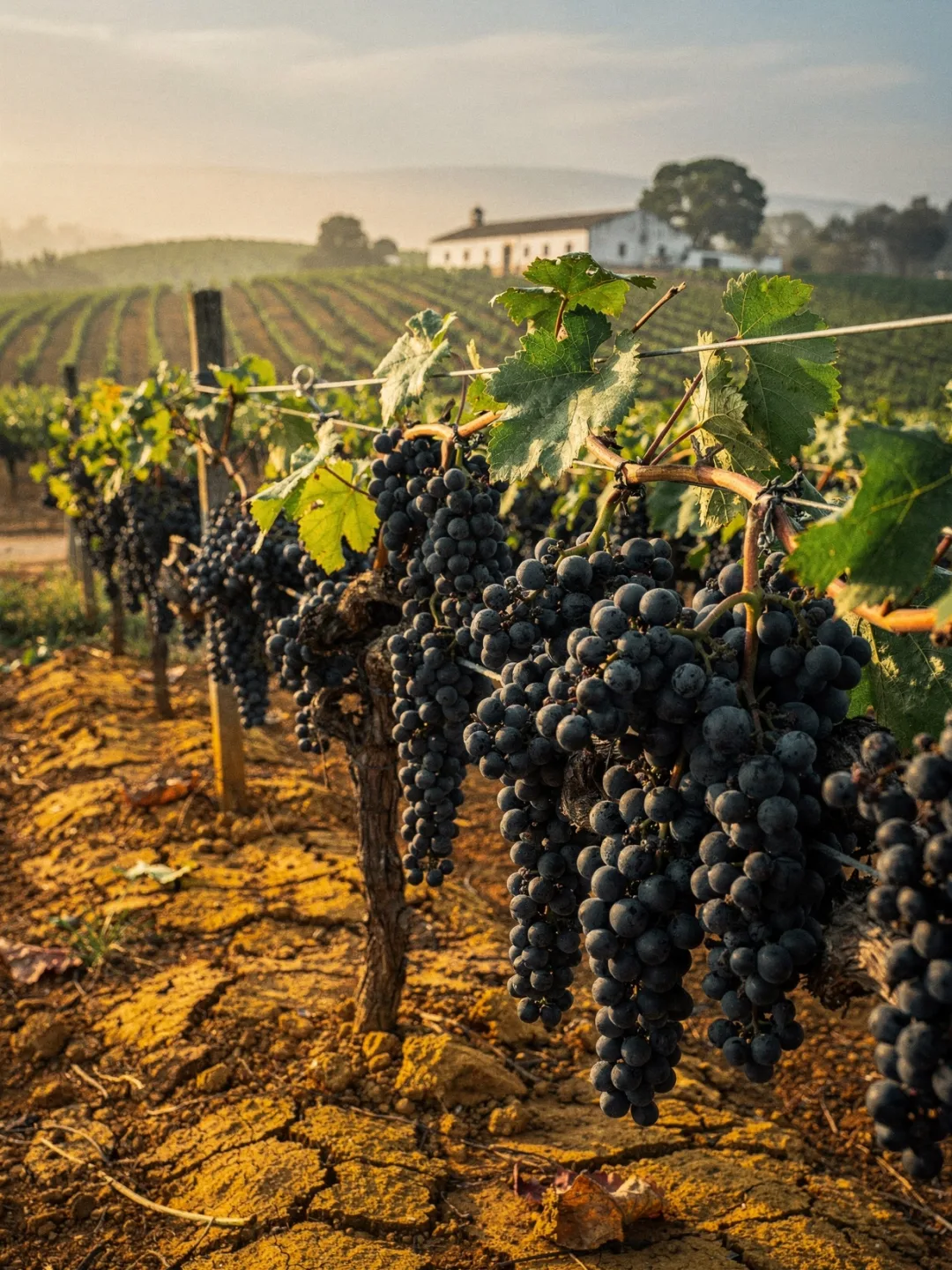
One variety dominates every vineyard in Canelones: Tannat. Its name comes from the French word for tannin, and that's exactly the point. It has thicker skins than almost any other grape variety, more seeds, more pigment. Add to that the furry tannin you feel on your gums after a sip.
In the glass, it appears almost black. A violet sheen rims the edge, only turning brick-red after years of aging. Uruguayan Tannat tastes different from its French counterpart in Madiran: fruitier, more approachable, with notes of blackberry, dark plum, and black pepper instead of the earthy harshness of its region of origin. The reason lies in Canelones' climate and in a technique that actually originated in Madiran itself.
Alongside it stand international partners that round out Tannat or stand on their own. Merlot, Cabernet Sauvignon, and Cabernet Franc bring softer tannins and dark berry fruit. Among the white wines, Chardonnay, Sauvignon Blanc, and Viognier dominate. The latter carries notes of apricot and holds up remarkably well against the humid sea air from the Río de la Plata.
Nearly forgotten was a third, older variety: Folle Noire, the grape Vidiella once planted as the Peñarol grape. For over a century, it all but vanished from the vineyards. It took two enologists, Juan Pablo Fitipaldo and Gonzalo Pastorino, to track down fewer than five hundred vines in Colonia Valdense, planted in 1984 across six low rows, and since then they've been crafting a pale, aromatic red wine from it that recalls a Pinot Noir from Burgundy more than a Tannat. Two traditions, one stretch of land.