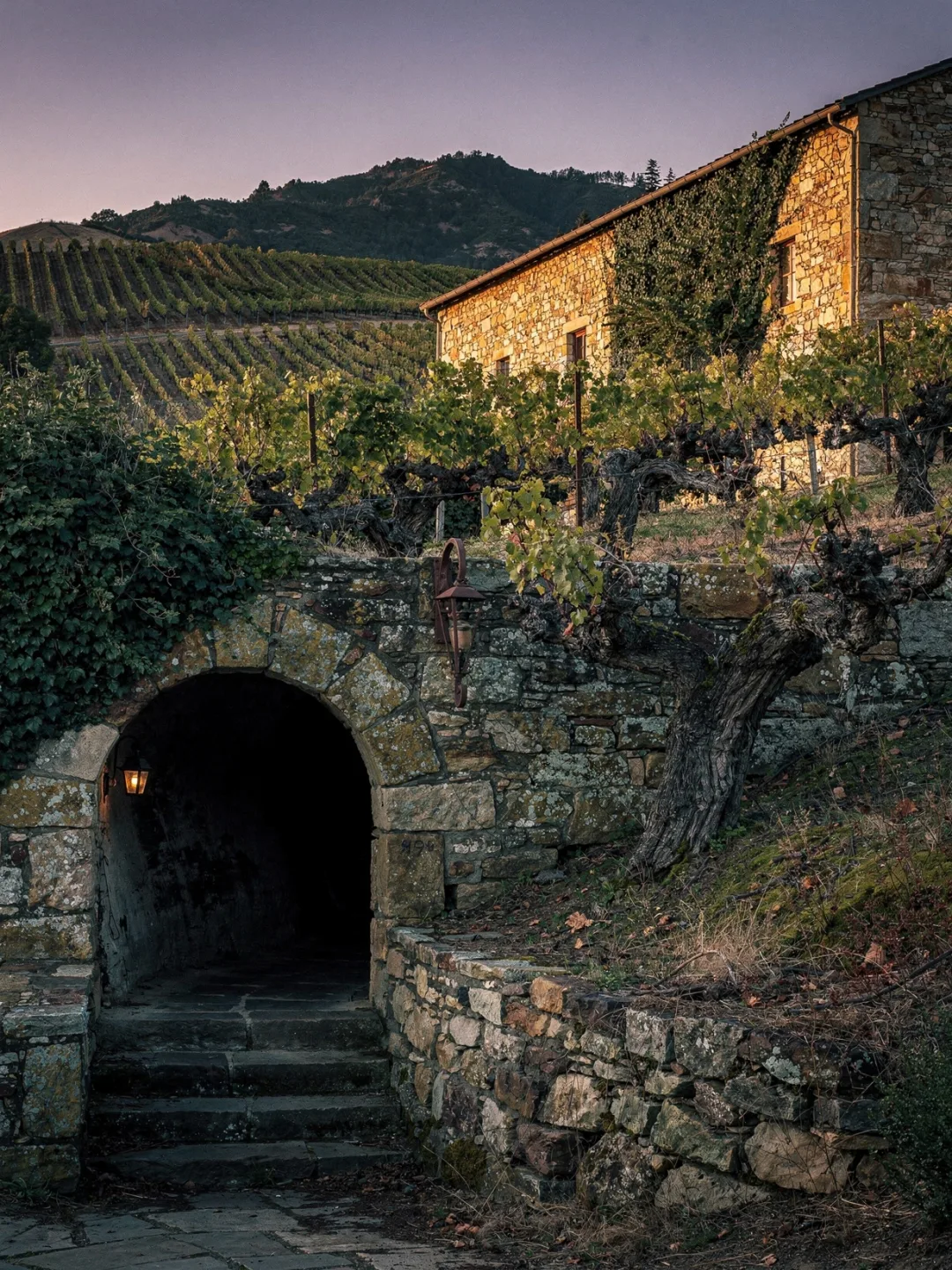
Mission to AVA
Region & History
Vines grew here before there was even a border to draw. In 1823, Franciscan friars planted the area's first vines at Mission San Francisco Solano. It was the last and northernmost of twenty-one missions Spain had founded in California. Eleven years later, General Mariano Guadalupe Vallejo took over the land. He expanded the vineyards and founded the Pueblo of Sonoma in their place. A mission became a town.
The man who later made Sonoma famous arrived in California by a roundabout route, from Hungary via the American Midwest. In 1857, Agoston Haraszthy bought some 320 hectares of land on the edge of town and named his new estate Buena Vista — the first commercial winery in the whole young state. He drove California's first wine cellars into the rock and, after a trip to Europe in 1861, brought back more than a hundred thousand vine cuttings. Some of his stories have grown taller with the years.
What legally ties this history together today is called an AVA, an American Viticultural Area, granted by the US Alcohol and Tobacco Tax and Trade Bureau (TTB). Unlike a French appellation, an AVA prescribes neither grape variety, nor yield, nor style of vinification — it simply draws a line on the map and requires that at least eighty-five percent of the grapes come from within it. Sonoma Valley received its own AVA on December 3, 1981, one of the first in the country. To the east, the Mayacamas Mountains separate Sonoma from Napa.
In between lay a century that nearly destroyed Sonoma: phylloxera in the 1870s and nationwide Prohibition starting in 1920. Vineyards disappeared, cellars became fruit storehouses, and families survived on grapes grown for legally permitted home use. Only years after Prohibition ended in 1933 did money return to the region for new vineyards. Today the county counts nineteen of its own AVAs — more than any other in California.